Bible Reference guide http://www.biblegateway.com/
ADAM'S DESCENDANTS
A Primer
Concerning the Relationship of
Civilization,
God's Law
And the
Descendants of Adam
Written
By
J. Kent Crutcher
1996
slightly updated 2024 - 1996 was before the flood of information from the Internet)
TABLE OF CONTENTS
Introduction
Chapter 01, Adamic Man.
Chapter 02, The Sumerians.
Chapter 03, The Egyptians.
Chapter 04, The Greeks.
Chapter 05, India.
Chapter 06, China.
Chapter 07, Sub-Sahara Africa.
Chapter 08, Rome.
Chapter 09, The Israelites.
Chapter 10, The Europeans.
Chapter 11, The Ancient Americas.
Chapter 12, America, America.
Chapter 13, America the Conquered.
Chapter 14, Conclusions.
Appendix A, Why?
Appendix B, How the Federal Reserve Banking System Operates.
Appendix C, Further Reading and Education.
INTRODUCTION
The Bible states that we are being destroyed by a lack of knowledge (Hosea 4:6). Hopefully this work will start you on a long road of discovery.
To better understand this short book on the descendants of Adam and their relationship to "civilization," it is necessary to explain a few points.
At first glance, this may appear to be a book about religion. It is not. But what is equally true is that we cannot leave out the influence of God upon man. Modern Americans have been conditioned to separate God from our daily lives (leave Him in the church), but it was not always that way. The concept of God's influence upon man will at first seem strange to some of you. It was for me; most of my life (age 12 to 35) I was an atheist. I just ask that you read the whole book before forming a final picture in your mind. Hopefully you will see the required connection between God and man after some thought.
Second, when visualizing the people of each civilization who are summarized in this text, remember the Texas\Texan example. In 1900 when someone referred to one as a Texan, what would come to mind? It would be a person with light skin, often tall (refers to men 5'10" and above), probably light eyes and ancestry mostly from northern Europe. In short, the 1900 Texan was white. They were 95% of the population, but what is more important; they were the children of the founders. Who were the geographic Texans in the year 1700? They were Indians. Who were the geographic Texans in 1820? They were Indians (15-30,000) and three small settlements of Mexicans (3100 - census of 1828). Who are Texans in 1996? Some would say they are only the sons and daughters of the white founders. Others would say they are all races: American, African, Mexican, Asian, and a mixture thereof. What do you think the Texan of 2050 will be? The point is, Texan is a relative term; it depends on time and point of view. And just like any other geographic area, Mesopotamia, Egypt, India, Greece, Rome, and so forth, the race of the inhabitants could (and usually did) change depending on the time frame in question.
Third, when you review the drawings, sculptures, etc., look at the features of the people presented. Look at the face, specifically the nose, ears, lips, skull, eyes, etc. Try not to pay too much attention to the color of the rock that was sculptured.
Next, realize that historical records are incomplete. We are working with a huge picture puzzle that has many pieces missing. Add to this the different interpretations by each historical author and a dishonest version by modern State propagandist\historians, and it often becomes difficult to decipher history accurately. Also, recognize that each generation tends to bend history to fit their individual time. In addition, we are uncovering new historical records daily. All of these factors affect the accuracy of "history." But for those willing to dig a little, many original, untainted documents are still there, awaiting the curious mind. In this writing, with the puzzle pieces available to us, we have made an attempt to present the historical facts concerning Adamic man (Adam and his descendants) honestly. At times we were forced to decide if respected historians made errors or if the record, as presented, was 100% logical. The decoding would have been harder without the generalized history of the Holy Bible to guide us. Secular and Bible history sort of match, given understanding. The journey was interesting, but often difficult.
Figuratively speaking, also to most of you, this book will be sort of like taking a trip to a place that you have wanted to see all your life. You have read a few brochures and talked to people who say they have been there. You have it set in your mind what it must be like. Immediately after the first tour (Chapter 1), most of you will say that you were never told or have never read about the new things you see. You wonder if you accidentally took the wrong tour bus. Some of you will be excited and want to see more; some will stomp off in a huff. Christ said in Luke 12:51 "Suppose ye that I am come to give peace on earth? I tell you. Nay, but rather division." That is exactly what is happening in our world today; His script is coming to life. These are dynamic times in which we live.
Finally, we have tried to present the historical facts outlined in this text as accurately and honestly as possible. These writings are not meant to offend anyone or any group of people. However, no doubt, the truth contained within will offend some, perhaps many, individuals.
CHAPTER 1
ADAMIC MAN
From modern science we learn that man has been on this earth for some time; the amount of time depends on the evolutionary theorist. However, all historians agree, about 5500 years ago, something happened in the history of man. Irrigation systems were constructed, great cities were built, and magnificent works of architecture emerged. Suddenly, man became more creative, intelligent, and constructive. What happened? One source for this answer lies in the oldest history book available, the Holy Bible.
Most fundamentalist Christians claim all men originate from Adam. Tracing the genealogy of the Bible backward, Adam's birth took place about 5407 BC, 7400 years ago (note 1). These Bible fundamentalists ignore the scientific evidence about us that is in conflict with this assertion. But, like the atheistic evolutionist, they claim that evolution did occur, that is to say the races formed after the creation of Adam. Due to environmental factors, the skin colors changed, skeletal and muscular structure became different, skull shapes and brain size changed, eye color changed, and so on. A closer examination of the Bible reveals evidence that proves this claim by the fundamentalist Christian wrong. Also, we bring further light to the fact that the "missing links" in evolutionary theory are indeed missing.
To understand the following better, read Chapter 1 and 2 within Genesis.
Point 1: The chapters and verses in the Holy Bible were inserted over a thousand years after the time of Christ, by a priest not directly inspired by the Holy Spirit (but he did a great service for mankind). He separated the chapters and verses as he was taught in his training. Prior to that the Bible was a continuous narrative, very difficult from which to quote. Remember this in your analysis of the Bible. Also the Books of the Bible are not in the time order they happened, this makes for a very confusing presentation. This was done by the Masoritic Text translators, Talmudic Jews that did not believe in Christ, and who some believe are the enemies of Christians.
Point 2: Genesis 1:1 - "In the beginning God created the heaven and earth." When? We do not know. This verse probably should have been Chapter 1, in and of itself.
Point 3: In Hebrew a "day" can mean an actual sunrise to sunset, and it can also mean a "period of time" (but read note 2 and note 3). How long of a period, we do not know; each period could have been a different length too.
Point 4: Genesis 1:24 - "And God said, Let the earth bring forth the living creature AFTER HIS KIND, cattle, and creeping things, and beast of the earth AFTER HIS KIND: and God SAW THAT IT WAS GOOD." Apparently, God created differences, liked his invention and commanded: KIND AFTER KIND.
Point 5: Compare the order of the Creation from Genesis 1:2 through Genesis 2:4, to Genesis 2:5-25.
In Genesis Chapter 1:
God first created light;
second phase (day two): the waters;
third phase: earth/grass/the land;
fourth phase: the heavenly bodies;
fifth phase: water life and fowls in air;
sixth phase: beasts of the earth and man.
But in Genesis Chapter 2:5-25 the order was:
First: plants and earth;
Second: formed Adam (to "cultivate" the soil);
Third: the beast of the field and fowl of the air;
Fourth: Eve (bone of his bones and flesh of his flesh).
If the creation in Chapter 1 and 2 are the same, how could this inconsistency be?
Point 6: Compare Genesis 1:27-28 and Genesis 2:5-25. In Chapter 1, God created man and woman at the same time and commanded them to "be fruitful and multiply." But in Chapter 2, God formed a man called Adam. He breathed into his nostrils the breath of life; he became a living soul (the living soul issue is very important to recognize and understand). Later He took one of Adam's ribs and from it made Eve. Adam and Eve were not commanded to "multiply"; they did so only after committing sin.
Point 7: Genesis 1:29 states "I have given you every herb bearing seed, which is upon the face of all the earth, and every tree, in the which is the fruit of a tree yielding seed, to you it shall be for meat." But in Genesis 2:17, God states, "But of the tree of the knowledge of good and evil, thou shall not eat of it...."
Point 8: Adam and Eve produced Cain and Abel. Cain murdered Abel. Thereafter God banished Cain and made him "a fugitive and a vagabond in the earth." In Genesis 4:14 Cain states "everyone that findeth me shall slay me." Genesis 4:17 states "Cain knew his wife" and "he builded a city." Questions: Who is the everyone who would slay Cain? Where did Cain get a wife? For whom did Cain build a city? Obviously, at that time, 7000 years ago, there were other people in the world besides Adam, Eve, and Cain.
Point 9: In Hebrew, the word Adam means to blush red in the face or to have a rosy-ruddy complexion (note 2). What group of people possesses such a complexion, is able to blush?
Point 10: Genesis 6:9 states that Noah was perfect in his generations. In Hebrew, generations mean seedline (note 2). Noah was not perfect in that he had done nothing wrong; he was perfect in his genealogy from Adam and Eve. Therefore, if he was perfect in his lineage from Adam and Eve, an imperfection must exist, a non-Adamic lineage.
Point 11: Deuteronomy 23:2 states that a bastard shall not enter into the congregation of the Lord. In Hebrew, this word is mamzer (bastard) meaning the product of a racially mixed marriage, a mongrel (note 2). In this particular case, it meant the product of a marriage between an Israelite and non-Israelite. As explained further in Chapter 23 (and other parts of the Bible), there are exceptions to this rule. God commanded the people of the Bible, a special line of Adamic man (the Israelites), not to mix their seed with those who were not kinsmen, spiritually and racially. Go here - https://crutchercpa.com/interracialmarriage.htm and here - https://youtu.be/Xky3xCOvRmk?si=V-Qm1oOEq0H95M3C and click on my youtube picture for 2 Christian sermons on the subject.
Point 12: Genesis 6:2 states that the sons of God married the daughters of men. The commandment of kind after kind was violated (Gen 1:24). Hybridization occurred. Wickedness increased. From further study of the Bible it becomes apparent that the sons of God are the descendants of Adam and the daughters of men are pre-Adamic (those people created before Adam).
To summarize, we assert that God created the life around us in a different order. The time frame of that order, we do not know. Concerning man, the evidence from the Bible is conclusive. There was man on earth before Adam. How long before Adam, we do not know.
In the following chapters, we will examine the descendants of Adam. That brief analysis should reveal something about him and what his physical and mental characteristics were like.
*********
Footnotes, Chapter 1:
1. This is according to the Bible used by the early Christians, the Septuagint Text. The Samaritan Text and archaeological evidence coordinate this date. The King James Version of the Bible states Adam's birth to be about 4000 BC.
2. Strong's Exhaustive Concordance of the Holy Bible, King James Version.
3. E. Raymond Capt presents in his cassette album, "The Bible and Archaeology" the viewpoint that the six, twenty-four hour days of Genesis were simply 6 days occupied by God in revealing to Adam the story of Creation, a revelation of His creative acts in times past. The Hebrew word for create is "bara" which means, "create" or "to create" and was not used in the Genesis account. Instead the Hebrew word "asah" is used in the six days, which means, "do" or "did" with no suggestion that the acts or processes of God had occupied those six days.
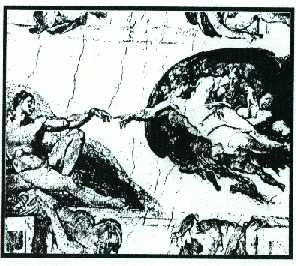
CREATION OF MAN. In this fresco on the Sistine Chapel Ceiling Michelangelo portrayed
God extending his finger to give life to Adam.
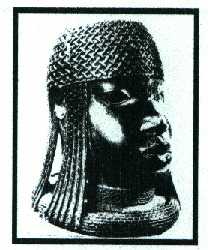
If all races came from Adam, did Adam and Eve look like this?
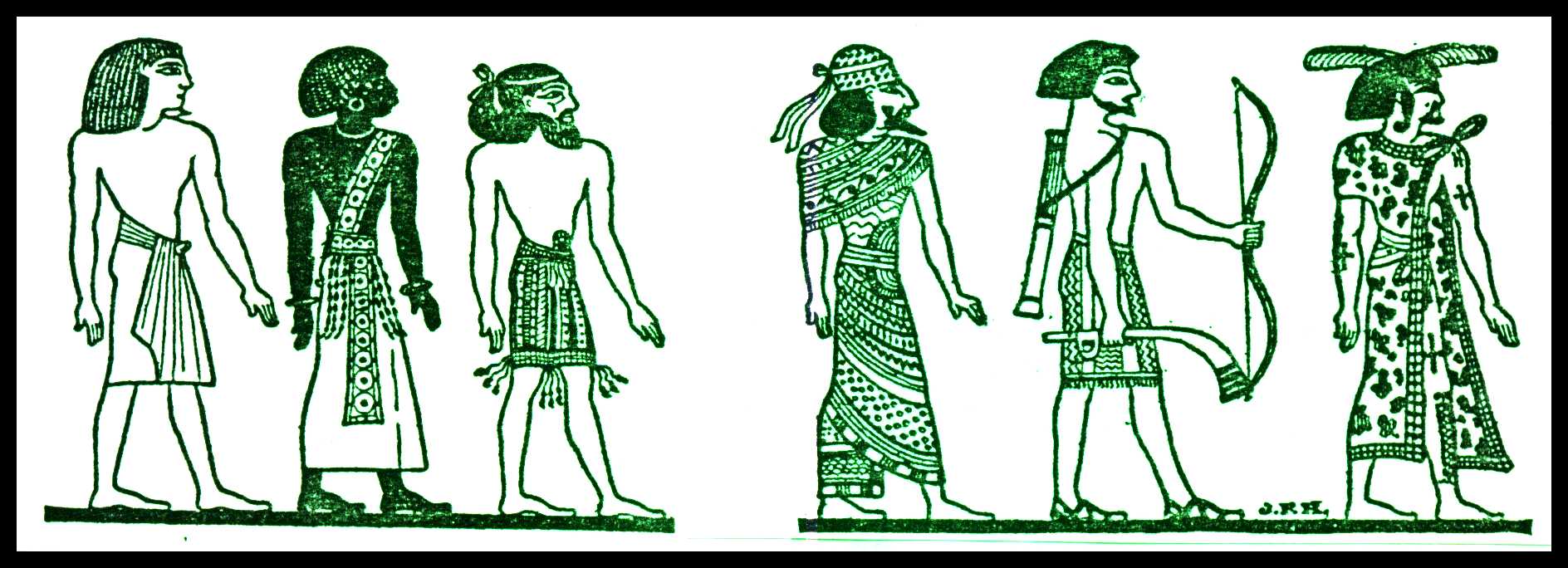
Noah's flood must have devastated his region, but it could not have been worldwide, as demonstrated by these post-flood Egyptian tomb paintings. The man on the left is the Egyptian and the painting was done 300 years after Noah's flood. Scriptures for America, Box 788, LaPorte, CO 80535, has an excellent 2 tape discussion on Noah's flood.
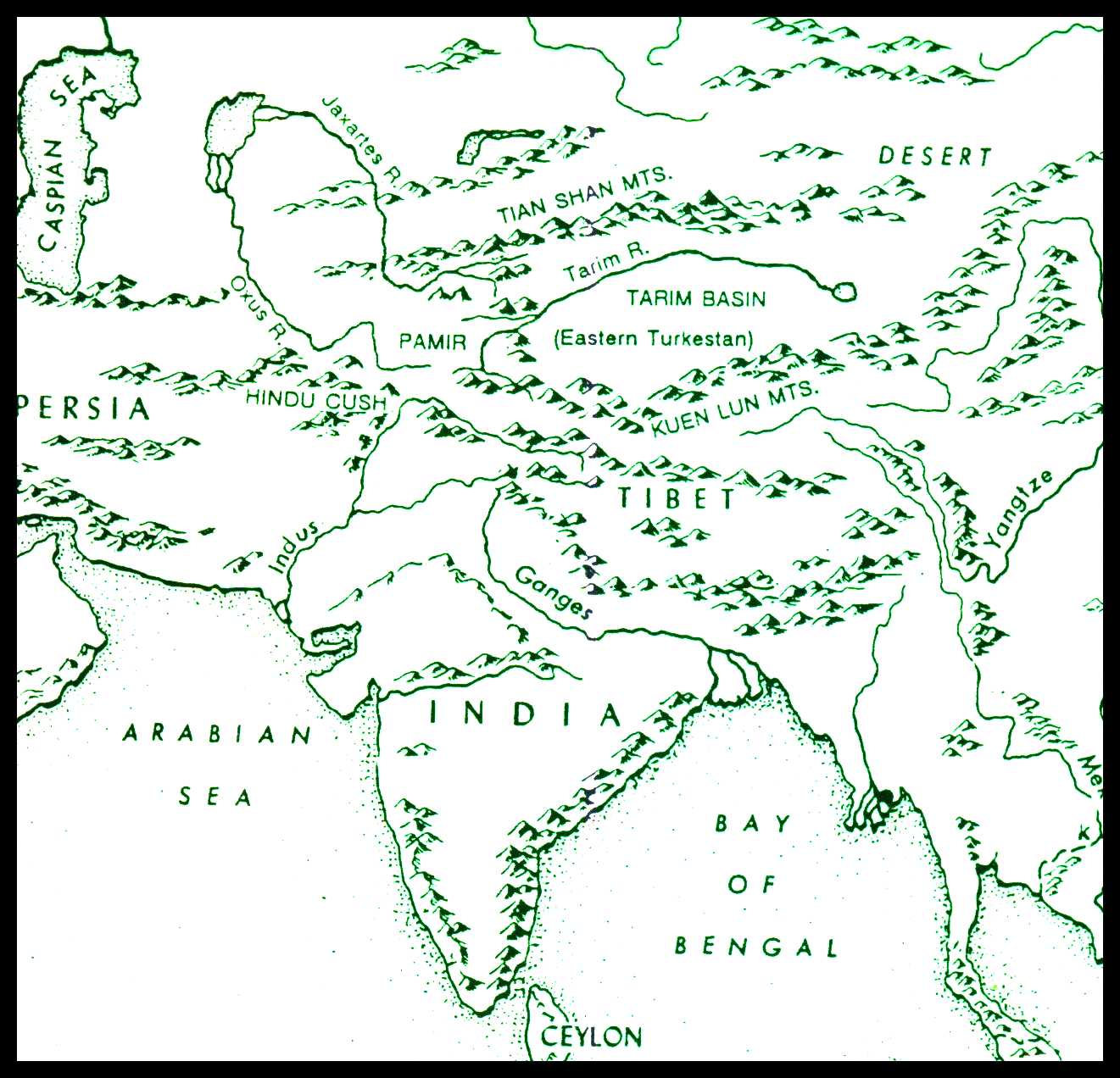
The Garden of Eden was probably in Pamir, which has four rivers flowing out of it, per Genesis 2:10-14. East of Eden is the Tarim Basin, the logical place of Noah's flood. This picture was taken from The Origin of Race and Civilization, by Weisman.
CHAPTER 2
THE SUMERIANS
Before Adam "man existed not to cultivate the Earth" (please read note 1). Symbolically, this meant not only to develop the land for sustenance, but also to care for the earth and God's other creations. Or to put it another way, there was not a man genetically programmed to build, to create, to organize and to bring order onto the Creation. Adam lived from about 5407 BC to about 4477 BC (please read note 2).
According to all modern historians, the Sumerians were the first people to develop a civilization. Generally, 3500 BC is the period most researchers place as the founding of this "cultivation of the earth." Perhaps their most outstanding contribution was the development of cuneiform script, the earliest known system of writing. Their written evidence also indicates they had knowledge of astronomy, mathematics, and medicine. The Sumerians also invented the plow and probably were the first to use wheeled vehicles, as well as being the first to use the arch in construction.
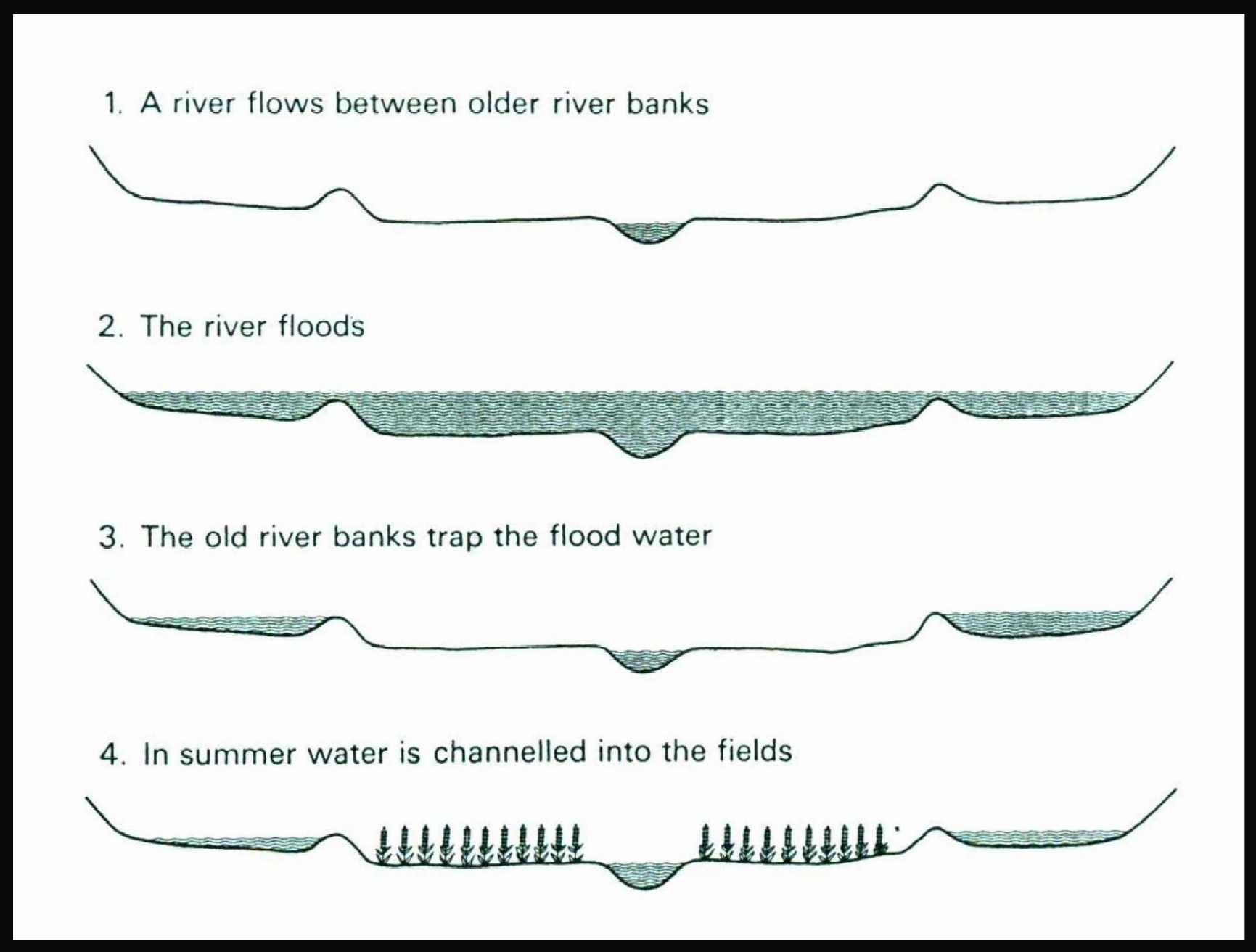
The Sumerians were an agricultural people and discovered how to capture floodwater and later use it to irrigate in the dry season. The system was elaborate and quite a feat of engineering. It served to make vast areas of the desert bloom on the hot, dry Mesopotamian (Greek for "between the rivers") plain.
Each year the lower plain between the Tigris and Euphrates Rivers (see picture) would flood as the rains from the higher regions would rush toward the Persian Gulf. The Sumerians created hundreds of miles of water traps (shallow lakes) along the higher regions of the plain. When the land flooded, these receptacles would serve as reservoirs for future irrigation purposes. Because of the engineering, the results were deposits of valuable silt on the farmed land during the flood season and abundant water supplies during the dry hot growing season. This invention of irrigation on a large scale enabled the Sumerians to trade their surplus crops for metals (for which there were excellent craftsmen and engravers) and other goods and services.
Because of this vast irrigation system, the Sumerians were able to settle permanently in one place. They were the first people to build cities. They used dried clay or mud bricks for buildings. They invented the "Temple," which resulted in a terraced tower or ziggurat, no doubt the first of the many pyramids created by ancient civilized man. The government was primarily a number of independent city-states.
The Sumerian civilization continued until about 2300 BC. At that time, they were conquered by another Adamic race of people. They later regained independence. Some time later, they were conquered again and by 2000 BC they finally ceased to exist as a separate people. Abraham, of the Bible, a descendant of Adam, left Ur, Sumeria, his homeland, about 2000 BC - according to the Book of Jasher, he was a prince there, the ruling class. In the Bible, the name for Sumeria is The Chaldees. From the Bible, Sarah was "exceedingly fair", and see picture below for what Abraham must have looked like.
Who were the Sumerians, and where did they come from? The "native" residents of Sumeria were pre-Adamic men. They were shorter with dark hair and dark eyes. Most historians believe the creators of the Sumerian civilization to have come somewhere from the north. Waddell (note 3) states them to be long-headed (Nordic) Aryans (Indo-European). "They were the longish-headed, broad-browed and large-brained Nordic type; and they were obviously fair in complexion as attested by the blue eyes and white shell inlaid with lapis lazuli stone inset in some of their statues and also by the darkish colour of much of their jewelry; and of fair hair, and their general term for their subject people was 'the black-headed (haired) people'. The kings and officials on state occasions usually wore the Gothic horned head-dress of the Ancient Britons and Anglo-Saxon" (note 3).
Waddell (note 3) also has an interesting study of the "King-List in the Isin Chronicle" of the ancient Sumerians. The "King-List" is exactly that, their official genealogical king's record. His deciphering work has tied the Sumerian, Assyrian, Babylonian, and Indian kings to the same source. In the Sumerian language records, the first of the ancient kings was known by several names, some of which were Ad, Adar, Adda, Addamu, or Adam.
What happened to the Sumerian civilization? Why did it become weak and eventually cease to exist in its current location? Pendell (note 4) states that there was no apparent reason. However, he suggests that they failed to maintain a strong gene pool of genetically superior leaders; they failed to recognize nature and its natural selection process. He also states that "the economy turned socialistic under the direction of the priest, as the financial records show." https://therabbithole.wiki/textsthe-makers-of-civilization-in-race-history-by-laurence-austine-waddell-1929/ One can do a search on these names, within this site, to see that it is so.
In the next 1500 years, Mesopotamia was conquered and reconquered by different people. Some of the conquerors were pure Adamites; some were a mixture. The Assyrian Empire arose along with the Babylonian. Their leaders were initially Adamites; then as time progressed, most of the people became mixed. King Hammurabi established a written code of rules by which to live. Adamic man had long used these laws in his world; they were genetically ingrained, i.e., a circumcised heart (note 5), so to speak. But this was the first time in history the laws had become written (note 6).
The Babylonians made advances in science. They made many accurate astronomical observations and performed many complex mathematical calculations. Man's world order began to override God's order. The influence of Adam's genealogy in Assyria and Babylonia grew weak with time, but it was still alive. In a selfish manner, Adamic man continued onward following his genetic programming. But in time the greatness waned in Mesopotamia. The strong among him traveled further westward.
Today, most of the people we see in southwestern Iraq (ancient Mesopotamia) and the remaining Middle East are the mixture of pre-Adamic man (the darker skin and eyes people) and Adamic man, the creators of the ancient Sumerian/Assyrian/Babylonian civilizations. However, there still exists a remnant of pure Adamic man living in these regions. They are easily noticed, surrounded by a dark skin and eyes people.
********* Footnotes, Chapter 2:
1. Holy Bible, Ferrar Fenton version, Genesis 2:5.
2. Considering the current life expectancy to be about 80 years, many people of today do not believe that Adam could have lived to be 930 years old. One possible explanation was that Adam, being Adamic man, par excellence, was particularly resistant to disease and the aging process. Another possibility concerning Adam's age is that perhaps the life of Adam relates to a period. For example, the Plantagenet family, a ruling family in English history, ruled from 1154 AD to 1485 AD. Likewise, in Scotland, the House of Alpine ruled from 842 AD to 1034 AD, and the House of Stewart ruled from 1371 AD to 1625 AD. One could say that Plantagenet lived for 331 years, Alpine for almost 200 years and Stewart for about 250 years.
3. The Makers of Civilization in Race & History, by Waddell, 1929, pp. 3 onward. Waddell was the premier, early 20th century historian, well known for is deciphering skills of ancient historical records.
4. Why Civilizations Self-Destruct, by Pendell, 1977, pp. 135-136.
5. Deuteronomy 30:6.
6. Hammurabi lived about 300 years before Moses. The Code of Hammurabi and the "Law of Moses" were not identical, but had many similar points. One could argue that Moses stole this law from Hammurabi simply because he was born later. However, for the astute Bible student, it becomes apparent that God gave his laws to Adam, and Adam's descendants carried them throughout the ages. Scriptures for America has a 6 part series on "The Law" that moderately discusses this particular issue.
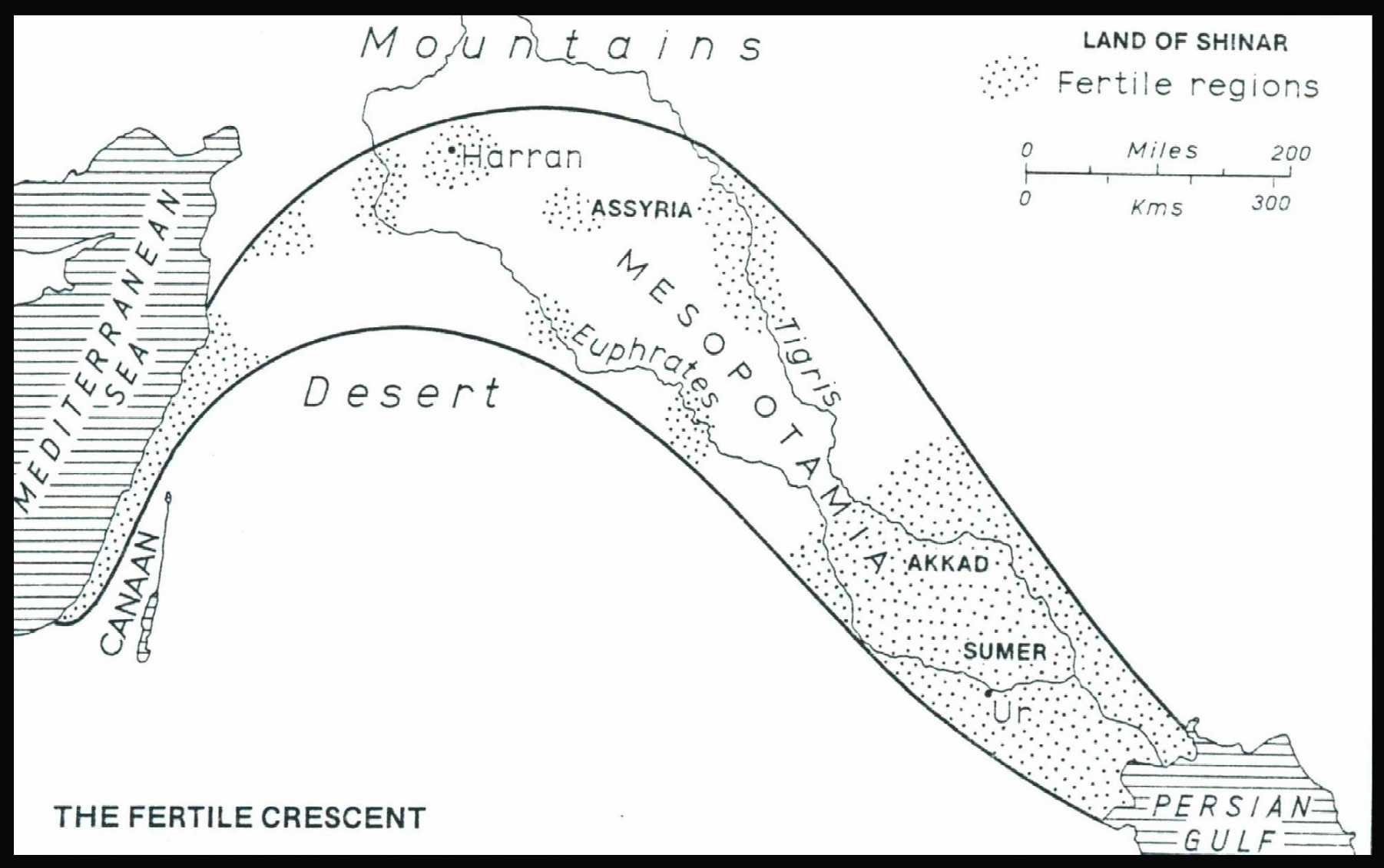
Mesopotamia (above). The flow of water was downward to the Persain Gulf. The diagram below indicates how the irrigation system in Sumeria worked. Both photos are from Missing Links, by Capt.
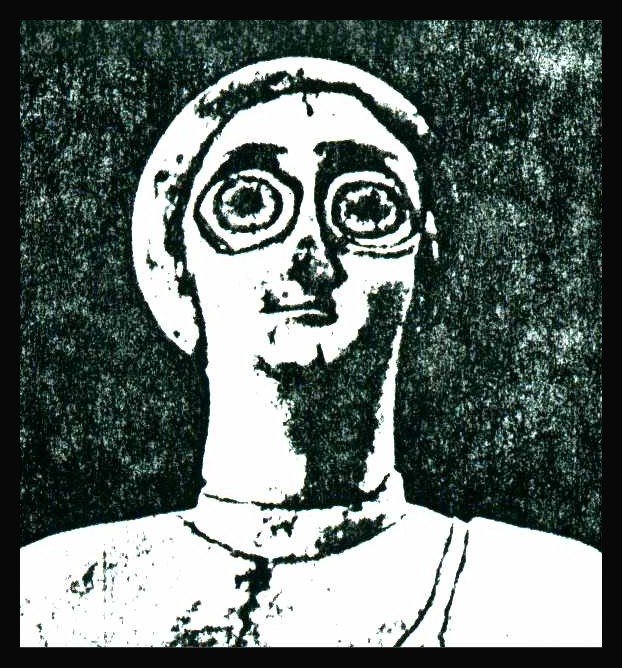
Sumerian woman, with blue eyes, 2800 BC. She was not very attractive but her features are "European."

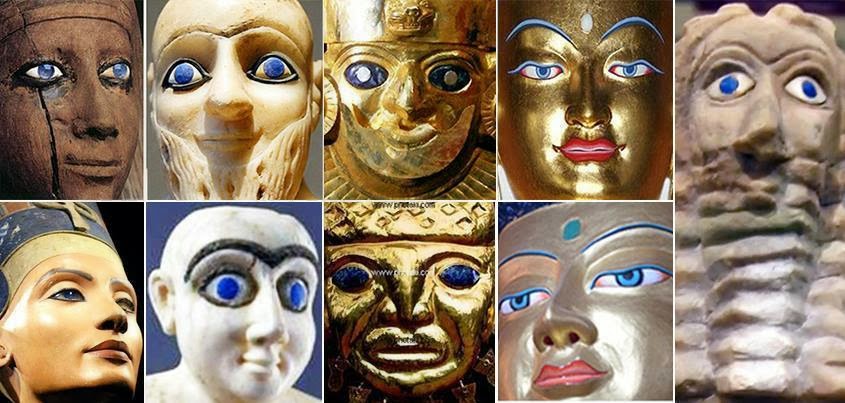
More Sumerian carvings of themselves.
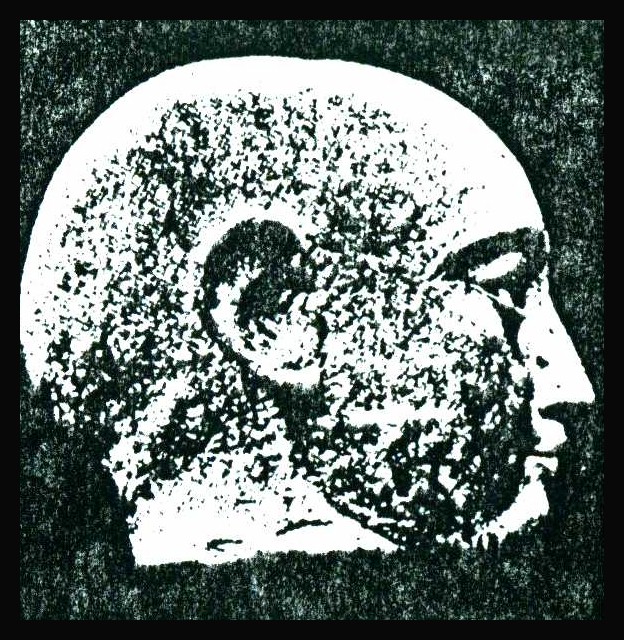
Sumerian head
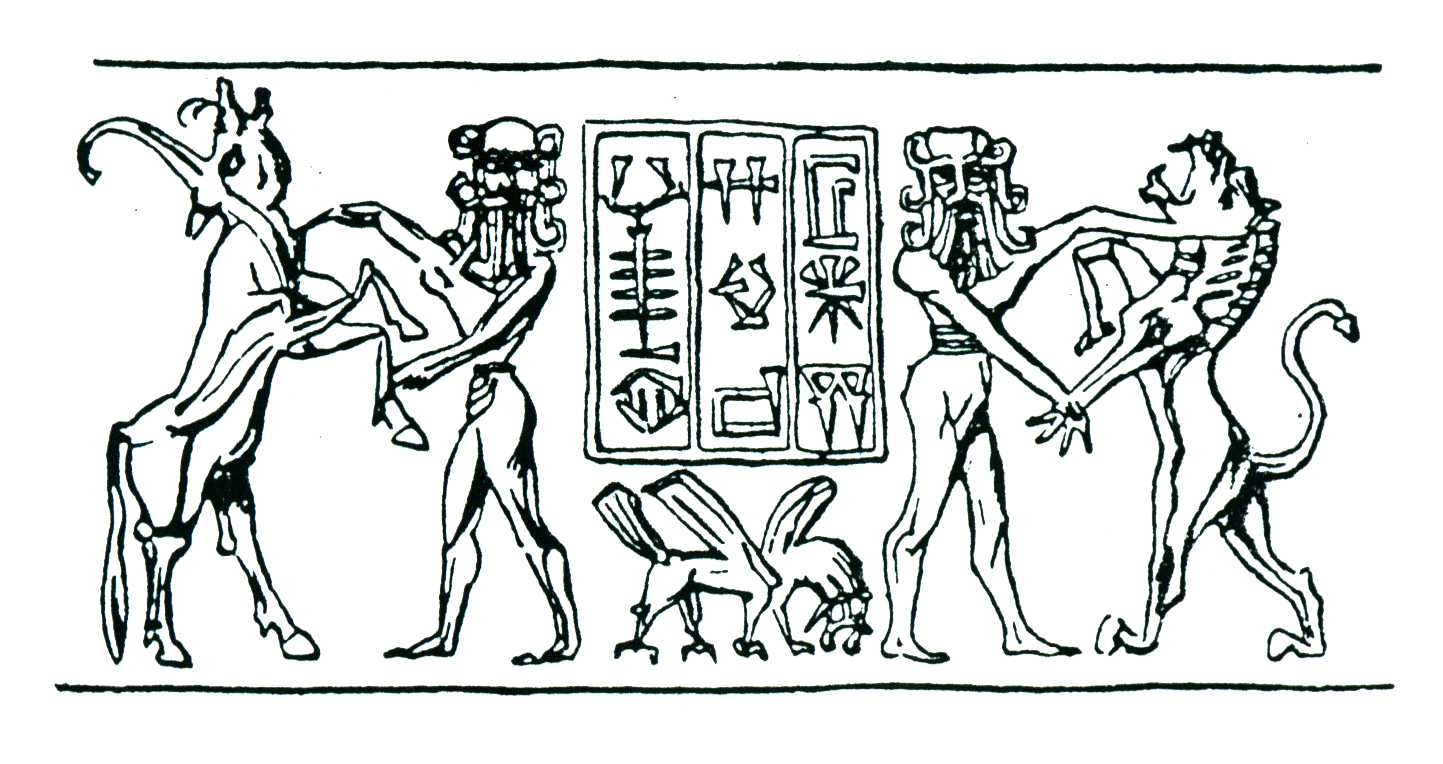
King Gishsax, also called Chaxus of Erech on the King's List, and also known as Issax of Erech, is shown here wrestling with a wild bull and lion on a Sumerian seal about 2500 BC. According to Waddell, this is the historical origin of Hercules or Herakles of the Phoenicians and Greeks. He is found on Sumerian, Hittite, Babylonian and Phoenician seals, and all acknowledge him as a "Lord of Oxen". Some will present the case (as Waddell) that Samson, of the Holy Bible, also has his origin in the same Sumerian source. Note the similarity in Issax (Sumerian), Issac (Hebrew), Sakh (See Chapter on India), and Saxon (I Sax Son - Germanic).
And in Chapter 10 of Genesis of the Bible, there are interesting connections. The name Erech is mentioned (10:10) as the beginning of the mighty King Nimrod. In 10:14, it states Pathrusim and Casluhim, (from which came the Philistines) came from the loins of Ham (son of Noah). In 10:15-16, it speaks of Canaan (son of Ham), being the father of Sidon (a Phoenician port) and Heth (who in turn became the father of the Hittites). The Amorites are also mentioned. Most historians classify the original (before they became mixed) Hittites and Amorites as Indo-European (Nordic white people), and all researchers classify the Phoenicians as Semitic (descendant of Shem, another son of Noah
CHAPTER 3
THE EGYPTIANS
Perhaps the best known aspects of the ancient Egyptian civilization are the pyramids and the sphinx. Also the ancient Egyptians were known for capturing the floodwaters of the Nile, thus establishing an elaborate system of irrigation along the Nile Valley of Upper Egypt. They invented a pictorial style of writing in which syllabary and then an alphabet gradually developed. They were also skilled in astronomy (note 1) and must have been brilliant mathematicians (note 2). They (or perhaps the Sumerians) were also the first people to utilize the harder metal, bronze, (9 parts copper, 1 part tin) for tools and weapons.
Who were the Egyptians?
"Since the dawn of history, the land of Egypt has been occupied by two different races" (note 3). The original inhabitants were pre-Adamic people. The most recent pre-Adamic man was short, had darker skin, black hair and black or dark eyes. When Adamic man arrived in Egypt, pre-Adamic man became his subject. Pre-Adamic man was compelled to execute the monumental works which have made the name of Egypt famous throughout the world (note 4). In the later dynasties (there were almost 30), "in the course of time, however, the two races became completely amalgamated" (note 4). The people of Egypt we see today are the product of North African pre-Adamic man, sub-Sahara African man (the black, imported as slaves), and Adamic man. Today Egypt's primary economic strengths are tourism (the great monuments), sustenance agriculture, and billions of dollars each year in "aid" from the United States.
The Bible confirms the founders of Egypt to be Adamic in several passages, and this is demonstrated clearly in Psalms 105:23, "Israel also came into Egypt; Thus Jacob sojourned in the land of Ham." Ham was a son of Noah. From secular records, it is apparent that Adamic man was the ruling class, who engineered and designed the pyramids (note 2, 8, 10, 11), engineered the irrigation systems, established a form of government (monarchy), and set the order of things. These rulers made Egypt the center of ancient civilization for over a thousand years.
Genesis 10:6 - New Internation Bible Version - The Hamites - The sons of Ham were Cush, Egypt, Put and Canaan. King James and New American Standard Version - The sons of Ham were Cush, Mizraim, Put, and Canaan.
According to Sayce, the original home of these conquering people was the "divine land" of Arabia Felix (note 5). They were long skulled, with fair skin. The artist of the Pharaohs acknowledged that their countrymen belonged to the white race. While the skin of the men is painted red (sunburn), the skin of the women is a pale yellow or white. The women protected themselves from the sun; the men did not; hence alone the difference in the color of their skin (note 6).
"Flinders Petrie compares them (Egyptians) to the people of Pun (see picture). No where else did the Egyptian find a population which resembled that of his country; the nearest in type were the Phoenicians of Kaft, who in general appearance remind us of the natives of Pun. But apart from the Phoenicians of Kaft, among the nations of the world known to the Egyptians Pun, alone contained a population which in outward form resembled that of Egypt." (note 7).
So, according to Petrie, the Egyptians, the Puns, and the Phoenicians all resembled each other. From other evidence, what did the Phoenicians look like?
In Capt's work, the Phoenicians were tall, light skinned, red-headed and blue-eyed (note 8). The Phoenicians were Semites (note 9) and were known for their trading and seafaring. They were also known for the alphabet they created. For further documented descriptions of the Phoenicians, read the remainder of this primer.
The mummy of Ramses II, the oppressor of the Israelites, had red hair (note 10). When we consider that Moses, an Israelite, was raised from birth as a ruling Egyptian, and no one knew the difference (by sight), then the ruling Egyptians of that time and the Israelites must have been a closely related people (see chapter on Israel).
Waddell (note 11) states "the thirty-seventh Sumerian king and emperor, Guni or Sa-Guni or Sargon-the-great, extended his empire westwards to the Mediterranean and Egypt, where he and his father and grandfather before him were Predynastic Pharaohs as well as emperors at the same time in Mesopotamia, and introduced civilization (Indo-European civilization) into Egypt with the Sumerian language and writing (Sumerian pictograph hieroglyphs). His son, Menes, was identical with the emperor Manis Tussu of Mesopotamia and Minos of Crete, and founded the First Dynasty of Egypt about 2704 BC."
See Chapter 11 below, Ancient America - there are lots of phoenician writings in Ancient America, 3000 years before Christ, 3000 BC. There is a copper mind with unique high quality copper in what is now Michigan - that copper is found in ancient copper works in Egypt, Greece and Rome. This video talks about a civilization before the Egyptian, with advance machinery, those who built the large works there in Egypt - https://youtu.be/K3uiMsqptOs?si=i_kxpkLGLqFqKGxQ They think the pyramids were erected to either generate water or electricity - starts at 1:36. And this video on the 200 pyramids in China - https://youtu.be/sCYdLZn_dZw?si=9kJe37vX9RHjTXhY and https://youtu.be/WQREYTGlfgM?si=QccGfF7Ql5HrRVXv and here - https://youtu.be/G5HSzfNvJDo?si=RCxY4XOoFM5e9PUx do a search on his youtube page, the magnifying glass symbol for "China Pyramids".
We are fortunate the Egyptians have left pictures of themselves. They were carved in stone or painted inside protected burial chambers within the pyramids.
******** Footnotes, Chapter 3
1. The Outline of the History of the World, p 13, by Wells, 1920.
2. The Great Pyramid Decoded, by Capt, 1971. This is a very interesting book (95 pages); it explores the mysteries of the Great Pyramid.
3. The Races of the Old Testament, p 87, by Sayce, 1891.
4. Ibid. p 90.
5. Ibid. p 91.
6. Ibid. p 83.
7. Ibid. p 92.
8. Missing Links Discovered in Assyrian Tablets, by Capt, p 43, 1985.
9. Any Encyclopedia.
10. The Races of the Old Testament, p 84, by Sayce, 1891.
11. The Makers of Civilization, p 470, by Waddell.
12. The Dispossessed Majority, p 116, by Robertson.
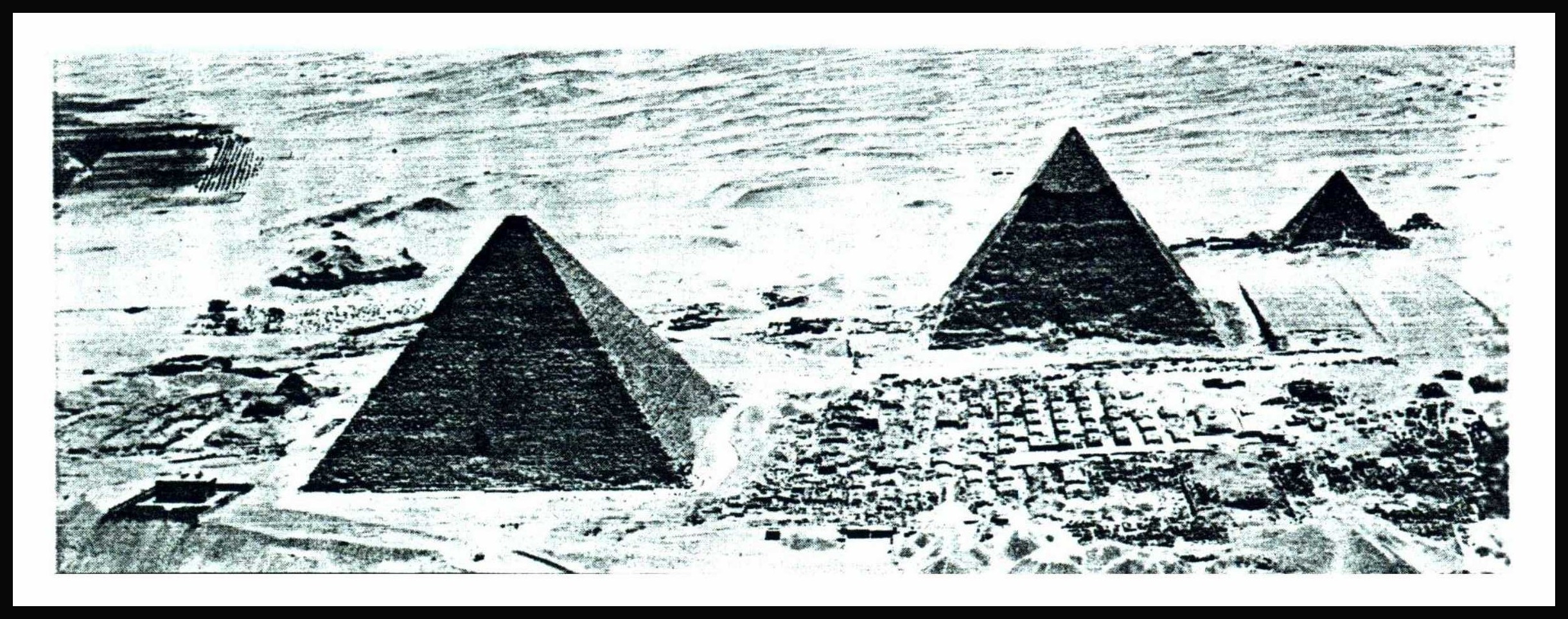
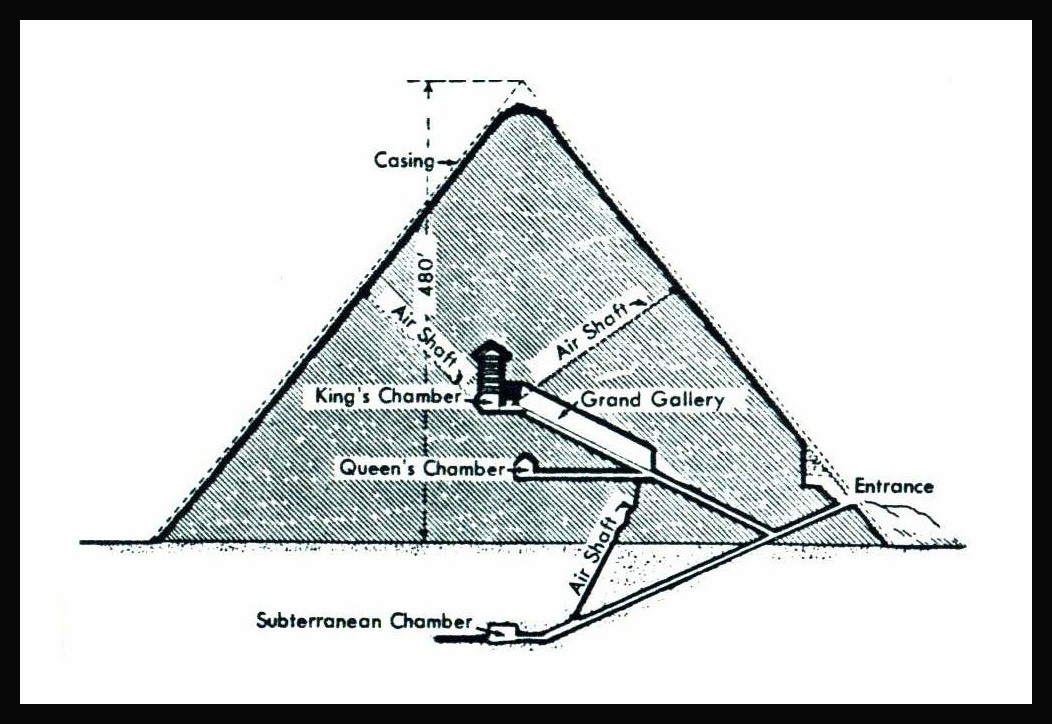
Above are the pyramids at Gaza. The drawing below is the largest pyramid. The underground design is often similar to the pyramids in Mexico
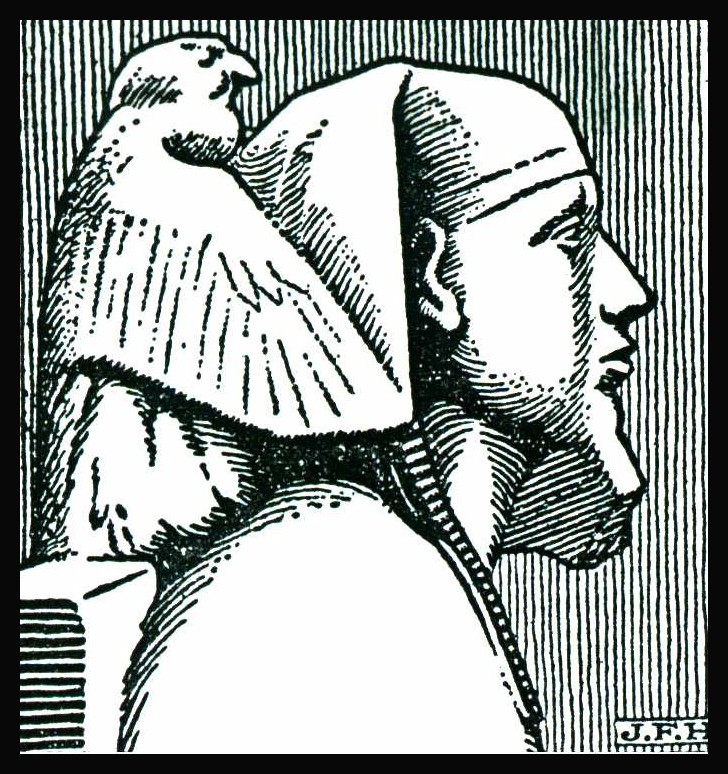
Chephren (or Khefre), builder of the 2nd pyramid
about 2565 BC. Note "European" features.
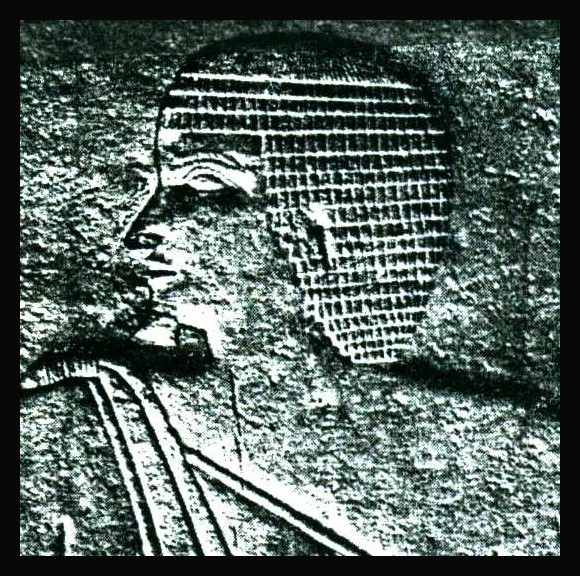
Prince Khufu-Kaf, son of King Cheops, builder
of the Great Pyramid about 2650 BC. He was
from the 4th dynasty. Khufu-Kaf's sister,
Hetip-Heres, had blond hair - from wall painting
(note 12).
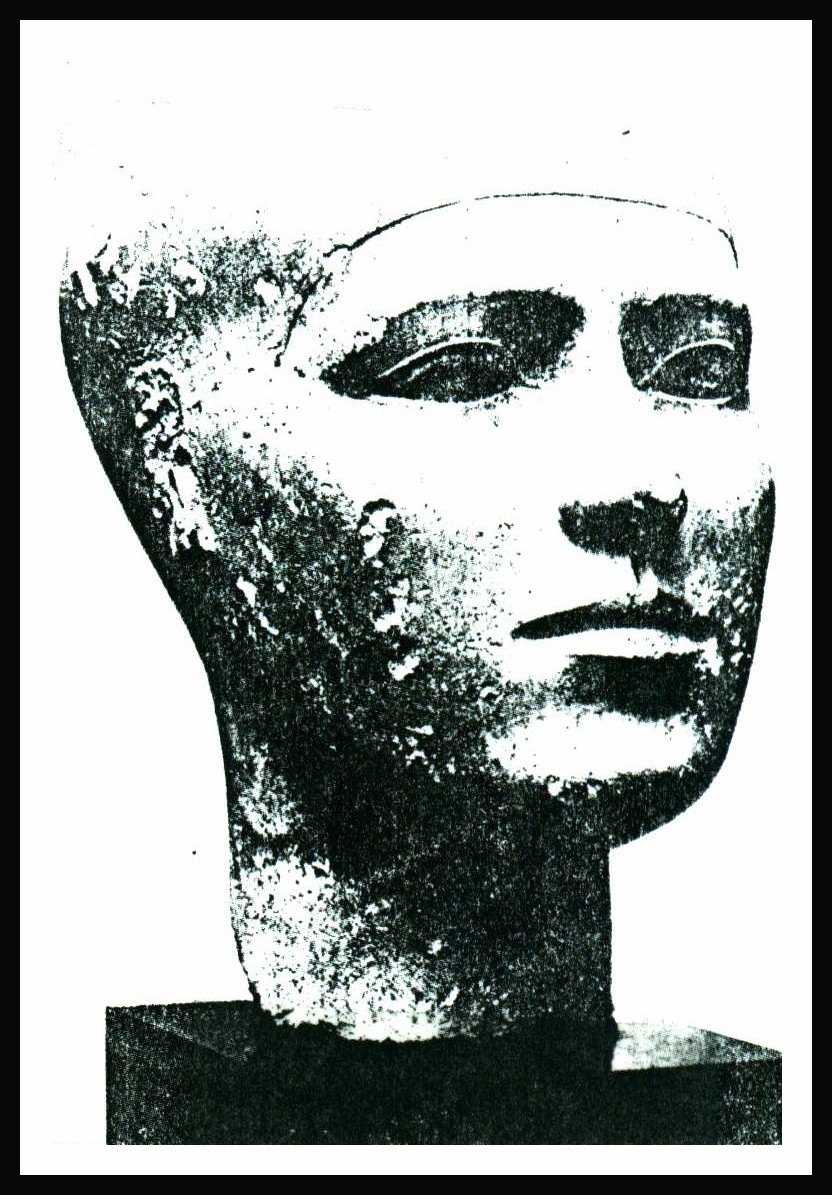
Princess from her tomb by the Great Pyramid.
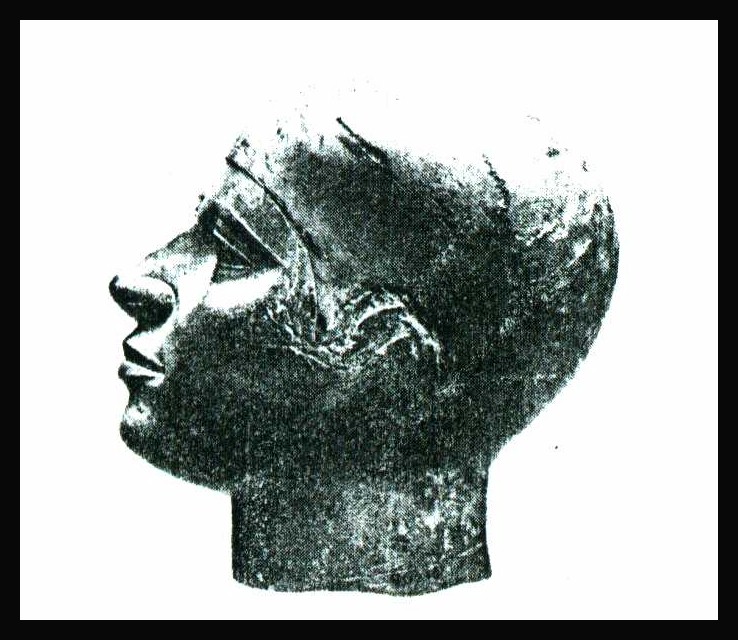
Limestone head of princess
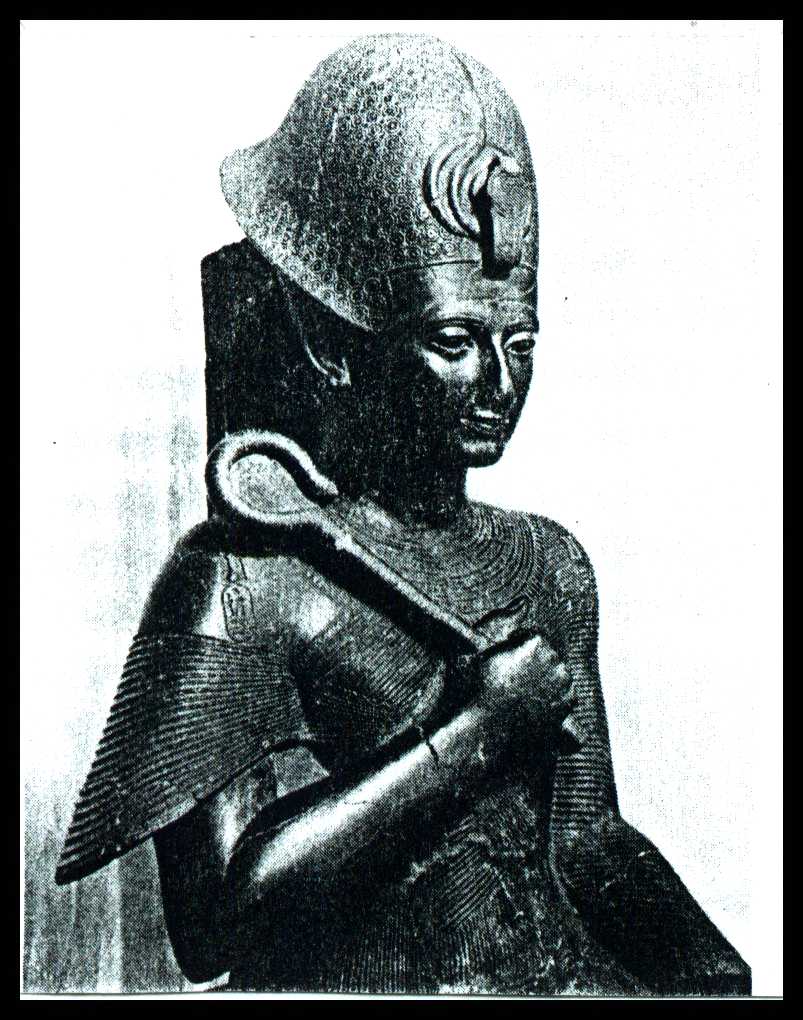
Rameses II, the opressor of the Israelites. His mummy had red hair and beard.

The Punite, a cousin of the Egyptian, the Phoenicain and the Israelites.
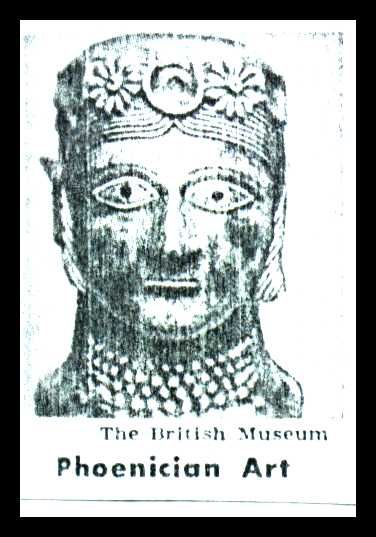
The Phoenicians were Semites (son of Shem, son of Noah). Generally they were known to have red hair and blue eyes.

Isis kneeling on 'The Sign of Gold'. Note blue eyes. In Egyptian mythology, Isis is the mother goddess. Later the Greeks and Romans worshipped her as a nature goddess. The time frame is dynasty 28, 1440-1410 BC. The Israelites, with Moses, left Egypt in 1446 BC and traveled in the wilderness until 1406 BC. Moses, the Israelite, was accepted into the Pharaoh's family.
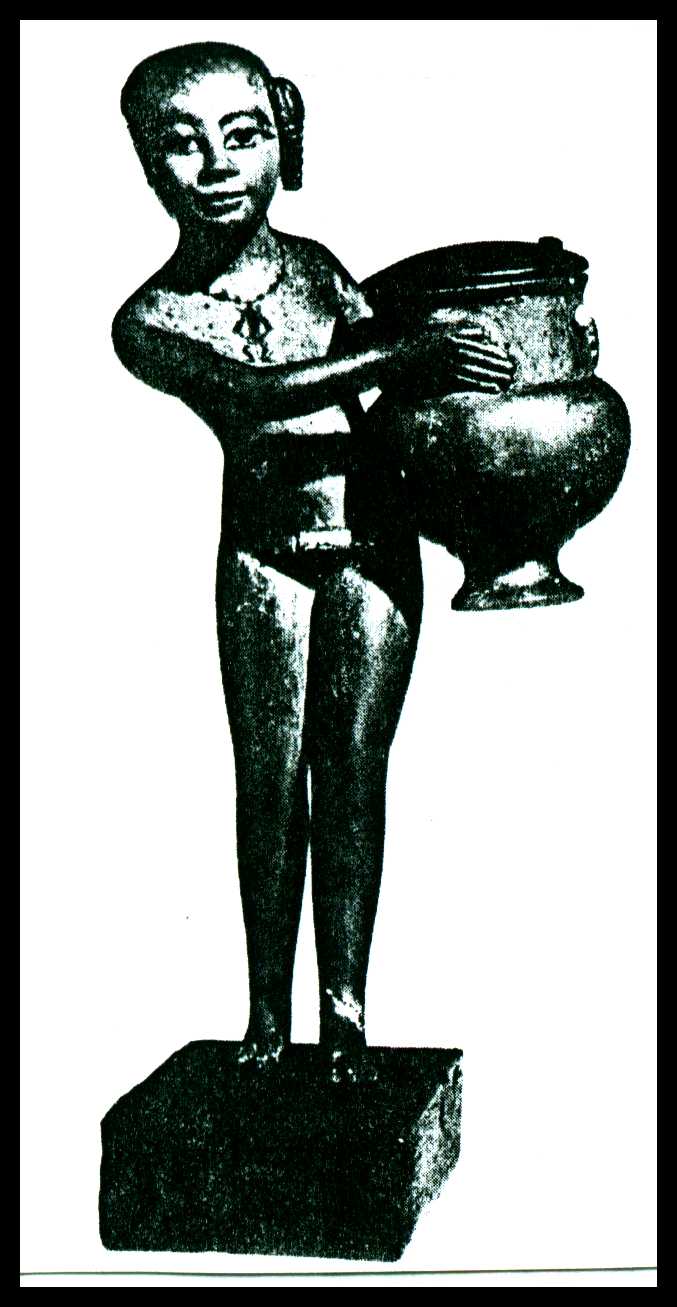
Adamic man abuses his God given power. He imports these slaves into egypt. These are Nubian prisoners. Their descendants will become a part of modern Egypt's unrecognizable amalgamation of people. The sculptures were 1330-1305 BC, Dynasty XXIII.
From historical records, the first wave of Adamic man came into Greece about 3000 to 2700 BC. Like Sumeria and Egypt, prior to Adamic man, pre-Adamic man occupied the territory.
As the Sumerians (Adamic man) were the first to establish an organized order, the Greeks (Adamic man) are also an important focal point in the history of mankind. Adamic man in Greece formed the basis of western civilization. They were intelligent, adventuresome, vigorous, and strongly practical. Because of these qualities, they produced high art, literature, architecture, drama and philosophic concepts that have yet to be surpassed. However of utmost importance, the Greeks were a freedom-loving people. They established the concept of republican government, established freedom of speech and religion, and established a system of law defining the rights of man. They made major discoveries in astronomy, physics, mathematics, and medicine. The first experimental scientists were Greeks, and children of all ages enjoy the written works of Greek "mythology." The Greeks were also the founders of the Roman Empire where, for a time, the development of all mankind continued along a positive path.
Like the Sumerians, the Greeks formed city-states. Each city had its surrounding territory, and that landmass was independent. It was a highly decentralized form of government. The Greeks were united culturally, but not politically. This independence of mind caused much conflict between the states. Yet the system existed for well over 2000 years. Ancient Greece probably produced more geniuses per capita than any other time in history. The Greeks were also great seafarers due to innumerable harbors, bays, and gulfs. Along with their cousins the Phoenicians, they were masters of the sea.
Per Waddell, Minos, the legendary first king of Crete, was also the first Pharaoh of Egypt, Menes (note 1). Minos/Menes could trace his ancestry back to Sargon, then back to the Sumerian civilization "King-List." According to Waddell, Minos' kingdom was about 2700 BC. Other sources state 2500 BC. These early founders of Greek civilization were Adamic man, but the greatest influx of Nordic invaders began about 1300 to 1400 BC (note 2). As will be documented throughout this primer, we will see that these Nordic invaders were also Adamic man.
As in Egypt and Mesopotamia, the early inhabitants of Greece/Crete were pre-Adamic men. They were a shorter people with dark features (hair, eyes and skin) and were called Pelasgians. Most historians speak of the Indo-European invasion "from the north" as a mass movement of people who came in several waves. Each time the large Nordic type, with light hair/skin and blue or green eyes came upon the scene. They came as conquerors and subjugated the population where they settled whether it was pre-Adamic man, Adamic man, or a mix of these elements. These special people were called the Achaeans, Phrygians, Dorians, Spartans, Lacedaemonians, Aeolian, Ionian, Athenians, etc. (note 2).
Roberts (note 3) states that many of these "invaders" came from Egypt. Hecatoeus of Abdera (6th century BC), quoted by Diodorus Siculus (50 BC) i. 27, 46, 55, said: "The most distinguished of the expelled foreigners (editor: from Egypt) followed Danaus and Cadmus (note 8) into Greece; but the greater number were led by Moses into Judea" (note 8). And further from Herodotus, "These Phoenicians were the earliest of the Greeks..." (note 10). In Aeschylus Supplicants (6th century BC), "Danaus and his daughters are represented as a 'seed divine', exiles from Egypt, fleeing from their brother Egyptus; since they feared an unholy alliance, they appear to have passed through Syria and perhaps Sidon into Greece...." .
And from Capt (note 4) "Diodorus gives us another version of the same story: "Now the Egyptians say that also after these events a great number of colonies were spread from Egypt all over the inhabited world... They say also that those who set forth with Danaus, likewise from Egypt, settled what is practically the oldest city in Greece, Argos...". Capt indicates these migrations of Dan to be about 1550 BC (note 5). He also states "there is ample reason to believe that the Trojans, Spartans, Dorians, Lacedaemonians, Achaeans, Minoans, Danaans, and the Palestinian tribe of Dan are all branches of the same central stem, branches united from the beginning by a common ancestor, Shem" (note 6).
From Josephus (note 7) "Areus, King of the Lacedaemonians (a Greek people), to Onias, the High Priest (of Judea), sendeth greetings. It is found in writing that the Lacedaemonians and Judeans are brethren, and that they are of the stock of Abraham. Now, therefore since this has come to our knowledge, ye shall do well to write unto us of your prosperity."
The Judean priest, Onias, did correspond back to Areus, the Lacedaemonian. It is clearly documented in secular history that the Lacedaemonians were a tall, blue-eyed, fair hair/skin people.
And from an old American high school textbook, "These nomads from the north were not the swarthy people of today's Greece, but a tall, muscular, blue-eyed race" (note 9).
What happened to the Greek (Adamic) civilization?
It happened several times in the history of ancient Greece. The conquering race would gradually intermarry with their subjects (note 11), pre-Adamic man, and decline would occur. Then a new conquering people full of energy and vitality would appear and subjugate the racially mixed people. Each time, these invaders came from pure blood Adamic man. They came from the frontier, the wilderness of the north. Their northern home was harsh. The weak died early. Only the strong of mind and body reproduced themselves. They were wild and barbaric, but they possessed the special Adamic seed.
This continual infusion of Adamic blood kept Greece the center of the civilized world for over 2000 years. But in time, all Greece became a mixture of pre-Adamic man and Adamic man. And, as in all recorded history, when this occurs, the nation will fall from its greatness.
Look at the Adamic-Greek pictures and compare to the Egyptian. Within books and museums, we have much to review. The ruling Greek had the same facial features as the ruling Egyptian. They are the same race. But notice that the Greek's skull appears larger. He also appears more muscular. Could this be because the Nordic's environment was different? Was it because the Nordic diet was higher in protein (he was a hunter) and the Egyptian diet was more carbohydrate (he was a farmer of grains)? Did the Nordic grow larger and stronger because of his harsh environment?
********* Footnotes, Chapter 4
1. The Makers of Civilization, p 470, by Waddell.
2. The Passing of the Great Race, by Grant, 1916, p 158-62.
3. British History Traced From Egypt & Palestine, by Roberts, 1927, p 122.
4. Missing Links Discovered in Assyrian Tablets, by Capt, p 62, 1985.
5. Ibid. p 64.
6. Ibid. p 66.
7. Josephus, Antiquities, XII, IV, 10 and XIII, V, 8.
8. Your Inheritance, The Best Kept Secret in the World, states this was quoted from Herodotus, the "Father of History." It also states that Cadmus was the great-grandson of Chacol (I King 4:31; I Chron 3:6) who was the great grandson of Judah, p 39. This book is printed by Sacred Truth Ministries, PO Box 18, Mountain City, TN 37683.
9. The Ladder of History, a high school history book, by Macmillan & Co, 1945, as stated in "Your Inheritance" (see #8 above).
10. Herodotus, History, Book I, para. 163.
11. Holy Bible, Genesis 6:2 - "The sons of God saw that the daughters of men were pretty and took them for their wives."
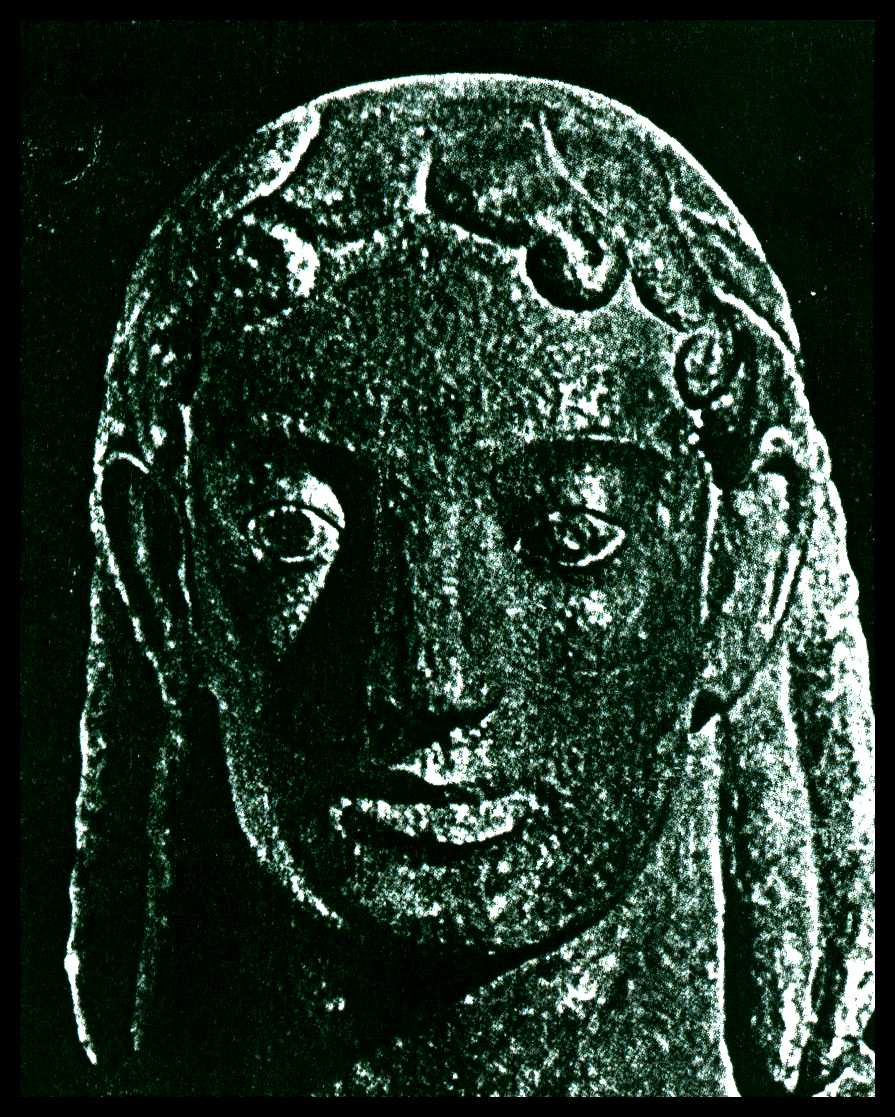
Apollo, god of intellect, 2400 BC.
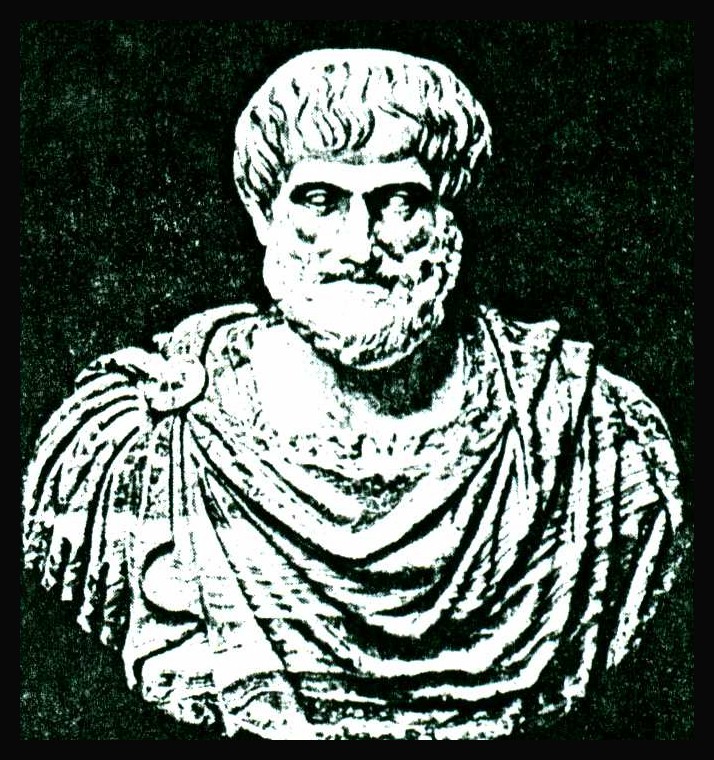
Aristotle, 384-322 BC
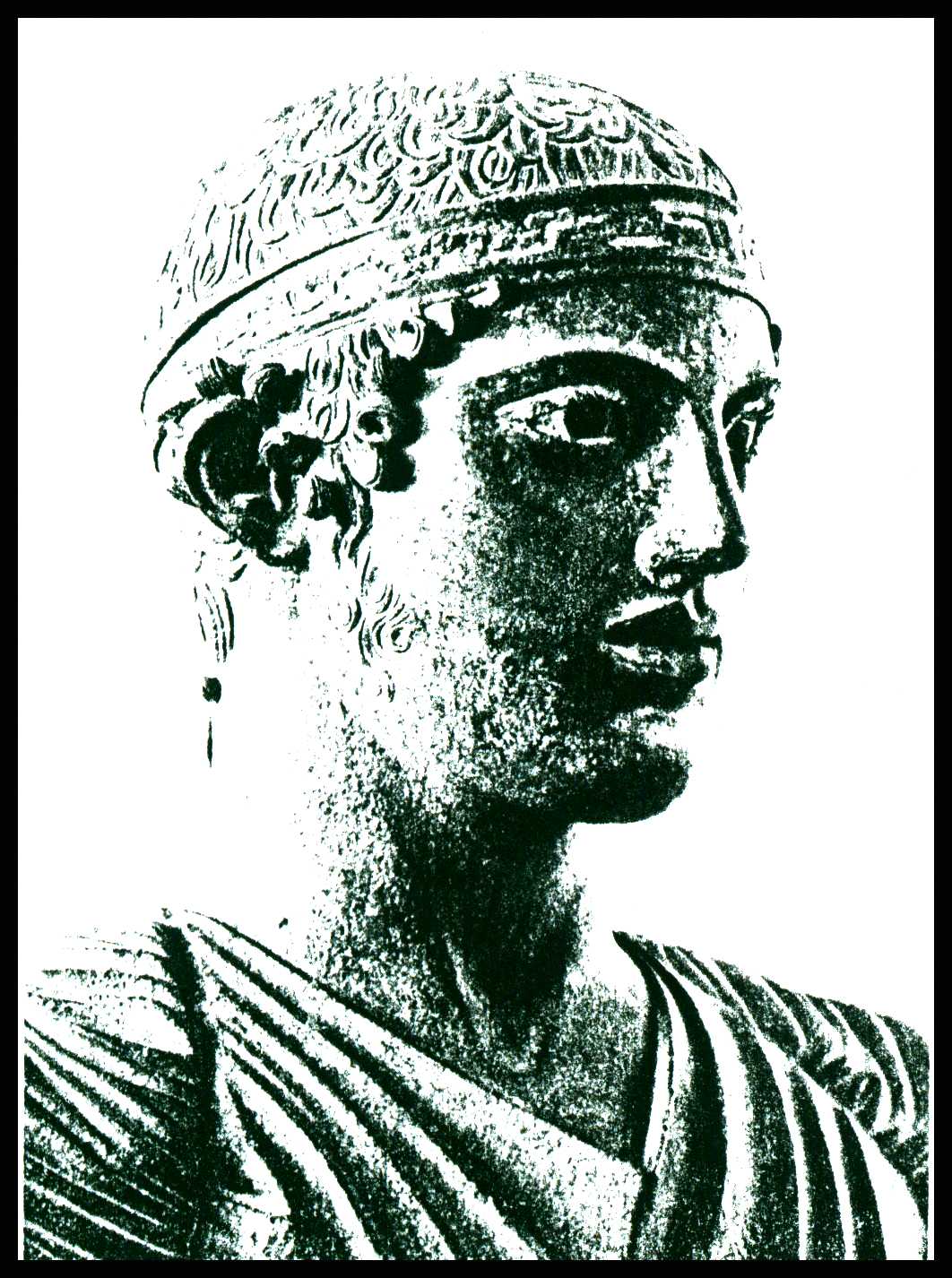
A Charioteer.
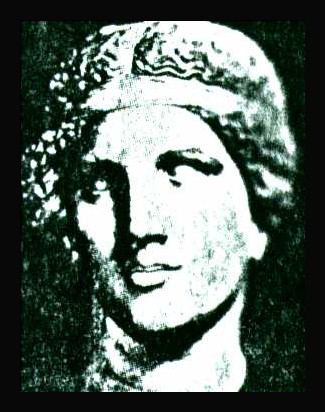
Adriadne, daughter of King Minos of
Greece (and Pharaoh Menes of Egypt).
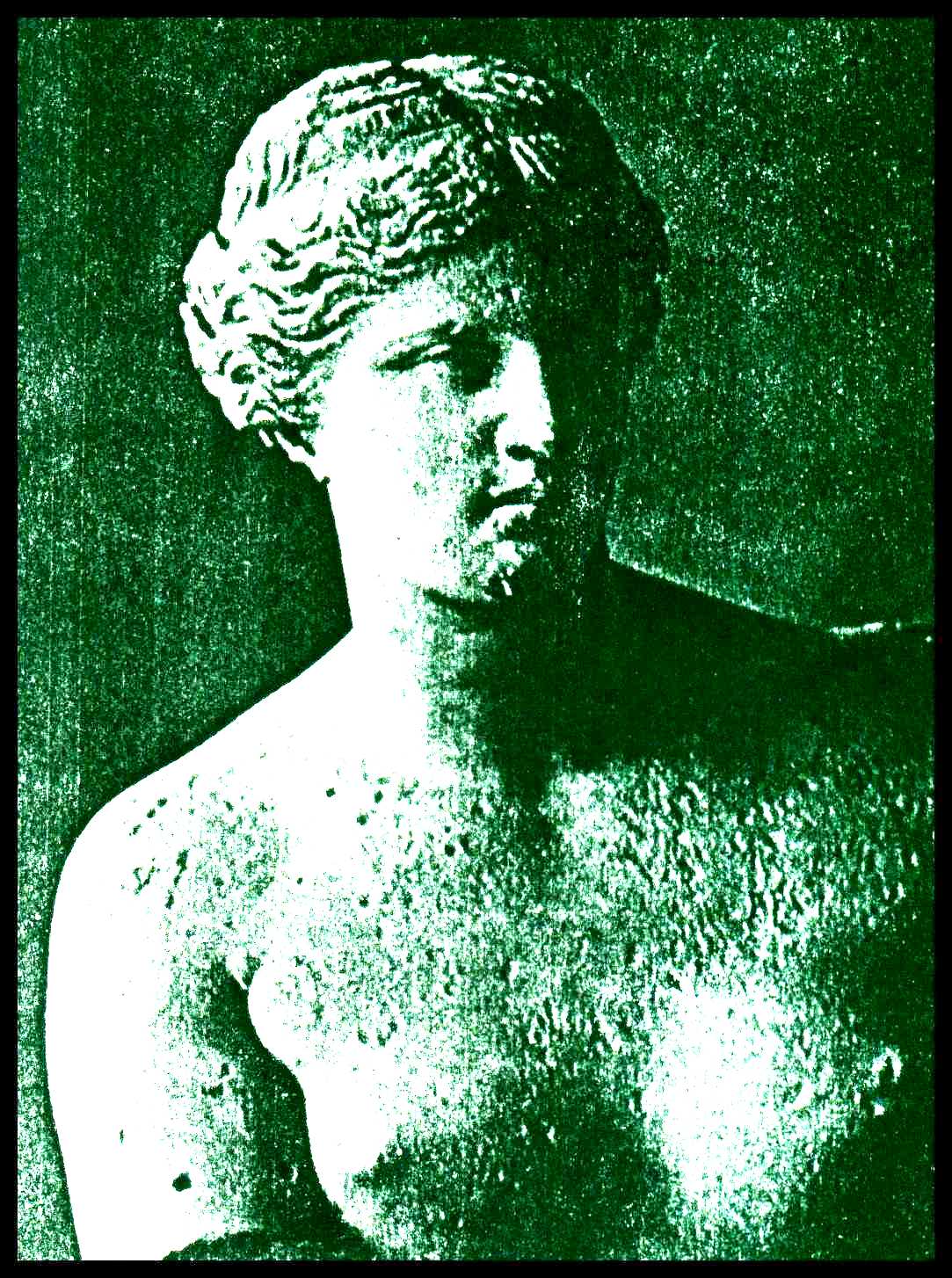
Aphrodite, goddess of love and beauty, mother of Aeneas,
whose descendants founded Rome.
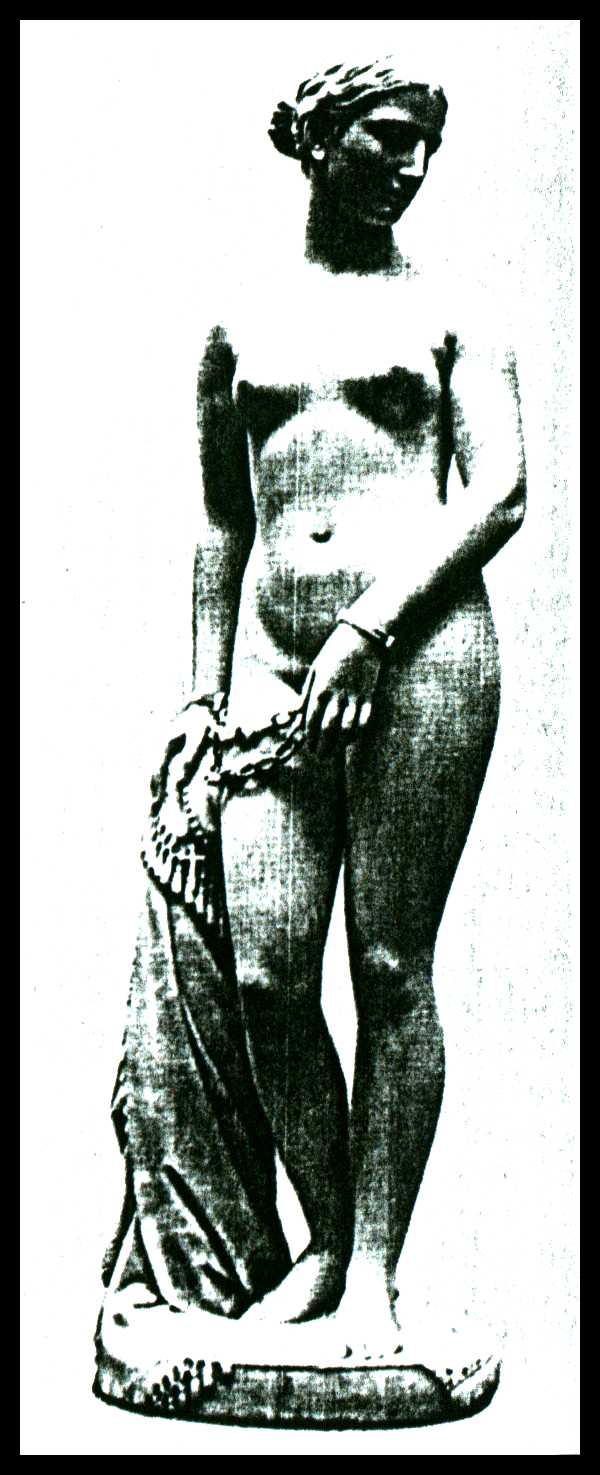
The Greek Slave, 1843
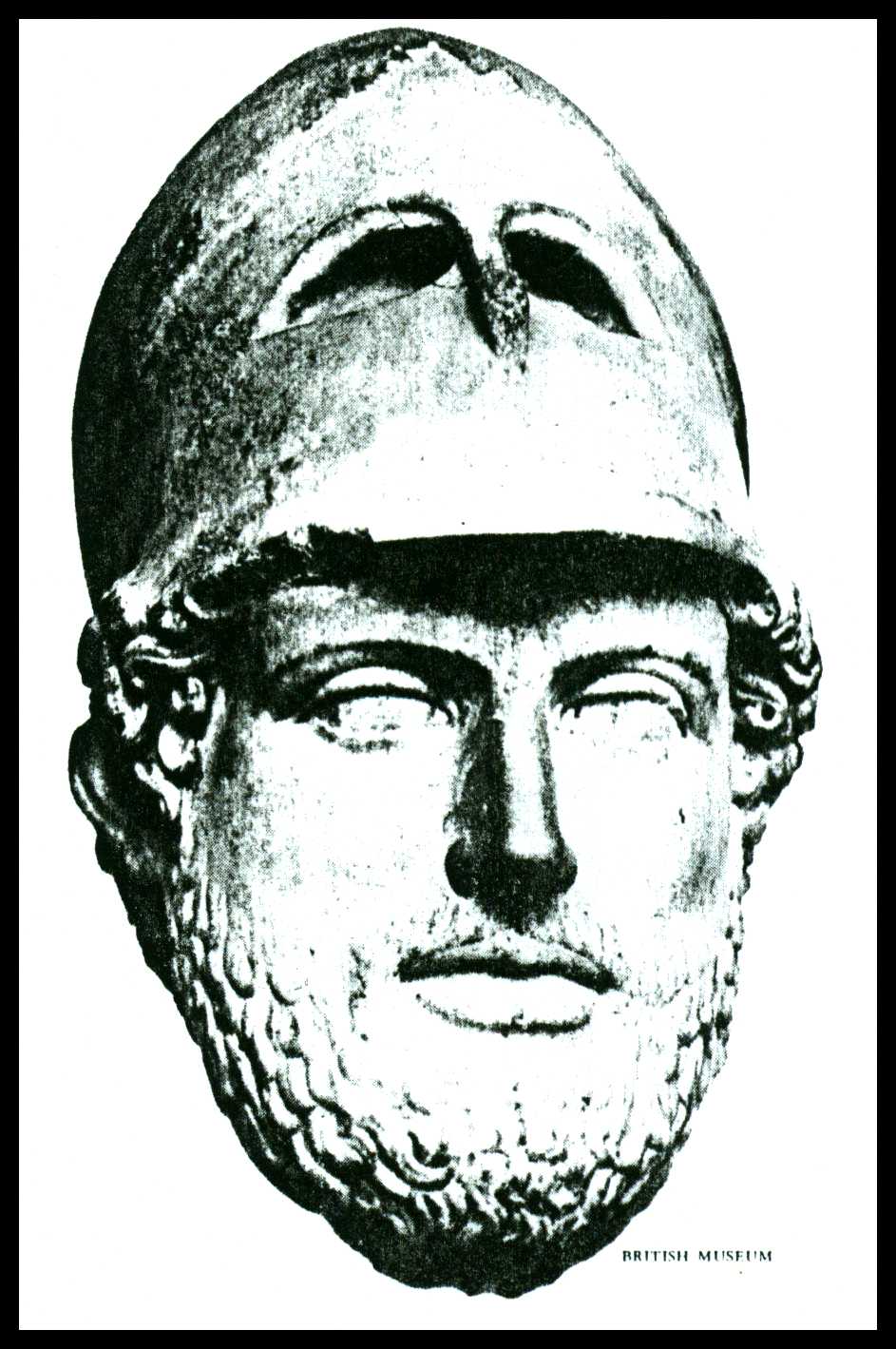
Pericles governed Athens about 450 BC, when the city stood at its height of wealth and power.
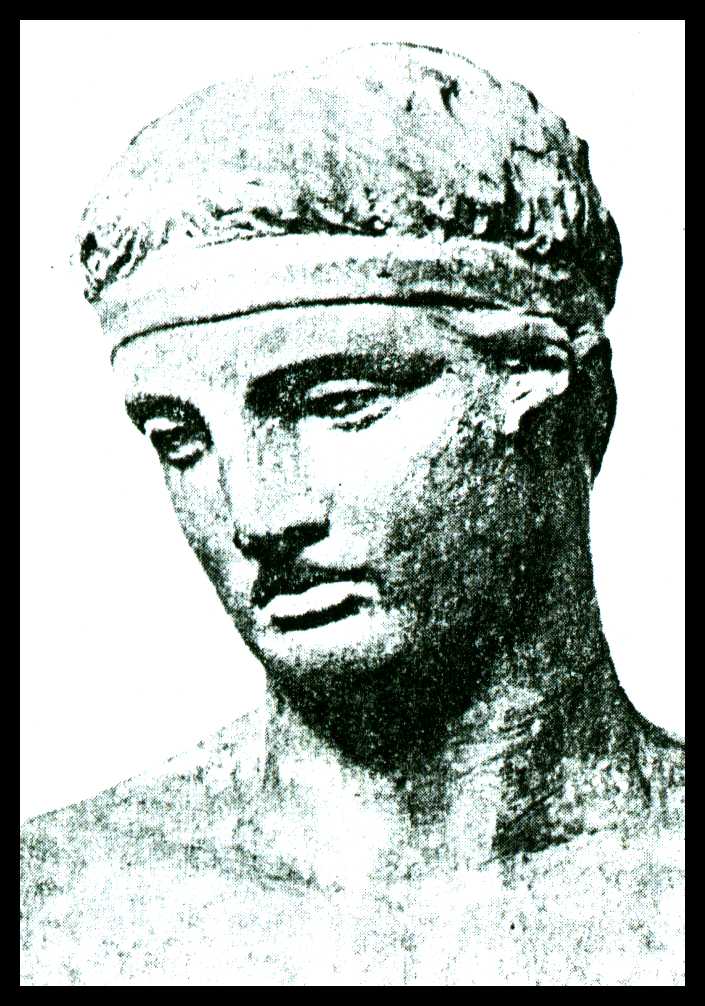
Diadumenus, 400 BC.
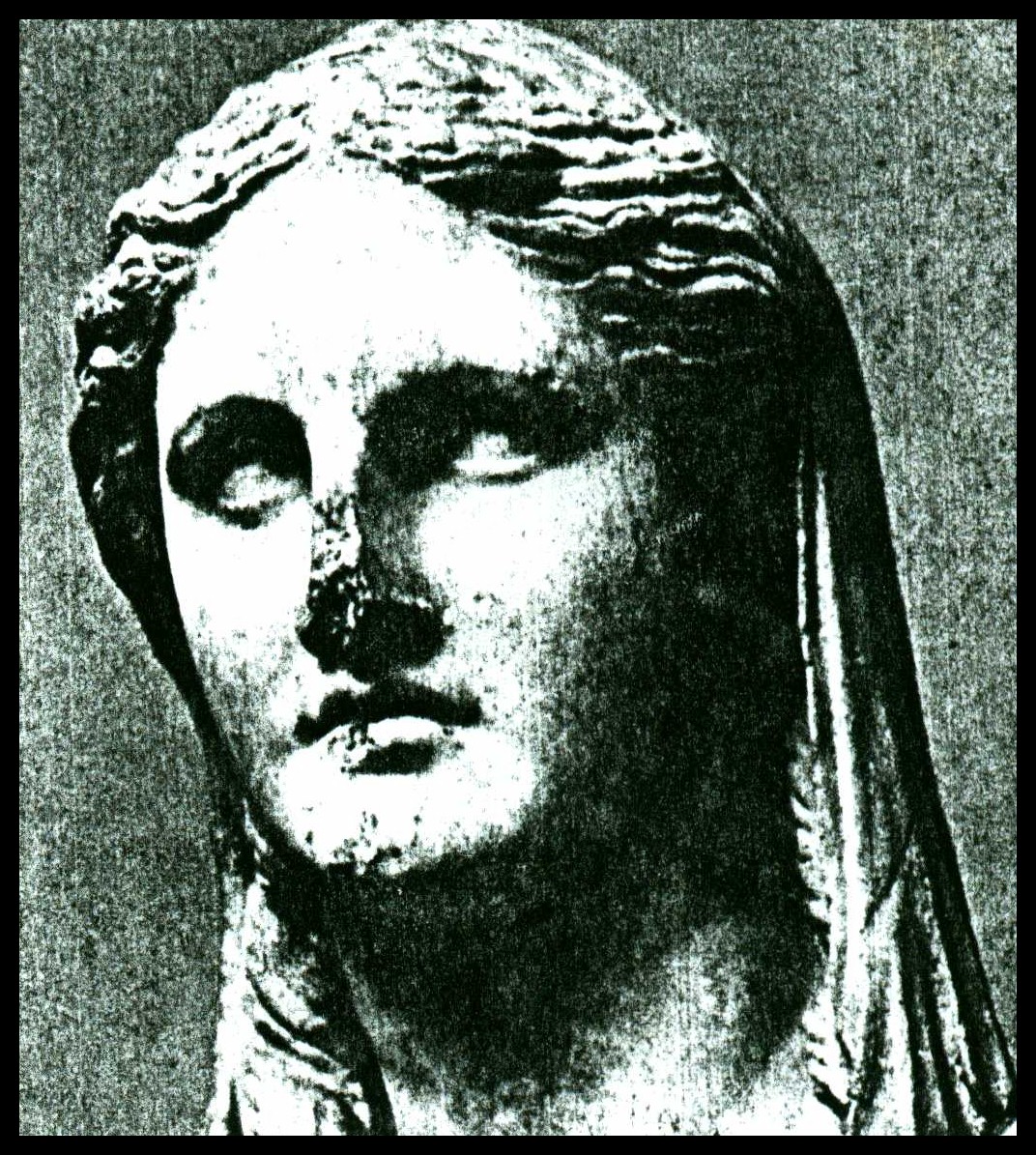
Demeter, giver of earth's fertility, 300 BC
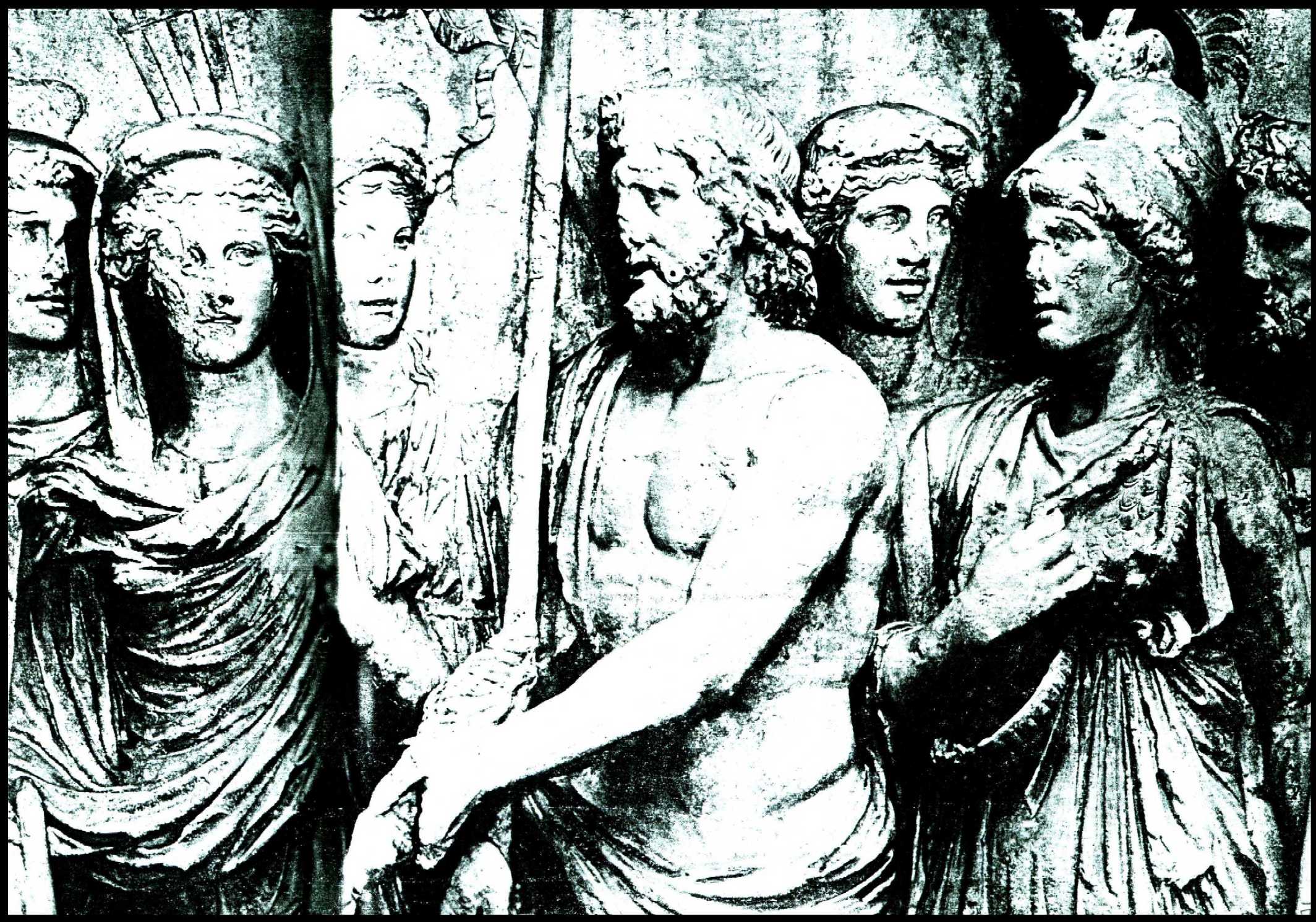
Hercules, Minerva, Jupiter, Ceres, Juno, Mercury.
CHAPTER 5
INDIA
Today, in population, India is the second largest in the world. For centuries its people have lived in extremes of poverty. Starvation is common. India is the United Nations' prototype of modern multi-cultural, multi-racial, pluralistic societies. The Hindu and Buddha religions are being promoted intensely in America. During the past few decades, the ideology of Hindu and Buddha have successfully been integrated into Christian churches.
Centuries before Christ, India was invaded by a group of long-headed, fair skinned, fair-haired, tall, and blue/green-eyed people. Prior to this, India was inhabited by pre-Adamic man, a short, dark-skinned, black-haired and black-eyed people. They referred to themselves as Dravidians. The alien invaders called themselves arya or "noble ones" and are sometimes called Aryans.
Grant (note 1) refers to these people as Sacae (note 2) and Massagetae, and he believes that the first entry into India was between 1600 BC and 1700 BC. Capt (note 3) refers to them also as Saka, and from ancient historians (Strabo and Herodotus), allies them with the Scythian nationality. Capt's estimate of their entry into India is after the Assyrian conquest of Israel and subsequent relocation about 745 BC. Capt believes these Saka to be dispersed Israel.
In either case, both groups were Adamic people. See the Israel and Europe chapters for further detail concerning Israel's conquering and relocation..
In Waddell's research (note 4), he ties the Sumerian King-List into the Indian King-List. Both have the same beginning. Thus, the Saka could tie their ancestry back to the first recorded civilization, Sumeria. https://therabbithole.wiki/textsthe-makers-of-civilization-in-race-history-by-laurence-austine-waddell-1929/
In Waddell's research (note 4), he ties the Sumerian King-List into the Indian King-List. Both have the same beginning. Thus, the Saka could tie their ancestry back to the first recorded civilization, Sumeria.
The Saka (Scythians) introduced the Sanskrit language into India. It is the oldest of the Indo-European languages. Sanskrit is important in the study of the Indo-European language family, which includes Greek, Latin, and most of the modern languages of Russia and Western Europe.
The Saka introduced a class (caste) system into India that survives (symbolically) to this day. They sought to protect themselves from the dysgenics of intermarriage with the Dravidians, thus passing laws that prohibited marriage across caste lines. These laws were similar to the laws enacted in the southern United States after the Civil War. They were designed to remove the possibility of inter-marriage between the whites and blacks. But, as in America, gradually over time the laws were ignored.
The people of India today are a mixture of Dravidians and Saka. The lighter skin Indians have a higher mixture of Saka. They are known as Brahmas and make up the ruling class. Most of the Indians living in America today are from the Brahman class, the best of India's best.
The Bible does speak of the Scythians in Colossians 3:11, "... there is no distinction between Greek and Jew (meaning Judean), circumcised and uncircumcised, barbarian, Scythian, slave and freeman, but Christ is all." The sister passage to this is Galatians 3:28, which states basically the same thing. To harmonize these passages with the rest of the Bible, Paul's meaning is that, if you are an Israelite, Jesus' sheep (read Matthew 10:6, 15:24), God's chosen, the seed of Abraham through Jacob, it does not matter where you live, the promise made by God to Abraham still applies. When Paul spoke these words, it was almost 800 years after the dispersion of Israel between 745BC to 721BC. At this point in time, the homeland of the Scythians\Saka was southern Russia, north of the Black Sea, reaching to southeast of the Urals, a very large geographic area.
*********** Footnotes, Chapter 5
1. The Passing of the Great Race, p 259, Grant, 1916.
2. Compare this to the Sumerian word, Sakh/Sagaga, to the Israel word Isaac or to the European word Sax-son (son of sak).
3. Missing Links Discovered in Assyrian Tablets, p 132, Capt, 1985.
4. The Makers of Civilization, p 107, Waddell.
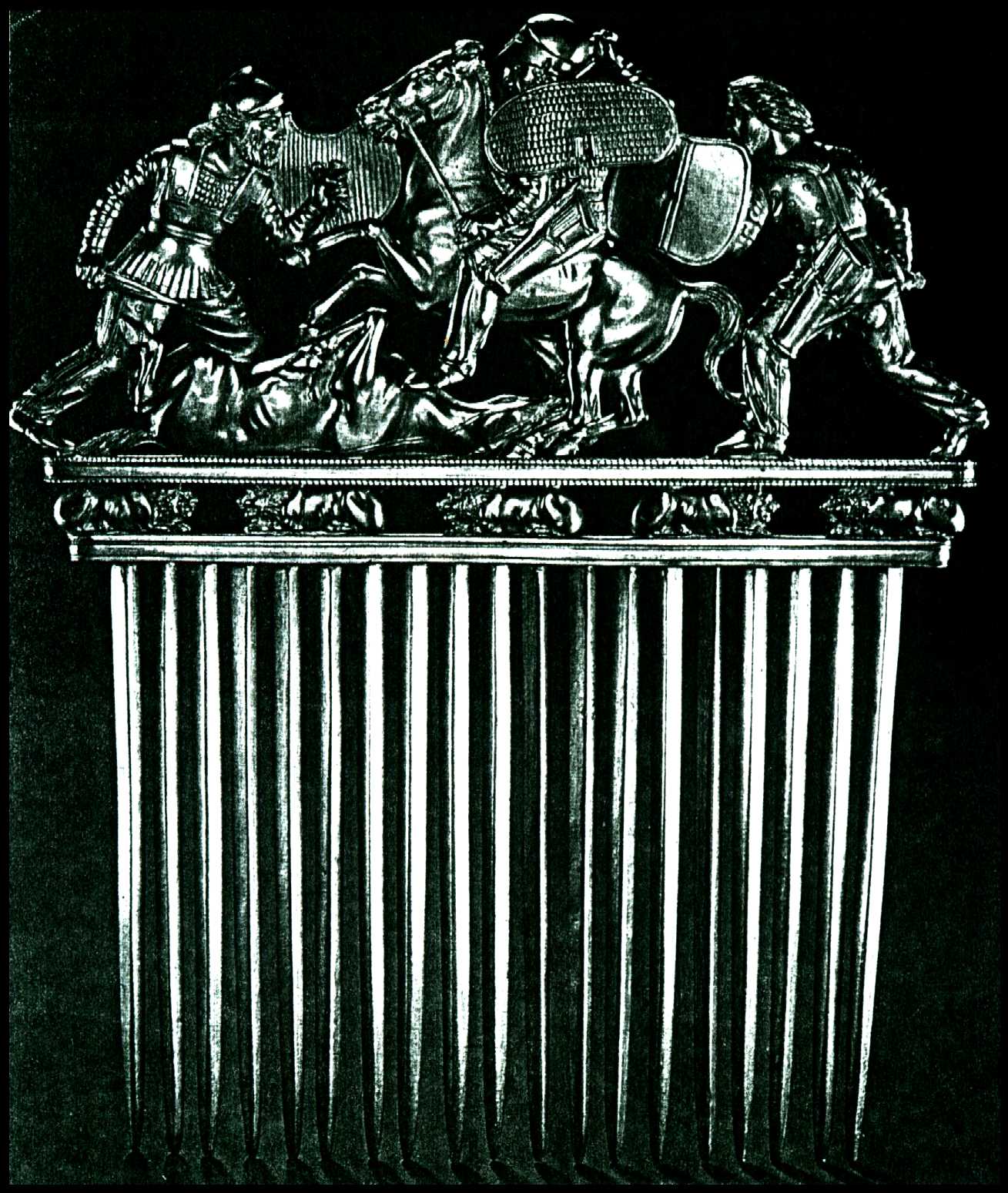
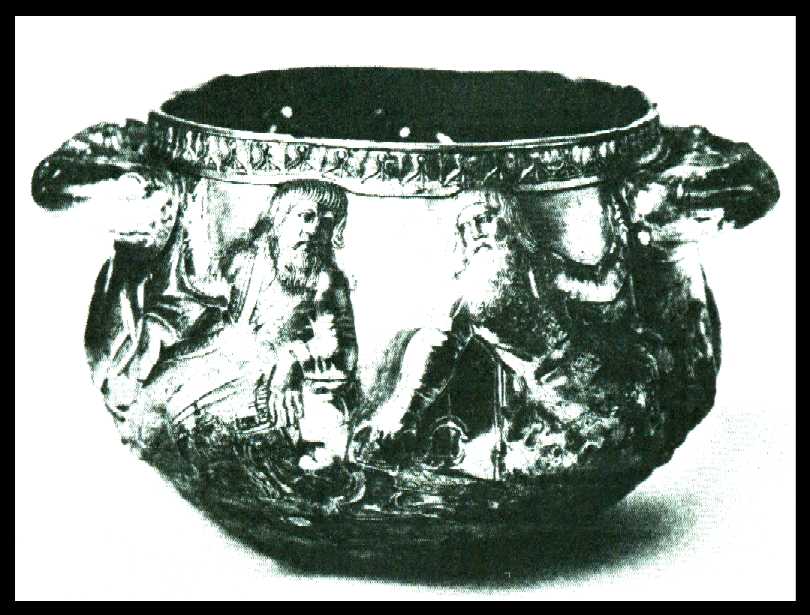
A solid gold comb. See the beautiful detailing. Life was
challenging for the Saka (Scythian) male.
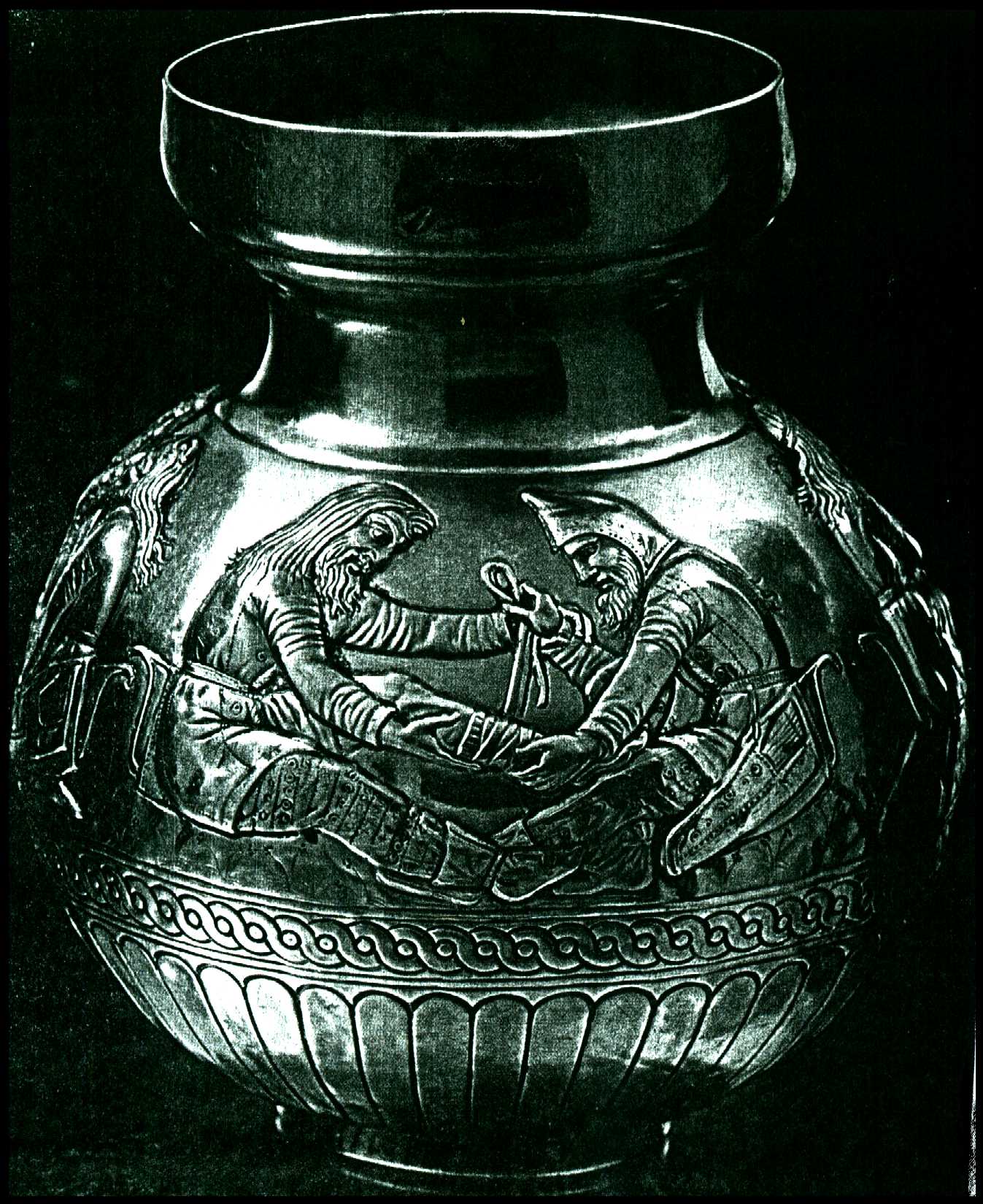
A Saka treats the wound of a comrade
as demonstrated in this gold vase.
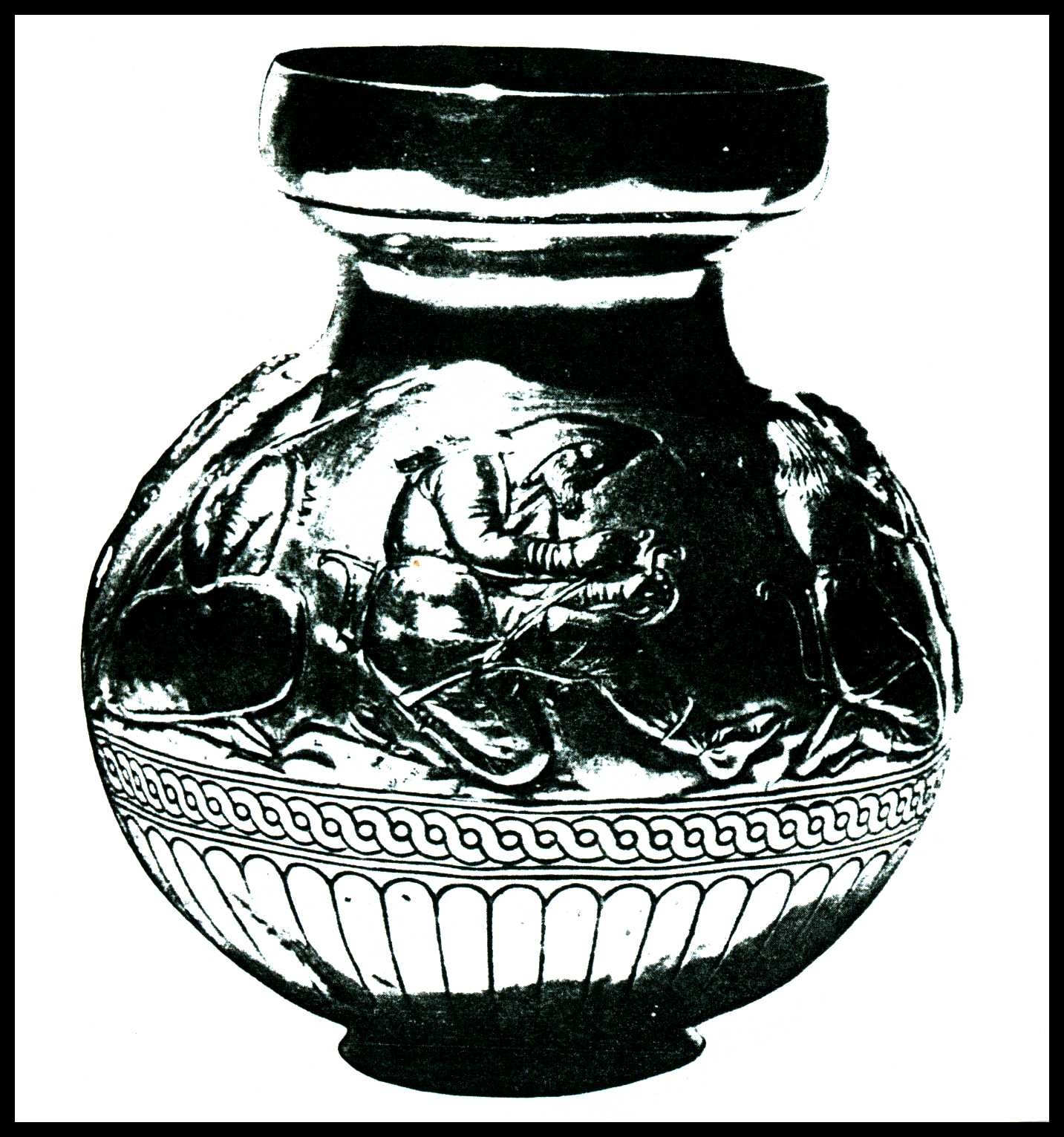
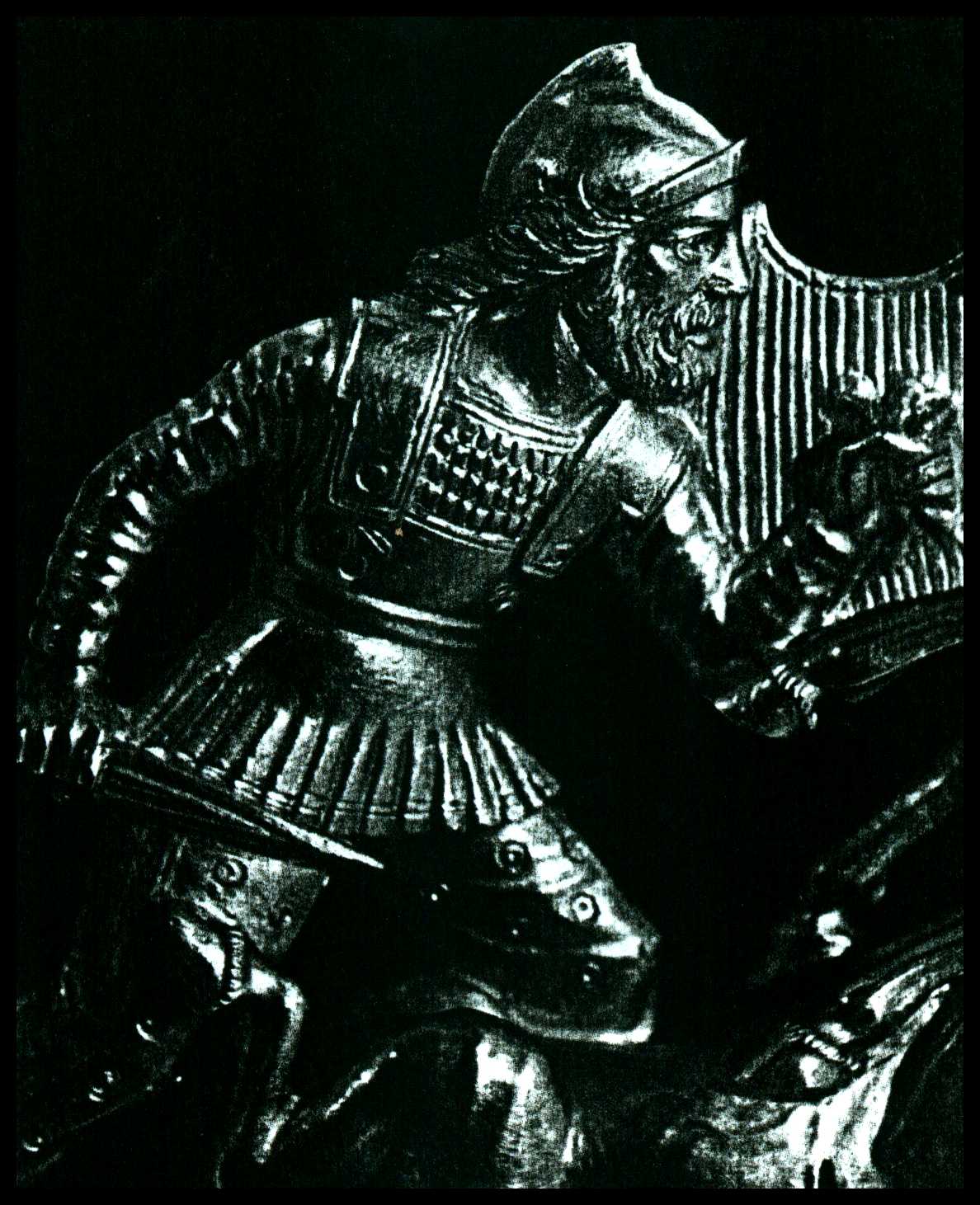
The Sakh (Scythians) were excellent hunters and horsemen.
Here a Scythian warrior is pictured restringing his bow.
The Scythians were excellent metal workers as demonstrated
by this work. Works of gold were plentiful, as found in their
graves.
Another Sakh profile.
CHAPTER 6
CHINA
The first recorded Chinese civilization is approximately 2000 BC. This was 1500 years after Sumeria, 1000 years after Egypt, and 500 years after the beginning of Greek civilization. Because Adamic man was created in western Asia, we must assume that Adamic man entered the Oriental countries.
From Grant, we learn that the Chinese called the invading Adamic man "green eyed devils" (they were ferocious fighters) and also the Wusuns (the tall ones) (note 1). In central China there have also been graves uncovered of ancient kings who possessed blond hair and a European skull (note 2). According to Chinese annals, Tai-Ko-Fokee, the great stranger king, ruled the kingdom of China. In pictures he is represented with two small horns (the Saxon - Sumerian horned headdress).
From Gobineau, "China represents the precise counterpart of Egypt. The light civilization was carried thither by Aryan colonies. The substratum of the social structure was composed of elements of the yellow race, but the white civilizers received reinforcements of their blood at various times." (note 3).
Mostly, throughout history, China (the Orient) has remained a mystery to the West. Over time, they took what they needed from Adamic man and little more. But today, they do have an eye on one aspect of Western man, their land. From writings by their leaders, both Japan and China want the North American landmass for their excess population. China's communist leaders think it can easily hold a billion people (peasants).
Today, most of the Chinese people live as their fathers did, sustenance farming with oxen. Through communism, there is order, yet there is also slavery through this social/economic/religious system. Long ago, there was something Aryan about China - white mummies with blond and red hair - https://youtu.be/sCYdLZn_dZw?si=0a2vumX5ubg3RhFH 200 pyramids covered, intentionally, in China - https://youtu.be/WQREYTGlfgM?si=0ZNUnvIGNNhWqUT- Possible reason pyramids were built, their purpose, towards end of video - https://youtu.be/K3uiMsqptOs?si=8i3PoAsVn8TuL8Y- (to generate electricity).
*********** Footnotes Chapter 6
1. The Passing of the Great Race, by Grant, 1916.
2. We could not relocate the source (too many books read).
3. The Moral and Intellectual Diversity of Races, by Gobineau, p 459, 1856.
4. May 2001 note: A red-haired, caucasian mummy was just discovered by Victor Mair in the Tarim Basin of the Xinjiang province in China. He is believed to be over 3000 years old and has been labeled Cherchen Man.
CHAPTER 7
SUB-SAHARA AFRICA
Outside the coastal areas into the interior of Africa, there was no civilization prior to the mid 1800's. The contrast between the real African of 150 years ago and modern "African history" is extremely stark. John Baker, the Oxford professor, has summarized some of the records of the early African explorers in his book "Race." The book is interesting reading and thoroughly proves the lie to modern equality propaganda. What early European explorers found in Africa, where not whites had ever been, where Africans had never seen whites before, starting 1820ish - https://www.bitchute.com/video/ieXRKBRNxELU/
There have been many interesting studies done on the Africans in America, their intelligence, crime rate, and even percentage of Caucasian genes. It is possible to test this percentage because the white (and black) race have isolated characteristics in their blood that the other races do not (note 1). Dr Shockley (note 2) did studies in this area, and his work (in the 1960's) indicates that in the northern USA, the percentage of white genealogy in the black population is 50%, in the South it is 5%. Overall, across all America, the percentage is about 21%. Therefore to "analyze" the black population in America is difficult because there is such a wide divergence in the genetic make-up of the colored population.
Haiti does offer one example of the African people left to themselves in the New World. Today, it is the only all African nation in the Western Hemisphere. For the past two hundred years, starvation and dire poverty have been the normal way of life. At one time, the agricultural land of Haiti was some of the most productive in the world. What happened? In the late 1700's, the black population (mostly slave, some freemen) revolted against white rule. The colored population hunted down the white population as if they were wild beasts. Without exception, all white men, women, and children in Haiti were murdered. The battle flag that the Haitians used was a white baby impaled on a long stick (note 3).
On the African genetics - Abraham Lincoln - https://youtu.be/AXJ6PIhO8qo?si=Rb43r0z09NhU9LG5 Thomas Jefferson - https://youtu.be/D4RDG4ao4As?si=in9jvWfJ1_0XnKXq Teddy Roosevelt - https://youtu.be/k2gL4NAfP7c?si=J1HeUYTUQMc1hKGB
********* Footnotes, Chapter 7
1. Caucasian Genes in American Blacks: New Data, American Journal Human Genetics, 1992, 145-155.
2. Dr Shockley invented the transistor. It was the parent of all our modern electronic devices. He, along with Arthur Jensen, was a pioneer in the study of human genetics.
3. The French Revolution in San Domingo, by Dr T. Lothrop Stoddard, p131.
CHAPTER 8
ROME
As with all prior civilizations, the study of Rome bears resemblance to the history of the United States. A significant difference does appear, however. Perhaps because of the media, especially the success of propaganda TV, the United States is on fast-forward, the fast track of rise then decline. There are lessons to be learned from the study of the Roman governments.
Tradition states that Aeneas, from the royal family of Greece, was the father of the nation that became headquartered in Rome. Rome began as a kingdom from 753 to 510 BC, continued as a republic 509 to 028 BC, and then as an empire 027 BC to 476 AD. From a genetic standpoint, the leadership of Rome was a continuation of ancient Greece well into the time after Jesus Christ. This is apparent from the written works, and also from an analysis of the physical characteristics of their sculptures. The rulers were clearly men and women of Adamic-man features. And in conjunction, the Apostle Paul must not have been unlike them in appearance. It states in Acts 22:25-28, he was born a Roman citizen and citizenship was not easy to obtain.
Great works of engineering and architecture occurred when Rome was recognized as the world power. Roads 2000 years old still exist today. There are remains of great aqueducts that had carried water from the surrounding hills. The Romans made advances in geometry, astronomy, and philosophy. Education became widespread. Greek and Latin literature, geometry, history, astronomy, music, patriotism, and obedience were taught. The parents paid the tuition. The language was Latin, of the Indo-European family. Constant contact with Greece stimulated sculpture, painting, drama, and literature.
As in modern America, huge arenas were built so the people could be entertained. The Circus Maximus seated 180,000, and the Baths of Caracalla covered 260,000 square feet. Entertainment for the masses was often brutal, especially under the Empire. Condemned criminals and slaves fought to the death. Men fought wild beasts for the entertainment of the public.
The Romans had many gods until Christianity became the official religion in 330 AD. The leaders, mostly Adamic man, of the decaying empire adopted Christianity, not because they heard our Lord's voice, but to utilize it to unify a nation that was "falling apart like a rotten piece of cloth." (note 1). It was concocted in the same manner that our leaders now utilize the religions of Judeo-Christianity, equality, multi-culturalism, pluralism, oneness, etc.
The Republic
In its imitation of Greece, Rome was important to the development of the rights of man. Government under the Republic consisted of a Senate (300 men), popular assemblies, and a variety of public officials. It was open only to the landowners, (mostly Adamic man - like the Republic of the early United States). Only adult males with citizenship (as in early America) could vote.
Laws were passed that prevented plebeians (plebs) (pre-Adamic man) from marrying patricians (Adamic man). The plebeians carried on a long resistance to the patricians. In 445 BC, intermarriage between plebeian and patrician was sanctioned by law. In 366 BC, a limit was set on the amounts of land any one person could own, laws against debt were erased, and the new law provided that one of the two consuls be elected from the plebians. In time, the plebeians demanded, and received, an assembly of their own. By 287 BC, this Assembly had become the principal legislative body. From then on, many plebeians became rich, many patricians became impoverished. Sound familiar?
From Grant: "In the last days of the Republic, Caesar was the leader of the mob...Pompey's party represented the remnants of the old native Roman aristocracy and was defeated at Pharsalia not by Caesar's plebeian clients but by his Nordic (Adamic man) legionaires from Gaul. Cassius and Brutus were the last successors of Pompey and their overthrow at Philippi was the final blow to the Republican Party; with them the native (founding) Roman families disappear almost entirely."(Note 2).
The Empire
As stated above, Julius Caesar was the leader of the mob (plebians and mixed race people). After mass killing of the ruling class (Adamic man - the old families), the work rewarded him with the title of official dictator of Rome. His family, the Caesar name, ruled for over a hundred years thereafter. After that, Caesar became a title only. (It is interesting to note that two thousand years later, Stalin copied Julius Caesar's style when he took command in Russia after the Bolshevik (communist) revolution. He starved to death, worked to death, or directly murdered over 30 million Christians (from the old ruling families). The same process is happening in America except at a slower pace than Russia. Divide and conquer is the course.... black/brown/yellow against white, women against men, poor against rich, new against old, child against parent, and so on. As Caesar found, it worked. He became god.)
The Emperors kept the Republican form of government for 200 years. The Senate was allowed to meet, as were the assemblies. Officials were regularly elected. But in effect, all power depended on the emperor, backed by the army and a few select senators and advisors. The early part of this dictatorship corresponds with modern America, the time in which we live.
Under the emperors, the army became immensely powerful. The Roman Empire became a military monarchy (police state). In time, the emperors designated themselves as official gods. Worship was mandatory. Dissenters became enemies of the State and they were killed in one fashion or another.
By 150 AD, Rome, although still the world's dictator, was in severe decline. Great landowners bought up even more land. Rich businessmen became ever richer through graft and plunder. The huge and ever growing city population sold its votes to the candidate who promised the most bread and the biggest circus. In governing the empire, ever-increased attention was focused on reversing these conditions.
Italy had grown poor in men and goods. The currency became debased, and the sources of gold and silver were being depleted. Christians were starting to challenge authority. Between 303 AD and 313 AD, they were severely persecuted for anti-government behavior. Serfdom (forbade tenants to leave the farm) was introduced to insure a continuous internal food supply and soon this edict became hereditary.
Barbarian ("uncivilized" Adamic man) attacks on the frontier grew stronger. These independent minded people did not wish to live under the thumb of Rome. Before the end of the Empire, the Adamic barbarians attacked and plundered Rome. The Western Empire of the Roman Empire came to an end.
What finally happened to Rome? Tons of books have been written to explain. In summary, from Grant (note 2), "The importation of slaves and the ultimate extension of the Roman citizenship to their manumitted descendants and to inferior races throughout the growing Empire and the losses in internal and foreign wars, ruined the state." "At the beginning the Empire was clothed in the garb of republicanism in deference to such Roman elements as still persisted in the Senate and among the Patricians but ultimately these external forms were discarded and the state became virtually a pure despotism." "The new population understood little and cared less for the institutions of the ancient Republic but they were jealous of their own rights of 'Bread and the Circus' - and there began to appear in place of the old Roman religion, the mystic rites of Eastern countries so welcome to the plebeian and uneducated soul." "The Romans (Adamic man) died out but the slaves survived and their descendants form the great majority of the southern Italians of today."
Does this chapter compare to the modern America around us today?
****** Footnotes, Chapter 8
1. The Outline of the History of the World, by H.G. Wells.
2. The Passing of the Great Race, by Grant, p 217-9, 1916.
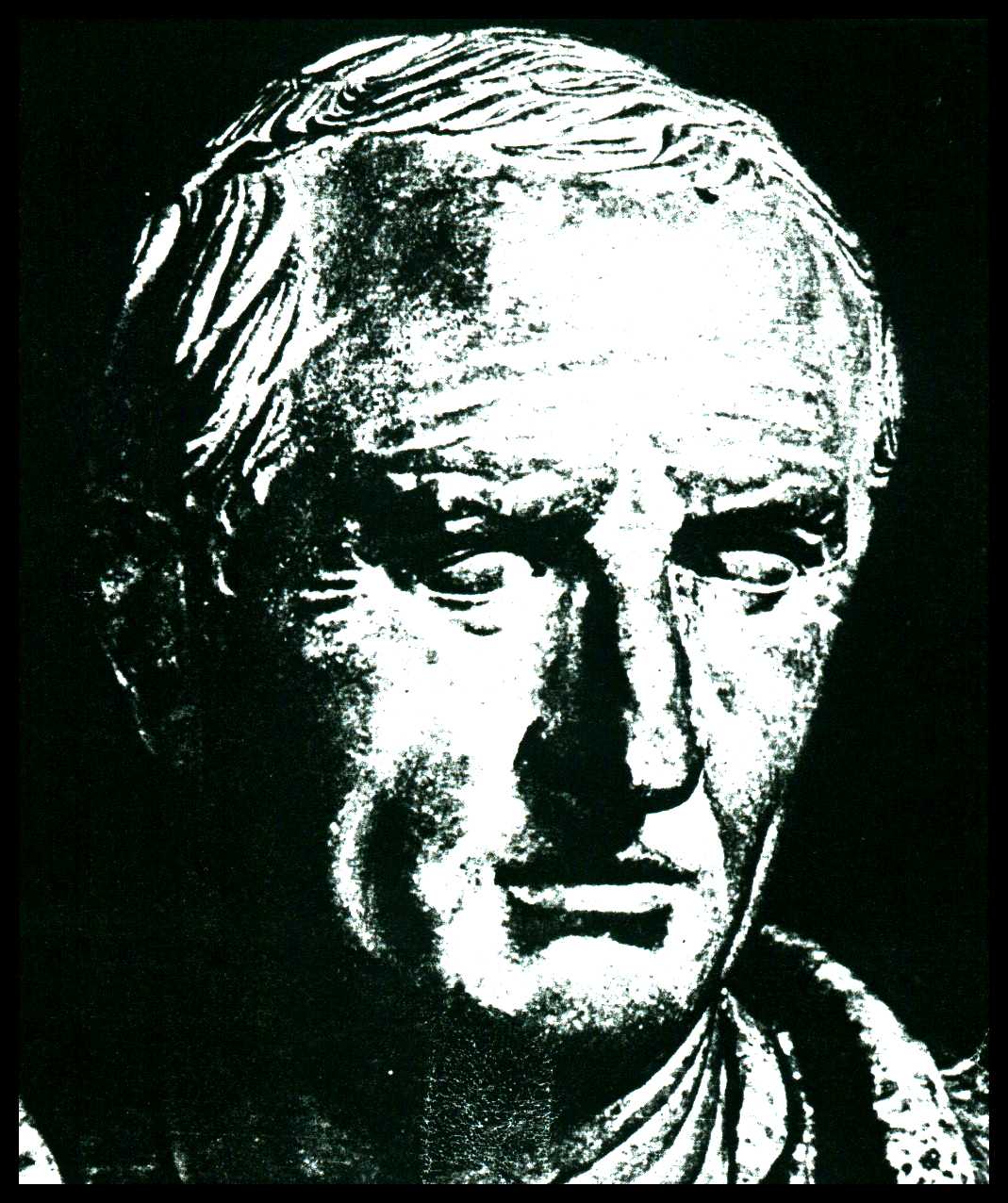
Cicero, 106-43 BC. He was a defender of the Republic form of government. He was pleased when Julius Caesar was murdered.
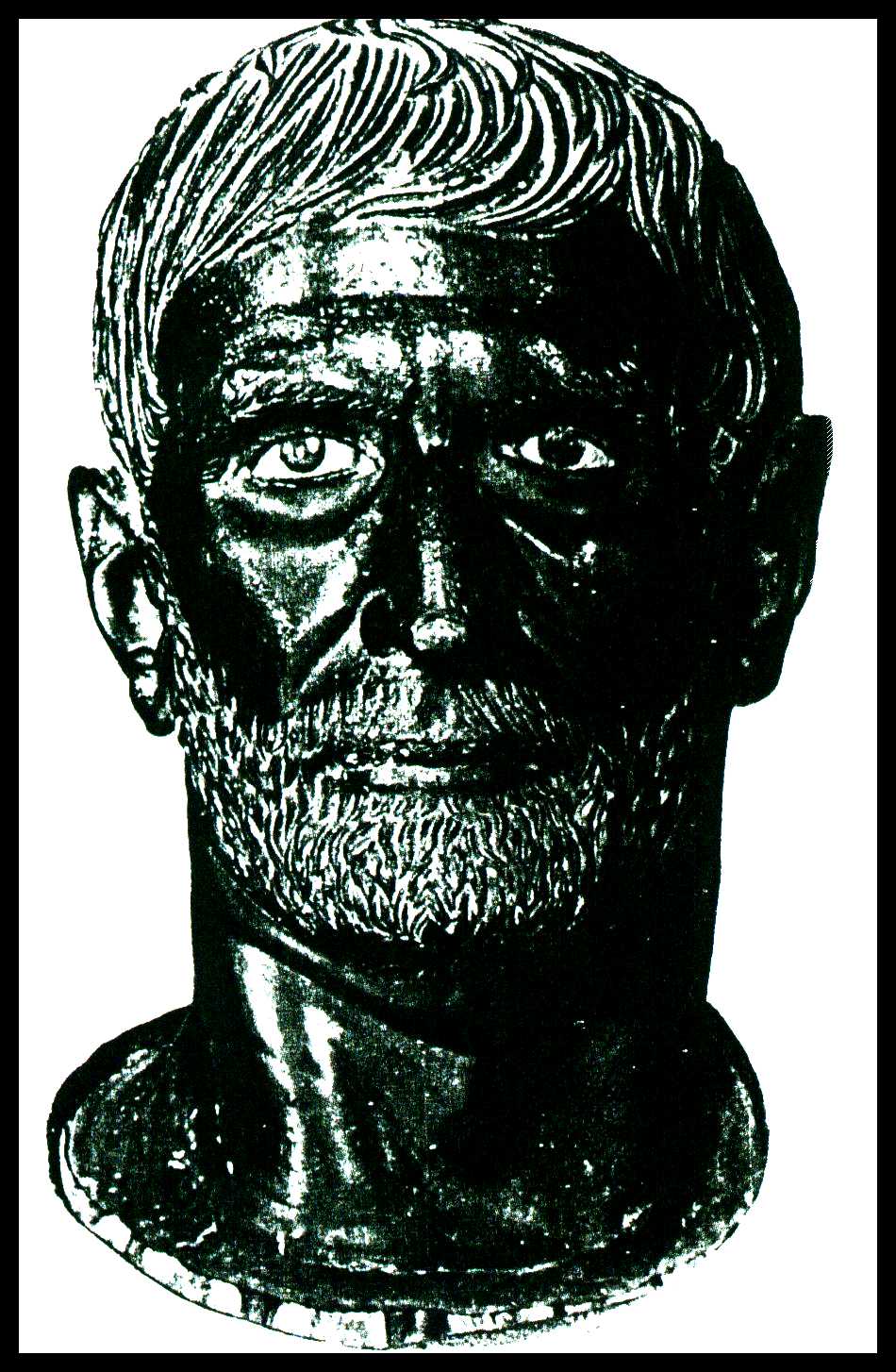
Lucius Junius Brutus, expelled the Tarquins and founded the first Roman Republic.

Agustus, 63 AD to 26 BC. He was the successor to Julius Caesar.
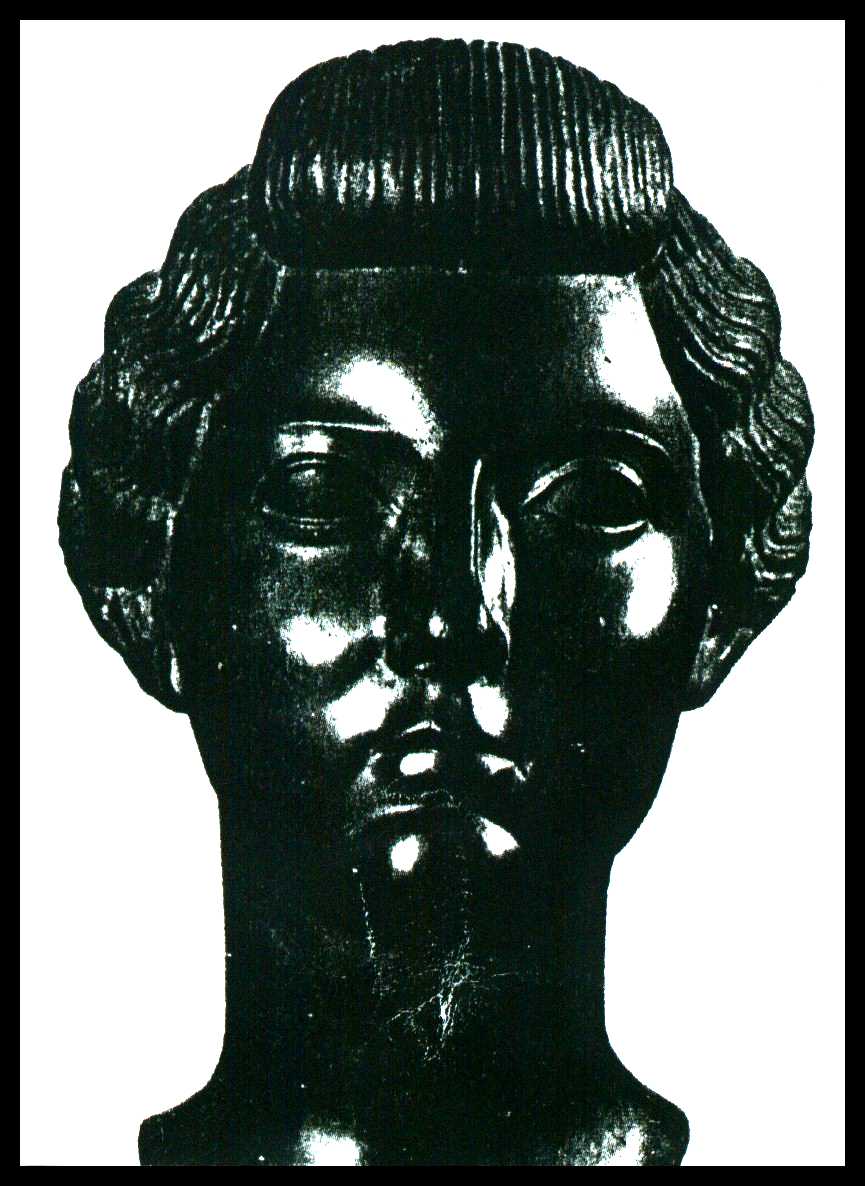
Livia, Agustus's third wife and political advisor. She is the symbol of wisdom virtue and dignity.
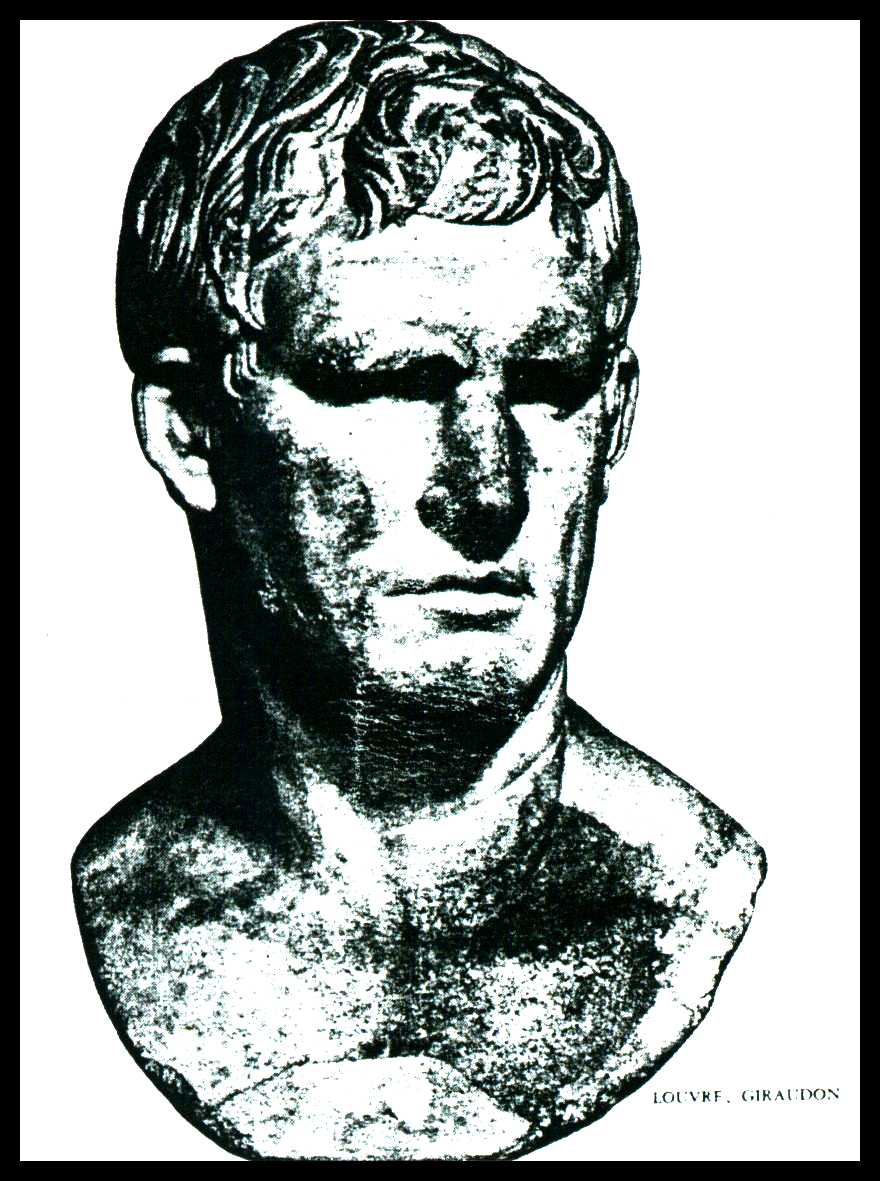
Agrippa served the Emperor Augustus as advisor and architect in the rebuilding of Rome.
CHAPTER 9
THE ISRAELITES
The nation of Israel did not build any magnificent structures, there were no great works of engineering design, nor anything most modern people consider "civilization." Yet without their contribution, Western Civilization never would have occurred, and the coming of Christ would not have been documented. Through His Holy Spirit-inspired writers, the God of Abraham, Issac, and Jacob gave us a code by which to live. We have been given a written account of God's law (note 1). If we follow its teachings, our nation will prosper; if we choose to go the way of man's laws (which change with the wind), our nation will decline and finally cease to exist. God's law can become a proto-type for any nation of willing people. Every Bible student, every Christian needs to listen to this - Greatest Bible Discovery of Our Age, part 1 of 2 https://youtu.be/CGvSl8fkkE0?si=Kv3oes4_GYTp-ADF part 2 - https://youtu.be/aGv_HmIgdes?si=WDwQUijd3Ucg0M1l
The Ten Commandments
1. No other gods before God (note 2).
2. Make no graven images (note 2).
3. Do not swear falsely using the Lord's name.
4. Take the Sabbath off, make no business.
5. Honor your father and mother.
6. Do not murder.
7. Do not commit adultery.
8. Do not steal.
9. Do not bear false witness.
10. Do not covet the goods of another (note 3).
In the days of Moses and Joshua, there were no prisons. The punishment for breaking the laws of God was strictly enforced. Those who committed murder, kidnapping, rape, sodomy, adultery, fornication, were killed. Thieves were required to pay back the victim (not the state) 2 or 3 times. In any case, the transgressor usually reproduced less children. The bad seed was gradually purged from the society. If a nation is to survive, strict, swift punishment must follow the transgression.
God's commands go further than the "Ten Commandments." These are the spinal column, the center, but not the whole. There are also food laws, social security and welfare laws, laws pertaining to contracts, and so on.
What about inter-racial marriage (note 4)? Are there laws on pluralistic, multi-cultural, multi-racial societies? Does the Bible tell us such nations are morally sound? Do these nations withstand the test of time? What does God's law teach us about these types of societies? Go here -https://youtu.be/Xky3xCOvRmk?si=NIC2xclGoa906yUq and here - https://youtu.be/cnOozZKMBAk?si=Vbw7YJKoKU6amTHn - and here - https://youtu.be/7YlAG-DSE3I?si=cTt_6Q23C09oBkHO and here - https://youtu.be/iKrQkencBo0?si=D_qjFQxt6-QBK-ef
1. Numbers 25:6-11 "One of the children of Israel came and brought unto his brethren a Midianitish woman....And Phinehas took a javelin in his hand; and he went after the man of Israel into the tent, and thrust both of them through, the man of Israel, and the woman through her belly. So, the plague was stayed from the children of Israel." Note, it was a plague of different-people marriage.
2. Deuteronomy 7:3 After taking the land God has given thee: "Neither shalt thou make marriages with them; thy daughter thou shall not give unto his son, nor his daughter shall thou take unto thy son."
3. Ezra 9:2,12 "For they have taken of their daughters for themselves, and for their sons; so that the holy seed have mingled themselves with the people of those lands." "Now therefore give not your daughters unto their sons, neither take their daughters unto your sons....".
4. Ezra 10:2-3 "We have taken strange wives of the people of the land, yet now there is hope in Israel concerning this thing. Now therefore let us make a covenant with our God to put away all the wives, and such as are born of them,...".
5. Genesis 24:3-4 "And I will make thee swear by the Lord, the God of heaven, and the God of the earth, that thou shalt not take a wife unto my son of the daughters of the Canaanites, among whom I dwell: But thou shalt go unto my country, and to my kindred, and take a wife unto my son Isaac."
6. Genesis 26:34-35 "And Esau was forty years old when he took to wife Judith the daughter of Beeri, the Hittite, and Bashemath the daughter of Elon the Hittite: Which were a grief of mind unto Isaac and to Rebekah."
7. Genesis 27:46 "And Rebekah said to Isaac, I am weary of my life because of the daughters of Heth: if Jacob take a wife of the daughters of Heth, such as these which are of the daughters of the land, what good shall my life do me?"
8. Genesis 28:1,8,9 "And Isaac called Jacob, and blessed him, and charged him, and said unto him, Thou shalt not take a wife of the daughters of Canaan." "And Esau seeing that the daughters of Canaan pleased not Isaac his father; Then went Esau unto Ishmael, and took unto the wives which he had Mahalath the daughter of Ishmael Abraham's son, the sister of Nebajoth, to be his wife."
9. Deuteronomy 23:2 "A bastard shall not enter into the congregation of the Lord, even to his tenth generation shall he not enter into the congregation of the Lord." In Hebrew, bastard (mamzer) means mongrel. In this text it means Israelite father, non-Israelite mother (do not mistake the word Israelite with the word Jew, they are not the same).
10. Proverbs 23:27-33 "For a whore is a deep ditch; and a strange woman is a narrow pit..." "At the last it biteth like a serpent, and stingeth like an adder. Thine eyes shall behold strange women and thine heart shall utter perverse things."
11. Proverbs 5: all "...remove thy way far from her, and come not nigh the door of her house...and thou mourn as the last, when thy flesh and thy body are consumed...drink waters out of thine own cistern, and running waters out of thine own well.... "
12. Exodus 33:16 "...so shall we be separated, I and thy people, from all the people that are upon the face of the earth."
13. Deuteronomy 17:15 "Thou shalt in any wise set him king over thee, whom the Lord thy God shall choose: one from among thy brethren shalt thou set king over thee; thou mayest not set a stranger over thee, which is not thy brother."
It is apparent that the Lord does not approve of multi-cultural, pluralistic, multi-racial societies, nor inter-racial marriage. What is the punishment for the transgressions? A few examples are listed below.
1. Joshua 23:12-13 "Else if ye do in any wise go back, and cleave unto these that remain among you, and shall make marriages with them, and go in unto them, and they to you: Know for a certainty that the Lord your God will no more drive out any of these nations from before you; but they shall be snares and traps unto you, and scourges in your sides, and thorns in your eyes, until ye perish from off this good land which the Lord your God hath given you."
2. Psalms 106:34-42 "They did not destroy the nations concerning whom the Lord commanded them: But were mingled among the heathen, and learned their works...and went a whoring with their own inventions,...And he gave them into the hand of the heathen; and they that hated them ruled over them. Their enemies also oppressed them, and they were brought into subjection under their hand."
3. Ezekiel 28:7 "...I will bring strangers upon thee, the terrible of the nations: and they shall draw swords against the beauty of thy wisdom, and they shall defile thy brightness."
4. Joel 1:4 "That which the palmerworm hath left hath the locust eaten; and that which the locust hath left the cankerworm eaten; and that which the cankerworm hath left the caterpillar eaten." These insects are all symbolic of alien people.
Does all this mean that we should make war on those not like us? No, it means we should protect our individuality. There are many other Bible passages that tell us to love even our enemies. When the stranger is among us temporarily, we should treat him with courtesy and respect. The Creation requires "like after like" (Gen. 1:24).
What about God's other laws for the making and preservation of a nation? What happens when we follow His laws? What is the effect when we disobey? Blessings and curses are listed in Deuteronomy, Chapter 28, and Leviticus, Chapter 26. A few are listed below.
1. "I will also send wild beasts (barbaric people) among you, which shall rob you of your children, and destroy your cattle, and make you few in number, and your highways shall be desolate."
2. "And I will give peace in the land, and ye shall lie down, and none shall make you afraid: and I will rid evil beasts out of the land, neither shall the sword go through your land."
3. "And ye shall chase your enemies, and they shall fall before you by the sword."
4. "Blessed shalt thou be in the city, and blessed shalt thou be in the field. Blessed shalt be the fruit of thy body, and the fruit of thy ground, and the fruit of thy cattle, the increase of thy kine, and the flocks of thy sheep."
5. "And the Lord shall make thee the head, and not the tail...."
6. "Cursed shall be the fruit of thy body."
7. "Thou shall betroth a wife, and another man shall lie with her."
8. "Thy sons and daughters shall be given unto another people and thine eyes shall look, and fail with longing for them all the day long...."
9. "Thou shall carry much seed out into the field, and shalt gather but little in for the locust (alien people) shall consume it."
10. "All thy trees and fruit of thy land shall the locust (alien people) consume."
11. "The stranger that is within thee shall get up above thee very high; and thou shall come down very low. He shall lend to thee, and thou shalt not lend to him: he shall be the head, and thou shalt be the tail."
12. "He shall put a yoke of iron upon thy neck, until he have destroyed thee."
Who was Israel?
Most people today have been taught that the people who call themselves "Jews" (Judeans) are the flesh and blood descendants of the Israelites (note 5). Some are, many are not. Most of Israel has been "lost" for 2500 years (please read note 7). That issue will be discussed later in the book.
However, for a brief summary of their origin... the 13 tribes (sons) of Israel (the Israelites) are the descendants of Jacob\Israel (1898 BC). Jacob was the son of Isaac (1938 BC), who was the son of Abraham. Abraham (1970 BC) was a descendant of Shem (hence the term Shemite\Semite), who in turn was a son of Noah. Noah (the flood was about 2300 BC) was an Adamite, perfect in his generations. In Hebrew, generations (Note 6) translates into seedline or genealogy - he was a pureblood descendant of Adam, his ancestors had not intermarried with pre-Adamic man.
Much of the Bible tells us what to do and what not to do and uses God's special people, Israel, to do so. The tribes\descendants of Israel came into Canaan about 1500 BC, after 400 years of living in Egypt. A significant amount of God's written law and teachings start as they leave Egypt, in what is termed the Exodus.
What happened to the Israelites?
The tribes of Israel did not follow God's law, and eventually they ceased to exist as a nation. In particular, some intermarried with the surrounding pre-Adamic people. To what extent, we do not know. Solomon was wise in written words and in his ability to gather the world's gold and silver, but he was sinful concerning the coordination of God's law and the security of the Israelite nation. He erected temples to worship other gods (note 2), and he married strange wives (hundreds of them!). The end effect, after his death, was the separation of Israel into two nations (Israel and Judah in 903 BC) where brother made war against brother.
Israel was conquered by Assyria (745-721 BC), and the nation of Israel (ten tribes of Israel and much of the nation of Judea, about 15 million people) was relocated to the south of the Black Sea/Caucasus Mountains area. From there, some went to the east, but most migrated to the north and northwest, Europe and British Isles (note 7).
About 600 BC, Judea met the same fate, except it was conquered by Babylonia and relocated to the east.
According to Biblical teachings, the children of Israel ceased to exist as a geographic nation because they followed the ways of man. They did not follow the rules for a lasting civilization, as defined by God.
What did the Israelites look like?
1. "Sarah's (Abraham's wife) skin was pure white and smooth" (please read note 8).
2. "I found Joseph and Mary in the land of Mecca...Joseph is a wood-workman. He is very tall...his hair looks as though it might have been dark auburn when young. His eyes are gray...Jesus...He is the picture of his mother, only he has not her smooth, round face. His hair is a little more golden than hers, though it is as much from sunburn as anything else. He is tall...His visage is thin and of a swarthy complexion, though this is from exposure. His eyes are large and soft blue...the lashes are long and his eyebrows are large" (please read note 9).
3. The Israelites, and Jesus Christ himself, were blonde-haired, blue-eyed people who averaged 6 feet in height (please read note 10).
4. "I was told it was Jesus"..."His golden colored hair and beard..." (please read note 11).
5. "He (Jesus) is a tall man, well-shaped, and of an amiable and reverend aspect; his hair of a color that can barely be matched, falling into graceful curls, waving about and very agreeable...His forehead high, large and imposing; his cheeks without spot or wrinkle, beautiful with a lovely red; his nose and mouth formed with exquisite symmetry; his beard and of a color suitable to his hair...his eyes bright and blue, clear and serene" (please read note 12).
6. David - reddish hair or skin, ruddy, fair complexion (note 13).
7. Rebekah - very fair (note 14 and note 8).
8. Solomon - black hair, blue eyes, skin white and ruddy (note 15).
9. Nazarites - skin whiter than milk (note 16).
10. Moses - exceedingly fair (note 17).
********
Footnotes, Chapter 9
1. For an excellent discussion of God's laws, a six part cassette tape series can be acquired from Scriptures for America.
2. For an excellent discussion of how modern America worships other gods, order the Baal worship tapes or the Baal worship book from Scriptures for America.
3. James Kennedy has a good message on covetousness, PO Box 40, Ft Lauderdale, FL 33302.
4. Scriptures for America has an excellent 4-part cassette tape series on inter-racial marriage.
5. For a discussion on the Jews, Scriptures for America has the tapes, "Jews the Most Confusing Word" and "Esau/Edom".
6. Strong's Exhaustive Concordance of the Bible, King James Version.
7. For a complete discussion of the movement of Israel after the dispersion, "The Missing Links Discovered" by Capt (1985) is a good archeology book. Also the books "Judah's Sceptre\Joseph's Birthright" by Allen (1902), and "God's Covenant People" by Weiland (1994), are excellent works which discuss the whereabouts of Israel utilizing Bible passages. These books can be bought from Scriptures for America.
8. Dead Sea Scroll called the Genesis Apocryphon (also called the Scroll of the Patriarchs - also called the 7th Dead Sea Scroll). This was taken from "Your Inheritance", by Balaicius, and from God's Covenant People, by Weiland.
9. The Archaeological Writings of the Sanheidrim & Talmuds (not "Talmud" of today's Jews)
Chapter V. (These are the Official Documents made in These Courts in the days of Jesus Christ; translated by Drs. McIntosh and Twyman in 1887 of the Antiquarian Lodge, Genoa, Italy, from manuscripts in Constantinople and the records of the Senatorial Docket taken from the Vatican in Rome; published by Keats Publishing). This was taken from "Your Inheritance" by Sacred Truth Ministries, Balaicius (1994) and God's Covenant People, p341.
10. The Essene and other literature of the Israelites (found in the catacombs). This was taken from "Your Inheritance", by Balaicius, and "God's Covenant People", by Weiland, 1994, p 340.
11. The Archaeological Writings of the Sanheidrim & Talmuds (not "Talmud" of today's Jews) - Chapter VIII. (These are the Official Documents made in These Courts in the days of Jesus Christ; translated by Drs. McIntosh and Twyman in 1887 of the Antiquarian Lodge, Genoa, Italy, from manuscripts in Constantinople and the records of the Senatorial Docket taken from the Vatican in Rome; published by Keats Publishing). See #9 above for source.
12. From a letter written to the monarch of Rome by Publius Lentrelus, a resident of Judea in the days of Tiberius Caesar. (The letter first appeared in the writings of Saint Anselm of Canterbury in the eleventh century A.D.) This was taken from "Your Inheritance", by Balaicius, and "God's Covenant People", by Weiland, 1994, p341.
13. Holy Bible, I Samuel 16:12 17:42.
14. Holy Bible, Genesis 24:16.
15. Holy Bible, Song of Solomon.
16. Holy Bible, Lamentations 4:7.
17. Holy Bible, Acts 7:20.
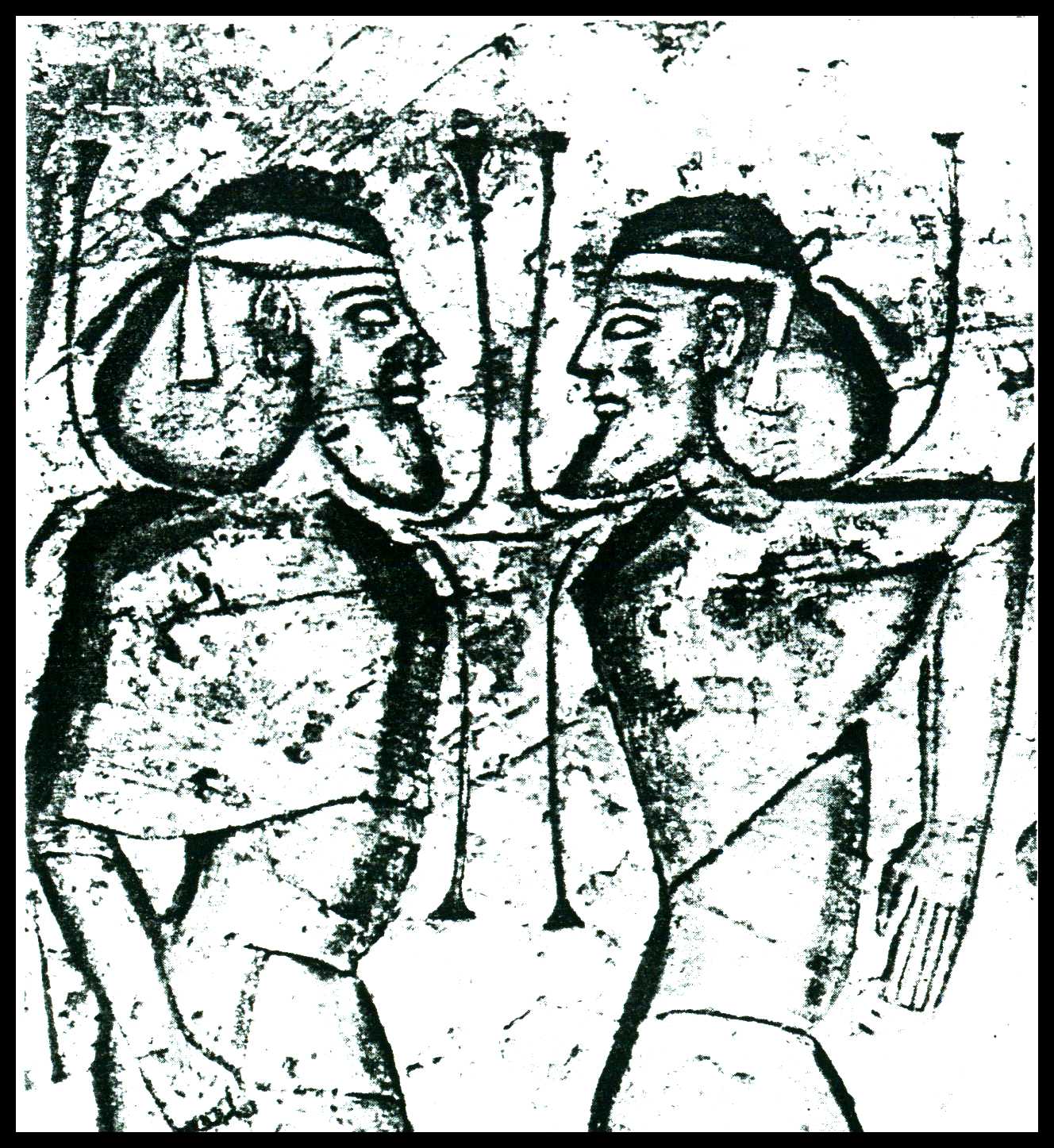
Israelites captured, about 1100 BC, from Temple of Rameses III. From The Origin of Race and Civilization, by Weisman.
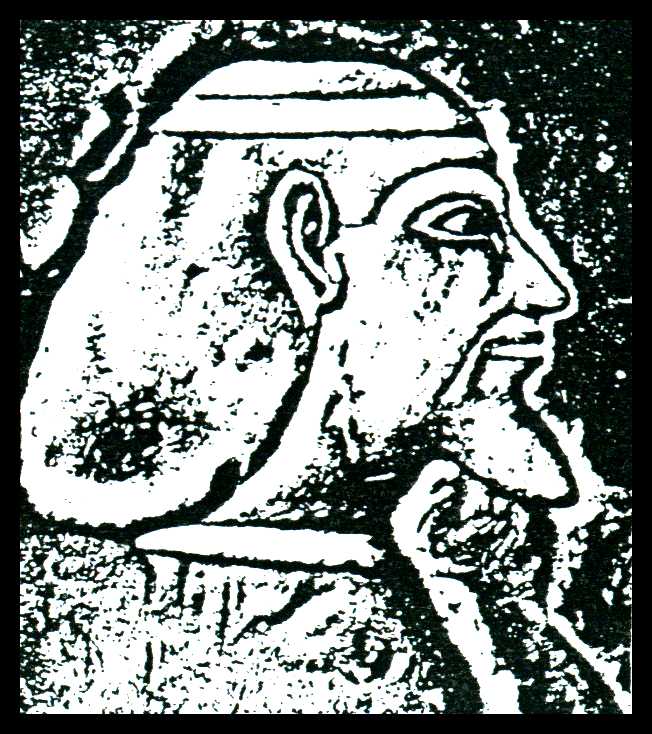
An Israelite from an Egyptain monument-1150 BC. From Races of the Old Testemant, by Sayce.
CHAPTER 10
THE EUROPEANS
This is the most difficult chapter to write about because more has been written about the Europeans than any other civilization. To present the material in a short, but understandable manner is difficult. A good start would be to quote the Scottish record of their origin.
Scotland and Ireland
The Scottish Declaration of Independence (note 1) was written about 1300 AD by the King of Scotland, Robert Bruce (Robert I). The Scots were declaring their independence from England, a racial sister nation. "Most Holy Father and Lord, we know and from the chronicles and books of the ancients we find that among other famous nations our own, the Scots, has been graced with widespread renown. They journeyed from Greater Scythia by way of the Tyrrhenian Sea and the Pillars of Hercules, and dwelt for a long course of time in Spain among the most savage tribes, but nowhere could they be subdued by any race, however barbarous. Thence they came, twelve hundred years after the people of Israel crossed the Red Sea, to their home in the west where they still live today. The Britons they first drove out, the Picts they utterly destroyed, and even though very often assailed by the Norwegians, the Danes and the English, they took possession of that home with many victories and untold efforts; and, as the historians of old time bear witness, they have held it free of all bondage ever since. In their kingdom there have reigned one hundred and thirteen kings of their own royal stock, the line unbroken by a single foreigner" (note 2).
From this quotation, it is clear that the Scots claimed ancestry from the Scythians. Chapter 5 on India provides excellent evidence that the Scythians were the Saka who could trace their ancestry to Sumeria, the first recorded civilization. The preceding chapters of this primer also have proven that the King-List of Sumeria, Babylonia, Egypt, Greece and India all tie together into a commonality. We must conclude that the Scots join the Adamic family and the original founders of these civilizations must have looked somewhat like the Scots (they are racial kinsmen).
The Declaration mentions they sojourned in Spain before reaching Scotland. Spain is called the Iberian Peninsula. The root word for Iberian is Eber, a great grandson of Shem (meaning Semite), son of Noah. Eber is the origin of the word Hebrew.
The home of the Scots before Scotland was Ireland, a thirteen mile distance across the sea between the two lands. The Romans called Ireland by the name Scotia or Hibernia. Hibernia is the Latinized version of Iberne, which was later abbreviated to Erne. This, of course, makes Hibernia (Ireland) another derivative of Eber, meaning Hebrew.
The Declaration also mentions the people of Israel. We see the suggestion/possibility that the Scots are claiming relationship to the people of Israel. The Red Sea was crossed about 1400 BC, so the time they refer to would be 200 BC when they reached Scotland. This would have been about 500 years after the children of Israel were dispersed immediately south of the Scythian domain. Interestingly, the daughter of Zedekiah (last king of Judea), and the granddaughter of Jeremiah, was named Scota (see Scotia above). There is ample evidence that she, her sister, Jeremiah, and a congregation of Israelites fled from Judea at its fall about 600 BC, and eventually relocated in Ireland. To understand more, Jacob's Pillar and The Scottish Declaration of Independence, by Capt, is required reading. See Appendix C.
Northern Europe, including England
Legend has it that Brutus, of Greek royalty, founded the city of London (called New Troy). At Totnes on the River Dart, twelve miles inland from Turbay, the oldest seaport in South Devon, is a historical stone that commemorates the coming of Brutus to Britain (about 1103BC). Review the Greek chapter to see the puzzle fitting together.
Most historians believe that the Germans were once Scythians. It makes sense since the population pressures from Asia made the tribal flow mostly west and northward. The landmass of the Scythians was enormous, from the Urals to the east, Western Europe to the west, the Black Sea to the south and almost unlimited to the north.
In 500 AD the Saxons, a northern Germanic tribe, invaded England. Remember Issax = Sumerian, Isaac = Hebrew/Israelite, Saka = India. The Saxons were joined by the Jutes, from Denmark (Judah?), and the Angles, northern Germany (called Anglo today). The Keltic Brits were overthrown, killed or driven into Wales. This group of northern Europeans conquered England and the Saxon Kings reigned until 1066AD.
In 1066AD, the Normans, formerly a Viking tribe, who ruled northern France, conquered the Saxon reign. In aggregate the term "Viking" includes the Norse, Danes (Dan), Rus (Swedes who founded Russia), Goths, Visigoths, and Swedes. All these were of Germanic origin.
Migration from Israel, beginning 721 BC
To really understand the Bible, we must address the issue of Israel's migration into Europe more closely.
About 925 BC, the 12 tribes of Israelites split into two nations, the nation of Israel to the north (10 tribes) and the nation of Judea (2 tribes) (Judah and Benjamin) to the south. Between 745 to 721 BC, the nation of Israel (the northern 10 tribes of Jacob/Israel) was conquered by Assyria. They were not killed but relocated and made a buffer between Assyria and their northern enemies. About 15 million were moved to the area now called northern Iraq, south of the Black Sea/Caucasus Mountains. Secular historians write that this mass of people, "The Lost Tribes of Israel" assimilated and inter-married out of existence with other tribes and nations.
But this does not match the Bible account on what would happen to Lost Israel. For example, in the Bible, God made an unconditional covenant with Abraham. He was to be exceedingly fruitful, a father of many nations, and kings would come from him. The covenant would be everlasting, for a thousand generations, and to Abrahams seed forever (see Genesis 17:1-7, Luke 1:68-77, Psalms 105:6-10). Abraham and his descendants were to become his special treasure, his chosen people (see Psalms 135:4, Peter I 2:9, Isaiah 41:8). According to the Bible, the thirteen tribes of Israel were the chosen lineage from Abraham to carry forward these promises.
Jeremiah 46:28, states that God would "make a full end of all the nations whither I have driven thee, but I will not make a full end of thee, but will correct thee in measure, yet will not leave thee wholly unpunished." In Hosea 1:10, it states that the Israelites would become as the "sands of the sea". Also in Malachi 3:6, it states that God "would not consume the sons of Jacob" (Israel). These prophecies were made after the 745 - 721 BC dispersion. God thus said that he would not end the tribes of Israel, he would not let them intermarry with other races (in bulk) out of existence. They were to grow immensely and become a multitude of nations.
In James 1:1, it states "To the lost tribes scattered abroad, greetings". Obviously, James knew the "dispersed" still existed.
In Matthew 15:24, Christ states that He "was sent only to the lost sheep of the house of Israel". Is He referring to the descendants of the Israelites dispersed 745-721 BC (and only to them)? Contrary to popular Christian theology, the word "Gentile" does not simply mean "non-Jew". It means nations. It can mean either a non-Israelite or an Israelite living outside of Israel or Judea. In addition, the word Jew and Israelite are not synonymous. This area is confusing (at first), yet an interesting study.
From our studies, we must conclude that the 15 million Israelites, due to population pressures from Asia, migrated north and northwest, into Europe and Great Britain. For an excellent study of this subject please see note 3.
When dispersed to the frontiers in 745 BC, did Israel meet their long lost cousins, other Adamic men? It must have been so. How many Israelites of unmixed seed arrived at the frontier of other Adamic man? Did they know the different groups were distantly related? Were there more Israelites than other Adamic men, or was it vise-versa? To these questions, and many more, we have no firm answers. However, in our thinking, they must have intermarried with these other Adamic tribes. In conjunction, we need to remember the teachings on the fruit test. We also need to remember the words of Jesus Christ, the great I Am. In His words "My sheep hear my voice, and I know them, and they follow me" (John 10:27).
********
Footnotes, Chapter 10
1. The Scottish Declaration of Independence, by Capt, 1983.
2. Numbers 17:15 - "...thou mayest not set a stranger over thee, which is not thy brother."
3. Missing Links in Assyrian Tablets, by Capt, 1985.
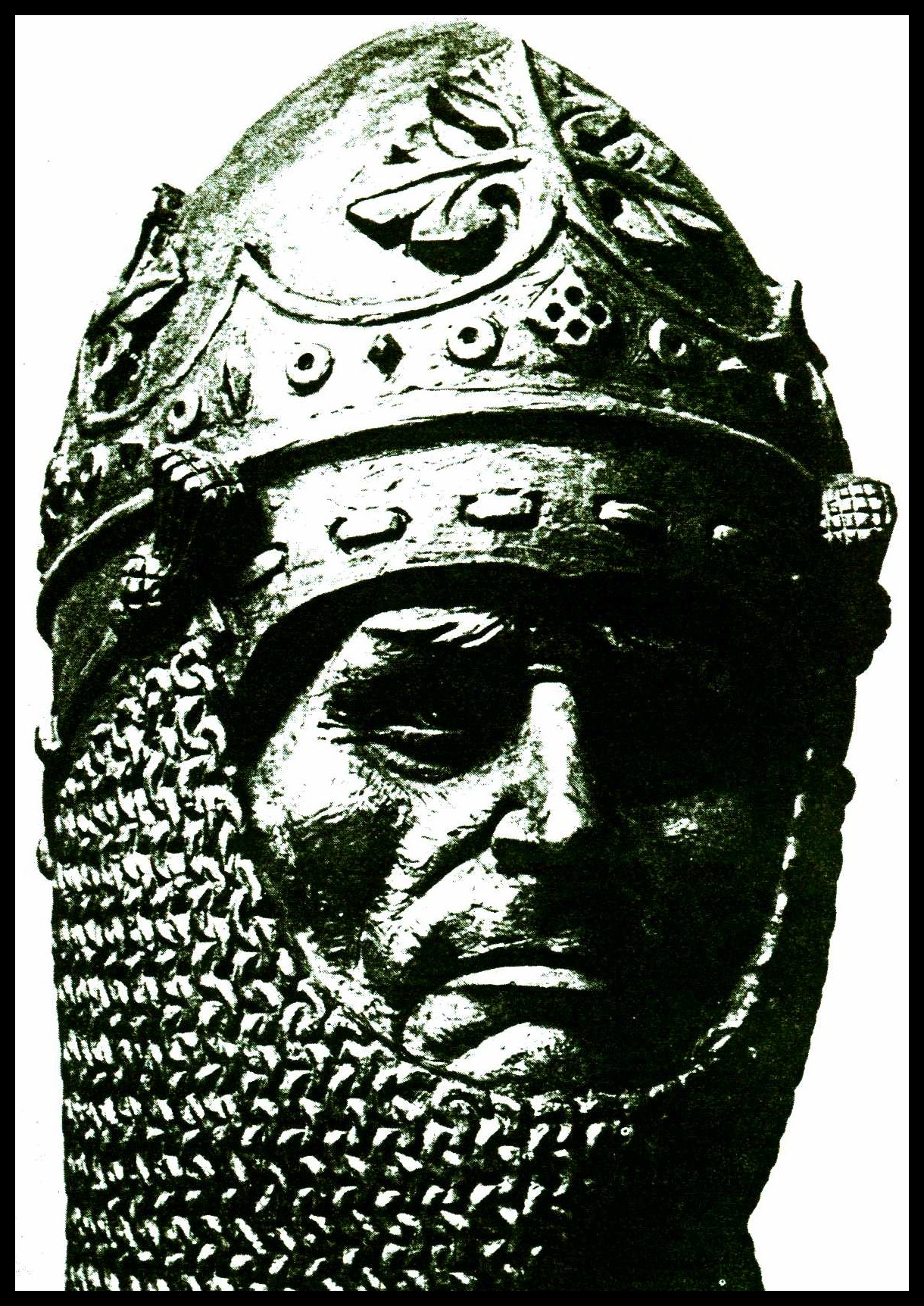
King Robert Bruce drafted the Scottish Declaration of Independence, April 6, 1302. He was a large frame man, over 6 feet, had reddish-orange hair, blue eyes, and his skin was ruddy.
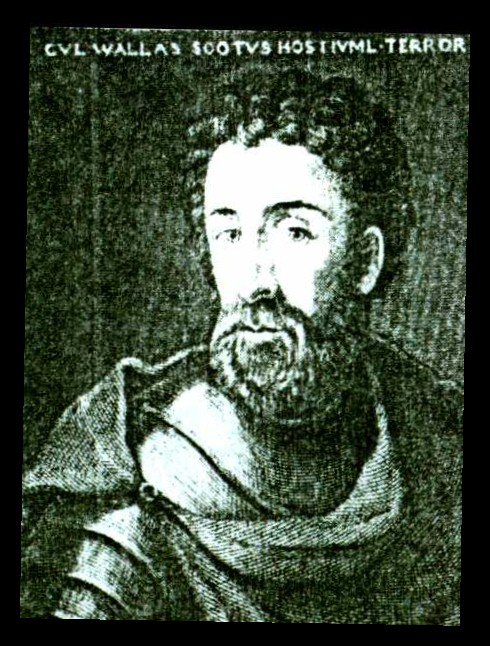
Thanks to the movie "Braveheart," William Wallace is the best known Scottish hero. He had amber hair and blue eyes.
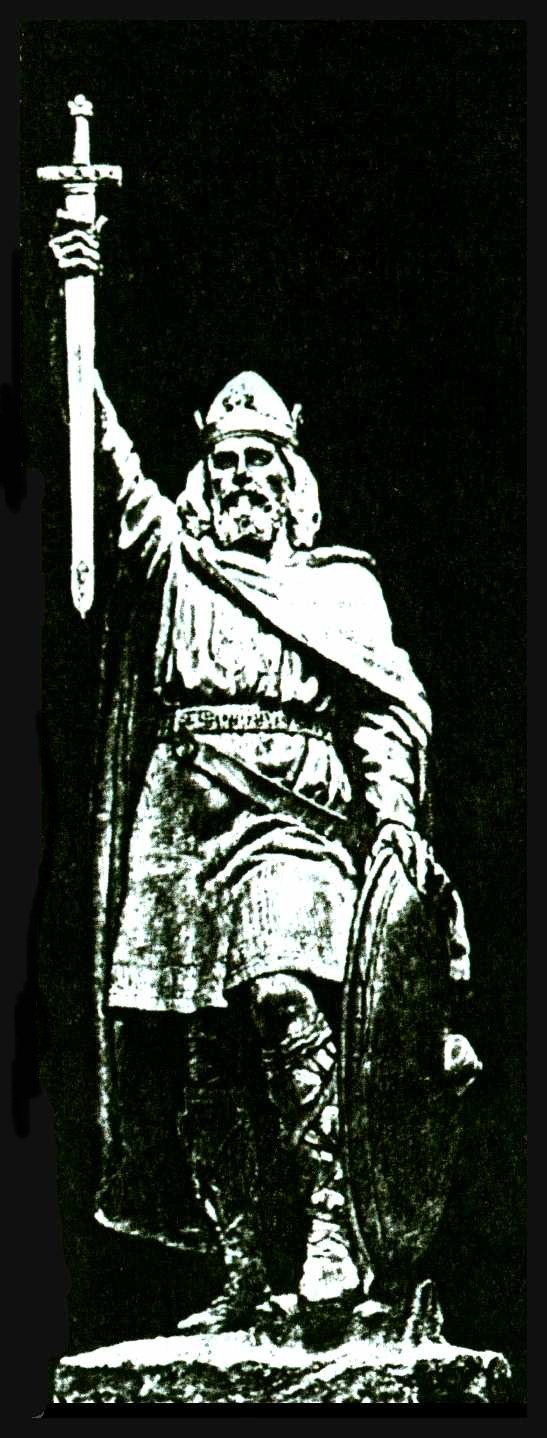
Alfred the Great, King of England, who lived 849 to 899 AD, was one of the greatest kings in English history. Among many highlights in his reign, he codified the laws of the Bible and made them English law. He had reddish colored hair and beard. He visits a monastery, below.
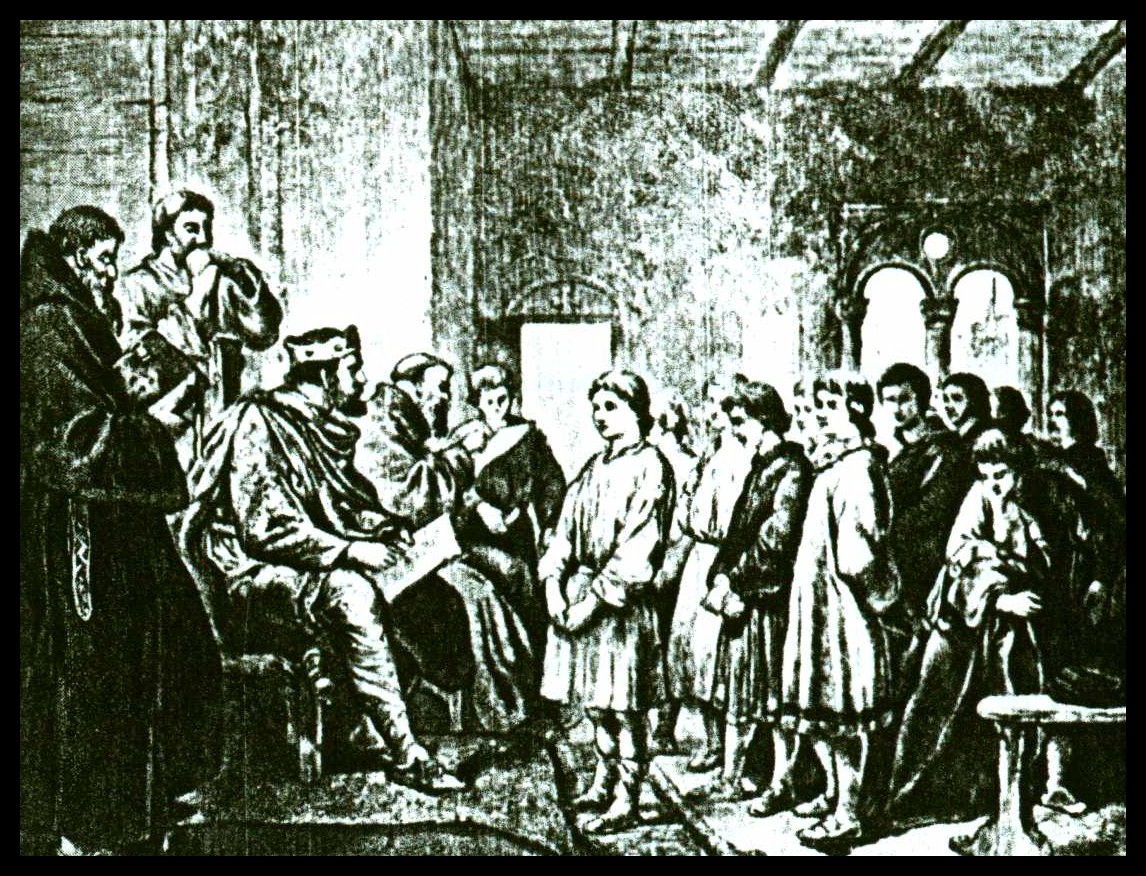
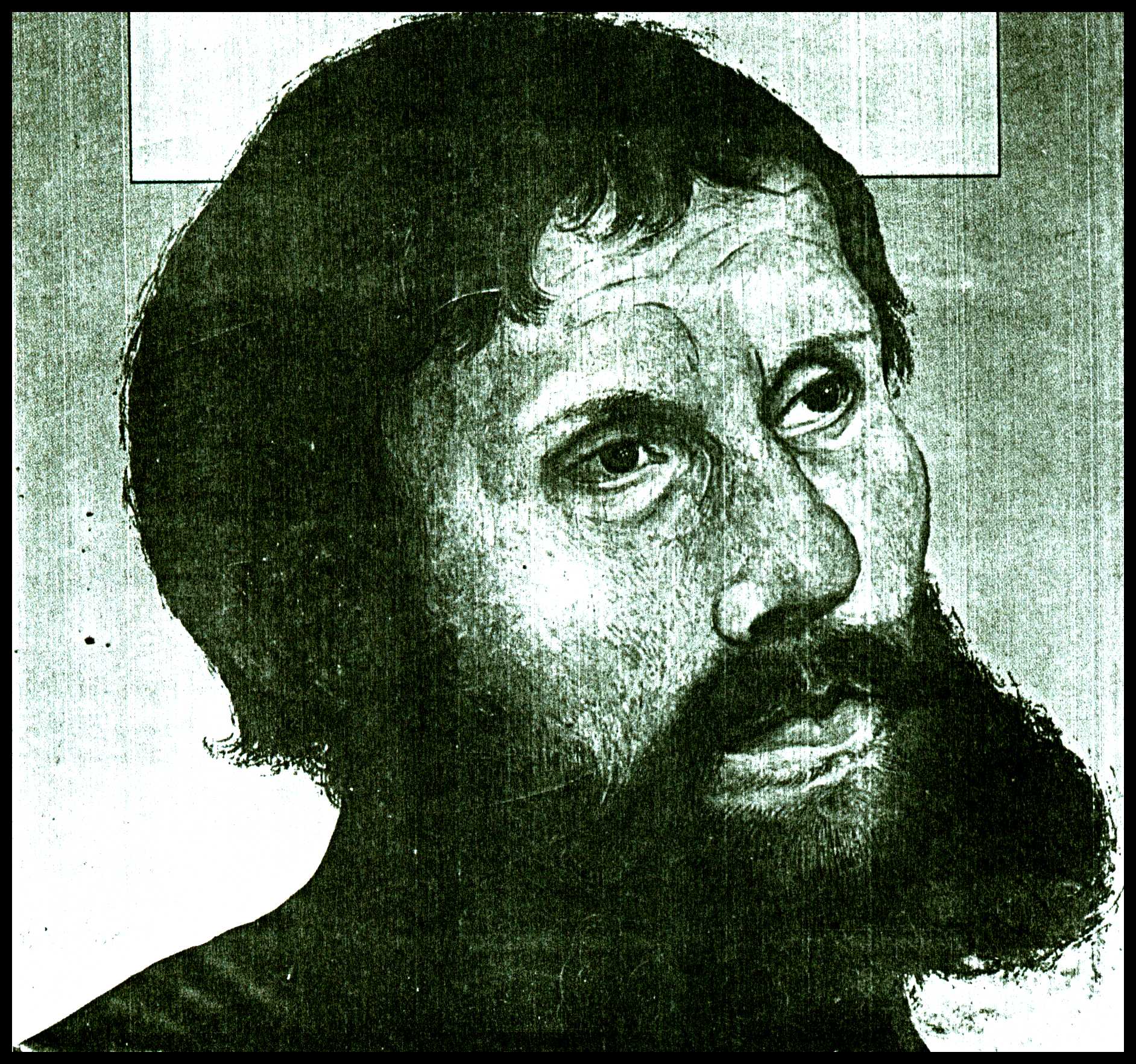
Martin Luther (1483-1546). As a young priest he rejected the god-like power of the pope. He held up the Bible as the decisive authority. Luther is the father of Protestantism. Yet the modern Lutheran churches reject his belief that Jews are the enemies of Christianity. Today, (because of his writings), he would not be allowed to preach in any Lutheran church, and he most likely would be arrested and convicted of multiple hate crimes. Luther had brown hair (blond as a boy) and brown eyes.
CHAPTER 11
THE ANCIENT AMERICAS
There is overwhelming and undeniable evidence that thousands (perhaps tens of thousands) of white people entered (and settled) in the Americas starting almost 2000 years before Christ. Of the evidence available, a very small amount, the tip of a huge iceberg, is presented here.
Written Evidence
From "Minor Works" by Aristotle (please read note 1), written about 300 BC..."In the sea outside the Pillars of Hercules they say that an island was found by the Carthaginians, a wilderness having wood of all kinds and navigable rivers, remarkable for various kinds of fruits, and many days' sailing distance away. When the Carthaginians, who were masters of the western ocean, observed that many traders and other men, attracted by the fertility of the soil and the pleasant climate, frequented it because of its richness, and some resided there, they feared that knowledge of this land would reach other nations, and that a great concourse to it of men from various lands of the earth would follow. Therefore, lest the Carthaginian Empire itself should suffer injury, and the dominion of the sea be wrested from their hands, the Senate of Carthage issued a decree that no one, under penalty of death, should thereafter sail thither, and they massacred all who resided there." Perhaps these were the Azores islands, perhaps not. They are about 40% between Spain and Newfoundland.
Who were the Carthaginians? They were the same people as the Phoenicians, the Semitic, redheaded, blue-eyed people described in an earlier chapter. They were cousins to Abraham, the Israelites, and their faces looked like the Pun and the ruling Egyptians.
From Diodorus (100BC) of Sicily (please read note 2)"...Over against Africa lies a very great island in the vast Ocean, many days' sail from Libya westward. The soil there is very fruitful, a great part whereof is mountainous, but much likewise a plain, which is the most sweet and pleasant part, for it is watered with several navigable rivers.... The mountainous part of the country is clothed with very large woods, and all manner of fruit trees and springs of fresh water.... There you may have game enough in hunting all sorts of wild beasts.... This island seems rather to be the residence of some of the gods, than of men. Anciently by reason of its remote location it was altogether unknown, but afterwards discovered upon this occasion: The Phoenicians in ancient times undertook frequent voyages by sea, in way of traffic as merchants, so that they planted many colonies both in Africa and in these western parts of Europe. These merchants succeeding in their undertaking and thereupon growing very rich, passed at length beyond the Pillars of Hercules (southern tip of Spain), into the sea called the Ocean. And first they built the city called Gades (Cadiz, Spain). The Phoenicians, having found out the coasts beyond the Pillars, and sailing along the shore of Africa, were suddenly driven by a furious storm off into the main ocean, and after they had lain under this violent tempest for many days, they at length arrived at this island, and so they were the first that discovered it." Perhaps these were the Azores islands, perhaps not.
From Plato, 400BC, "In those days (long before Plato), the Atlantic was navigable from an island situated to the west of the straits which you call the Pillars of Hercules: the island was larger than Libya (perhaps meaning northwest Africa) and Asia (perhaps meaning Middle East) put together, and from it could be reached other islands, and from the islands you might pass through to the opposite continent (America)" (please read note 3). Plato later states that the island was sunk by an earthquake. According to Plato, the island was destroyed by Zeus, the god of gods, because "when this devine portion began to fade away in them, and became diluted too often, and with too much of the mortal admixture, and the human nature got the upper hand, then they being unable to bear their fortune, became unseemly, and to him who had an eye to see, they began to appear base, and had lost the fairest of their precious gifts." Read Genesis 6:2 again.
From the writings of Columbus, 06Nov1492 "...My messengers report that after a march of twelve miles they found a village with perhaps about a thousand inhabitants. The natives, they say, received them with great ceremony, lodged them in the most beautiful houses, carried them around on their arms, kissed their hands and feet, and, in short, tried to make clear to them in every possible way that it was known the white men came from the gods. About fifty men and women asked my messengers to be allowed to travel back with them to the Heaven of the eternal gods." Columbus, like many of the early explorers, was fair and had blue eyes.
Pedro Pizarro was a Spanish explorer. He conquered, looted and plundered the Incas in the early 1500's. He writes, "The ruling class in the kingdom of Peru was fair-skinned with fair hair about the color of ripe wheat. Most of the great lords and ladies looked like white Spaniards. In that country I met an Indian woman with her child, both so fair-skinned that they were hardly distinguishable from fair, white men. Their fellow countrymen called them 'children of the gods'." He further states that the ruling class was one large family, which supplied all the country's governors, generals, and dignitaries. These aristocrats shunned all intermarriage with the Indians. They spoke a language of their own.
In the writings of Cortez, (he conquered and plundered the Aztec nation), it is revealed that the Indians had legends of a great flood, a tower of Babel (it wasn't called Babel though), and an immaculate conception of the White God. The Indian priests also forgave sins and went through a type of baptism.
Father Carvajal, a priest, who was with the explorer Orellana in South America in 1545-6, details his experiences along the Amazon. His first contact with white "Indians" was when four white strangers walked into the shocked Spanish explorers camp. These men were quite white, had fine hair reaching to their waist and were a span (9 inches) taller than the average Spanish soldier (who were considerably taller than the South American Indian). These white skinned "giants" were well mannered, decked out in gold and loaded with a great quantity of food (the Spanish often lacked food). After much civility, the four men departed, leaving behind a quantity of food, but no information (please read note 4).
Their next contact with white people was with a dozen Amazon women, referred to as Amazons'. "These women are very white and tall, and have hair very long and braided and wound about the head, and they are very robust and go about naked, but with their privy parts covered, and their bow and arrows in their hands, doing as much fighting as ten Indian men, and indeed there was one woman among those who shot an arrow a span deep into one of the brigantines, and others less deep, so that our brigantines looked like porcupines." Carvajal went on to say in his diary that these women clubbed any Indian man who tried to turn and run from the Spanish enemy (please read note 4). However, seven or eight of these white women were killed and the Indians lost heart and fled.
From a writing by Colonel Fawcett (1906-7), he and other people saw white Indians on the Amazon. One story told to him, "My brother went up in a launch, and one day, well up river, was told that white Indians were near. He didn't believe it and scoffed at the men who told him, but nevertheless went out in a canoe and found unmistakable signs of Indians. The next thing he knew, he and his men were being attacked by big, well built, handsome savages, pure white with red hair and blue eyes. They fought like devils too...."
In the early 1500's, Verrazano found fair-skinned and civilized "Indians" near Long Island Sound. Also, Powhatan, Pocahontas' father, had gray eyes.
In the diaries of the Lewis and Clark Expedition personnel, there exists evidence that the Flathead Indians were whiter than the other tribes, as Mr. Gass states (Sept1805); "They were the whitest Indians I ever saw." Also, within "The Adventures of Captain Bonneville" (circa 1830), by Irving, there are interesting observations concerning both the Flathead and Nez Perce Indians; they obviously were a unique people. Unlike the other northwest tribes encountered, both the Flathead and Nez Perce (who were neighbors) were very spiritual, kept the Sabbath and had Christian characteristics (faith and works) that could not have been taught, but appeared innate. The percentage of Caucasian genes in these people comes to mind; we will never know. Read Chapters 9 and 45.
Nelson Lee, a former Texas Ranger and horse rancher, was captured by the Comanche nation in 1856. He survived and became their slave for 3 years, after which he escaped. Within his "Three Years Among the Comanches" written in 1859, (see end of chapter notes), he describes part of a town he saw in the southern Rockies and the legend associated with these ancient ruins. From the words of the Comanche chief, Lee's slave master: "Innumerable moons ago, a race of white men, ten feet high, and far more rich and powerful than any white people now living, here inhabited a large range of country, extending from the rising sun to the setting sun... They excelled every other nation which has flourished either before or since in all manner of cunning handicraft - were brave and warlike - ruling over the land they had wrested from its ancient possessors with a high and haughty hand... In the height of their power and glory, when they remembered justice and mercy no more and became proud and lifted up, the Great Spirit descended from above, sweeping them with fire and deluge from the face of the earth." Note, to the reader, the immediate territory of the ruins of this ancient town were surrounded by volcanic rock (please read note 5).
Legends
The Toltec and Aztec god, Quetzalcoatl, and the Peruvian god, Virachocha, were white man-gods who taught the native inhabitants a more advanced civilization. There are a number of stories about these men, but the consensus is that they were white bearded men who disappeared across the sea promising to return one day. When Cortez landed in Mexico, the Aztecs thought the Spaniards were the men of Quetzalcoatl returning, even though it had been 500 years since the white god had left Mexico. Even today, the Mexicans do not make the connection. They still worship Quetzalcoatl as one of their gods. Legend states that Quetzalcoatl had blue eyes.
Physical Evidence in the America's
Rock and Cave Inscriptions:
-Latin inscriptions (400 to 500 AD) are found carved on rocks all over North America.
-Lug, the Celtic god of light, is found on rock drawing in Wyoming.
-Tablets are found in a cave in Mystery Hill, New Hampshire, that are dated at 800 to 600 BC. The writing is Phoenician. One translates "The Baal of the Canaanites (means Phoenicians), this in dedication."
-Engraved on a rock at Mount Hope, Rhode Island, is written, "Mariners of Tarshish this rock proclaims." A likely estimate of its writing is 700 to 600 BC.
-Found in a Paraguayan cave is the engraving "Inscription cut by mariners from Cadiz, exploring." The time frame is also 700 to 600 BC.
-In Parahyba Province, Brazil, is found a stone with Phoenician engraving carved into it. The stone monument was cut by Phoenicians of Sidon. They set out on a voyage in the 19th year of the reign of Hiram their king (536 BC). They departed from Ashongaber in the Red Sea, in 10 ships, and they sailed in company along the coast of Africa for 2 years. They became separated from the flagship, and were carried far away from their companions. Ten men and three women arrived in Brazil.
Artifacts and coins:
-A Roman oil lamp that was built shortly after the time of Christ was found in Connecticut.
-Alabaster egg with official King Tut seal was found in Idaho about 1900.
-Phoenician urn, 600 BC, was found in New York State excavation.
-Coins from many ancient civilizations are found all over America. Roman, Iberian, and Keltic are just a few of the varieties. In Massachusetts a large jar of Islamic coins (probably brought over by the Norse) was discovered during a road excavation in 1787. Farmers are the biggest source of these coin finds, however. As they plow the virgin soil, coins are turned up by the plow.
-A statue of St Bartholomew, whom the Indians called their white god, was found in the Incan Empire by the early Spaniards.
-A Phoenician sculpture of a woman's face on a winged horse was found by an Ecuador farmer as he plowed his field. The design is the period 800-600 BC and her features are "European."
Language, vocabulary and writing:
-Elephant drawings are found in Colorado. On the rock, they are referred to as "fill." The ancient Greeks and later the Icelanders used this word for elephant. Other African animal sculptures (like elephants) are also found in burial mounds near Davenport, Iowa.
-Depending on the Indian tribe, there are substantial similarities to Greek, Latin, Berber, Phoenician, or Keltic vocabulary. Thomas Jefferson's interest in languages led him to notice the similarities between the ancient North African (in ancient times they were Adamic) tongues and North American Indian. His retirement plans of research were thwarted by the theft and destruction of his lifetime collections of records on the subject. Jefferson was not familiar with the Central and South American Indian similarities in language, but they are also substantial.
-There are Indian place names in the America's that correspond with ancient European and North African place names.
-The picture writings utilized by some Indian tribes match ancient Egyptian writings.
- There are also pre-Christian drawings of horses drawn by the ancient Nevada residents. Note, horses were not known to the Americas prior to Adamic man discovery of the continents.
-The Incas utilized the decimal system and used beam scales like the Romans. The Greeks invented the decimal system.
-Many pyramids are found in the Southern America's. The step pyramids are like those found at Sakkara, Egypt. The underground design chambers are often like those in Egypt.
-The Mayans utilized the stele, a large stone, a carved column, to record important events. The Greeks "invented" recording events in such a manner. The Incas utilized the obelisk, something similar, but the origin is from Egypt.
-Indian records in Mexico go back to about 320 AD. They chronicle the life of central Mexico and discuss the white god rulers.
Other interesting finds:
-The adobe houses of the Pueblo Indians in New Mexico match exactly the design of the houses found in Libya (Berber construction). The Libyans started mining operations in Nevada. From ancient historical records, the ancient Berbers were a lighter skin people (compared to today). Grant describes the ancient ones as blond. Capt states that today the Berbers are dark haired and have brown or hazel eyes.
-European skulls are found in New England, carbon dated 400 AD.
-Huge rock phalluses are found throughout Europe and scattered throughout America, all standing on end. Earth covered rock chambers are also found in both America and Europe. The construction is identical.
-Druid (Celtic priest) chairs are found throughout Europe; an identical one is found near Boston, Massachusetts.
-Dolmens (huge boulders balanced on smaller rock pedestals) were ancient religious sites built by northern European priests, Druids. Thousands are found in northern Europe, dozens in northeast America.
- A copper mine is found near Lake Superior. Carbon dating indicates operation between 2000 to 1000 BC.
-Burial mounds of same design are found often, both in Europe and America.
-Incas utilized mummification much like the Egyptians.
-Modern science has proven that the Indian cotton is a cross between the European (26 large chromosomes) and American (growing wild it has 26 small chromosomes) cotton.
-The Incan kings wore robes of Tyrian purple, the same color as the ancient Phoenicians.
-Ruins of ancient aqueducts, which carried water from the hills, are found in the ruins of Tiahuanaco, Peru. They were designed similarly to the ones in the ancient Mediterranean and Middle East.
-From his Report on the Mound Explorations of the Bureau of Ethnology for the Smithsonians twelfth annual report (published in 1894), Cyrus Thomas relates the following discoveries: "In these caves, both in Kentucky and Tennessee, the bodies appear to have been laid on the floor of the cave, sometimes in beds of ashes, sometimes on a pavement of flat stones. There are, however, some instances in which the bodies have been found incased in stone slabs, and afterwards imbedded in clay or ashes. In Smith and Warren counties, Tennessee, and in Warren and Fayette counties, Kentucky, the flesh of the bodies was preserved and the hair was yellow and of fine texture. In some cases the bodies were enveloped in several thicknesses of coarse cloth with an outter wrapping of deer skin. Some of the bodies were wrapped in a kind of cloth made of bark fiber, into which feathers were woven in such a manner as to form a smooth surface. In two cases the bodies, placed in a sitting or squatting posture, were incased in baskets. In one of the caves in Smith county the body of a female is said to have been found, having about the waist a silver girdle, with marks resembling letters". And his presentation continues..
What Happened to the White Settlements?
From looking at the physical characteristics of some Indian tribes, it is apparent that Adamic man came to the America's in mass and intermarried with the Indians. Particularly, the Nez Perce and Flathead tribes of the northwest and the Cherokee tribe (perhaps too the Choctaw and Chickasaw) of the southeast U.S. possessed some of Adamic man's genes.
There is other evidence to indicate that the Indians exterminated the great bulk of the early white settlers.
Buried artifacts were found near Tucson, Arizona. The artifacts included lead swords, spears, a patriarchal monstrance/shrine and eight heavy crosses. The crosses were actually two thin lead crosses riveted together. The insides were covered with wax to protect the inscriptions between the two pieces. The purpose of the crosses was to act as a written record of important events.
From the inscriptions, apparently in the area of West Texas, New Mexico, Colorado, Arizona and Nevada, a large settlement of Adamic man, an empire of city-states, was present about 700 AD.
From one inscription it reads, "From the egg (beginning) AD 700 to AD 900. Nothing but the cross. While the war was raging, Israel died. Pray for the soul of Israel. May the earth lie light on thee. He adds glory to ancestral glory. Israel, defender of the faith. Israel reigns sixty seven years." Israel was the king of the empire. He conquered the Toltecs (Mexico) in 790 AD.
From another inscription, "AD 895. An unknown land. Would that I might accomplish my task to serve the king. It is uncertain how long life will continue. There are many things which can be said while the war rages. Three thousand were killed. The leader with his principal men are captured. Nothing but peace was sought. God ordains all things. OL."
When the Spanish Conquistadors arrived in Mexico in the early 1500's they were told of great cities of gold located in the southwest United States. They searched and found nothing.
Why were the ancient white settlers destroyed?
According to God's law, Adamic man is commanded to separate themselves from the other people and marry only their own kind. The North American settlements did not. They are also not to worship other gods. They did so directly (Baal) and indirectly (wealth). They came for gold and silver. They made slaves out of the Indians to enhance that objective. Our lives are not supposed to center around wealth, although wealth in and of itself is not bad. We are also not supposed to subjugate the other people in the world.
What happened to the Spanish settlers?
Most people think that Mexicans are Spaniards. No, the Mexicans and most Central and South Americans are a mixed race people. Until about 1820, there were only about 300,000 Europeans that came to and settled in Mexico. At that time, the population was 60% Indian, 30% mestizo (mixed) and 10% blue-bloods (they were called blue-bloods because their skin was so white that the veins looked blue). The whites (blue-bloods) ruled the country. By 1910, the population was 30% Indian, 65% mixed and 5% white. In the civil war that occurred in the next several years, the remaining white families were stalked like wild beasts and driven into the mountains and into the United States. They fled for their lives. The mestizos took control of the government and have ruled since the "Great Revolution". The communists played a significant role in that civil war. Today, pure blood Indians in the "Latin" Americas are the lowest on the socio-economic scale.
Why the Secrecy and Deception on Ancient America History?
In ancient times the reason for secrecy is obvious. Assume you are a man of means, like Solomon, and you have secret gold and silver mines. If the world finds your secret, you will be required to split your wealth, one hundred, perhaps one thousand different ways. Do you tell the world?
In our modern world, the reasons for hiding the truth are not as easy to understand.
In a "world socialist society," all people must be much the same, or the system is like a dike with holes. A world society requires equality. Is a world society possible when one group is capable of great works of architecture like building great pyramids, skyscrapers, bridges, elaborate road systems, tremendous time saving inventions and so on, and another group possesses the mental capacity which is substantially less? No. Such a world system, with a centerpiece of equality, would be impossible. Only a police state and pure despotism could hold it together.
The least obvious reason for the secrecy is that with it, the Adamic man concept (builder, creator, bringer of civilization and God's law), as presented in this primer, becomes impossible. If all men have the same special abilities of Adamic man, then all inequality of mankind is due to "racism" and it has no genetic roots.
The descendants of Adam do have enemies. In America, we have been at peace for so long that this is a difficult concept for us - enemies, people who wish us harm. There are people who hate Jesus Christ, his laws and commandments, and the people who obey them. Because they hate God, they wish to destroy God's creation, specifically Adamic man.
Since the dawn of the internet, there has been a flood of information on early settlement of white people, long before the Bering Strait migration. Do a search on ancient America, not google, but one less censoring. Go to Youtube and it still lots of videos that have not been censored on these white migrations to ancient America. I like these - https://youtu.be/0vwWJjE50Gc?si=nfdp3QV42lcENl2x https://youtu.be/sO184e-ghfo?si=amiwP8zH3xq1awOM https://youtu.be/yUJGLf2OUT4?si=ETP2fwkT65Iip4HI https://youtu.be/DwWjCxKzWYA?si=4DcrXKEs3_2ejHit https://youtu.be/KsPQPyC8Oxo?si=qzGOoIO0y3nAXTtc https://youtu.be/o1Asi6zbP0U?si=Y_1TdebOVjv3MX43 https://youtu.be/gvMQ0dk7FzQ?si=R0RysxSlaFlMSYt0 https://youtu.be/ZCYMAs4cqRU?si=F5WteTJcpucS1FY6 https://youtu.be/uPBgFAETrF4?si=mnnIls0izHTPijI9 and dozens more just like these, if you are interested.
*******
Footnotes Chapter 11
1. On Marvelous Things Heard, Section 84, by Aristotle, or his followers, 300 BC.
2. The Historical Library, Book V, Chapter II, quoting Diodorus the historian of Sicily, 100 BC.
3. This quotation from Plato, about 400BC, was taken from: Atlantis: The Antediluvian World, by Donnelly, p9, 1882. Also Henriette Mertz's book Atlantis (1976) discusses this quotation in detail. She makes a case for Atlantis being the Southeastern United States. She locates a modern descendant of the 734AD Portuguese settlers (about 5000) to America. It is an interesting work.
4. Account of the Discovery of the Orellana River, p214, by Friar Gaspar de Carvajal. The English translation is The Discovery of the Amazon According to the Account of Friar Gaspar de Carvajal, and Other Documents, by Edward Goodman (1934). See pages 186, 214, and 219-222.
5. Three Years Among the Comanches, originally published 1859, by Nelson Lee. See pages 154-156.
For a more detailed discussion of the above archaeological facts (not previously noted) read:
-America BC, Saga America, Bronze Age America, by Barry Fell. Mr. Fell was a Harvard professor and was America's leading expert epigraphist (ancient language/inscription deciphering). The books were written during the 1970's-1980's and pertain mostly to North America. These books are often found in city libraries or through inter-library loan.
-In Quest of the White God, by Pierre Honore, written in 1963. I think this book is most interesting. He has multitudes of reference material. He focuses mostly on Central and South America. This book is out of print, so you may have to do an inter-library loan, if your library does not have it.
- In Plain Sight, by Gloria Farley. This an excellent work by a lady who spent her entire life searching out ancient writings found throughout modern America.
-Calalus, by Cyclone Covey, published in 1975. This is an exceptional book detailing the pre-Columbus settlement of the southwestern United States by white people...190 pages.
-Christians before Columbus, by Jones. Scriptures for America sells this short booklet.
-6000 Years of Seafaring, by Orville Hope, written in 1983. This book does have some errors, yet it is an interesting work. In the introduction, the author/publisher states "If I have offended anyone with my findings and opinions, I assure the reader it was purely intentional." That should be enough reason for most I-Sax-sons to review it.
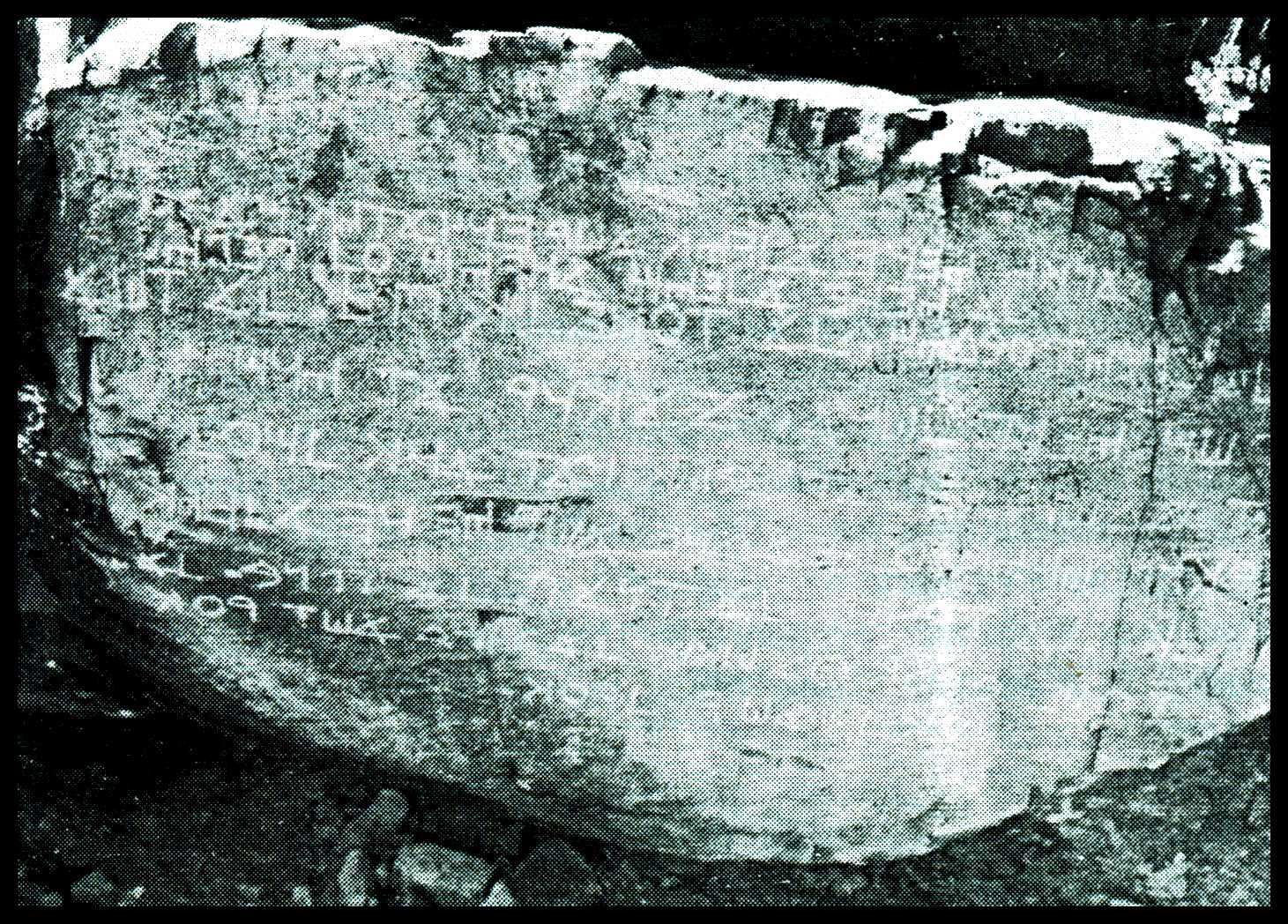
The Ten Commandments found carved on a rock near
Las Lunnas, New Mexico. The writing is an example
of early Hebrew script resembling Phoenician writing
under Greek influence (about 1000 BC). The English
translation reads:
"I am Yahweh your God that brought you out of the lands of Egypt."
From Christians Before Columbus , by Pastor Earl Jones.
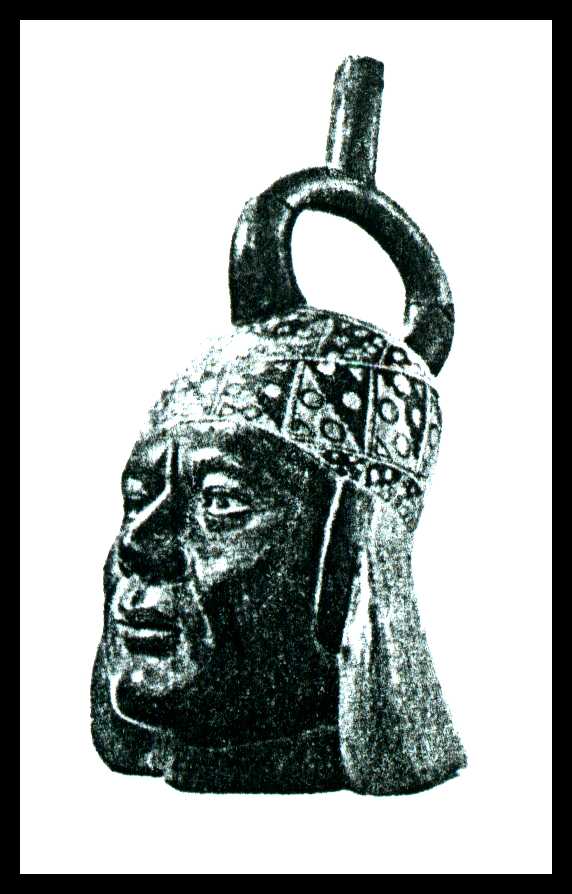
Peruvian art, about 700 AD.
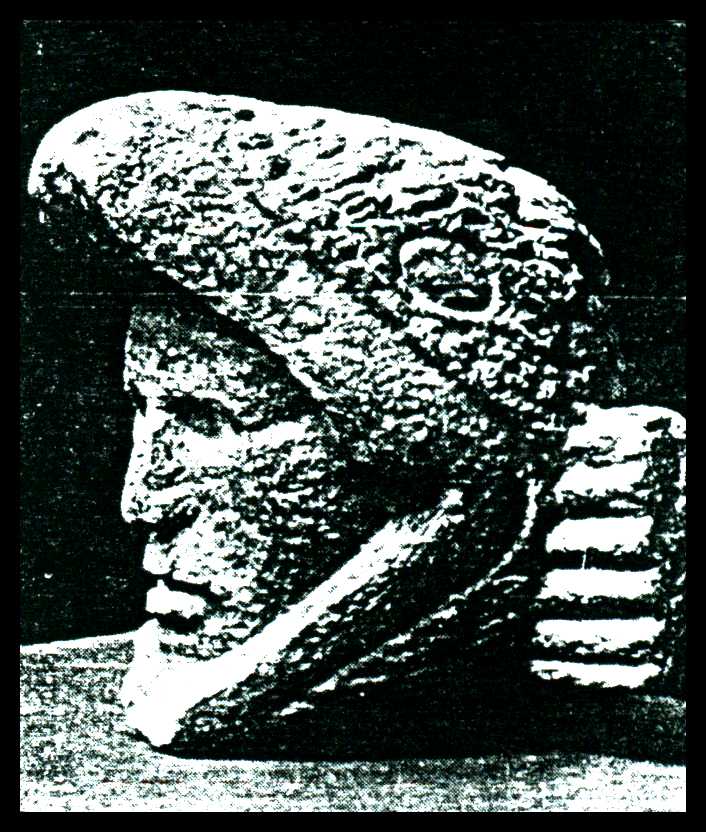
Aztec (Mexico) 1000 AD
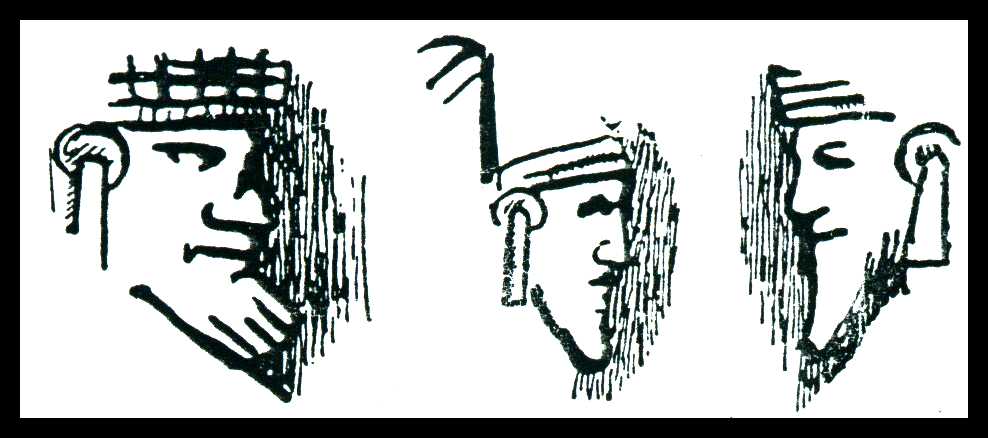
Maya (Mexico). White god of Chichen Itza found on monuments. Note beard. The native Indians were beardless.
CHAPTER 12
AMERICA, AMERICA
**************
"Moreover I will appoint a place for my people Israel, and will plant them that they may dwell in a place of their own, and move no more" (II Samuel 7:10). "In those days the house of Judah will walk with the house of Israel, and they will come together from the land of the north to the land that I gave your fathers as an inheritance." "And it shall be in those days when you are multiplied and increased in the land, declares the Lord". (Jeremiah 3:15-18). "Hear the word of the Lord, O Nations, And declare in the coastlands afar off, And say, "He who scattered Israel will gather him, And keep him as a shepherd keeps his flock" (Jeremiah 31:10). "And you will live in the land that I gave to your forefathers, so you will be My people and I will be your God" (Ezekiel 36:28). And I will shake the house of Israel among all nations, As grain is shaken in a sieve, But not a kernel will fall to the ground" (Amos 9:9). The new Israel would be boundaried by an eastern and western sea, and have enough land space so the children of Israel could become as the sands of the sea, stars in the sky (Hosea 1:10, Genesis 22:17, 32:12).
*************
Clearly, the founders of America were Adamic men. For the first 200 years, it was rare for any newcomer to come anywhere but from northwestern Europe. It was not until almost 1900 until the hordes of eastern and southern Europeans came. The English, Scots, Scotch-Irish, Scandinavians, and northern Germans are the Bedrock of America's greatness, the seed of Abraham. Like Greece, the founding of America is another milestone in the development of mankind. The most profound change for civilization and Adamic man was that the Pilgrims saw themselves as the new "Israel," striving to live under the guiding hand of God's law. As the nation progressed, we see the God-given rights of man woven into the fabric of the nation.
To address our assertion that America was founded on Christianity (and Christianity alone), we need to go back to a few of the original documents that profess these beliefs. We also wish to address the issue of Christianity as a religion for the pacifist and the issue that our founders were deists, both of which are promoted by the enemies of America.
The following is just a small sample of our strong religious heritage.
1. Jamestown Charter, 1606 - ".... in propagation of the Christian religion."
2. Mayflower Compact, 1620 - ".... having undertaken for the glory of God, and advancement of the Christian faith." The Pilgrims also referred to themselves as "The Seed of Abraham," "God's Servants", "His Chosen", and "A Vine out of Egypt into the Wilderness" (note 1).
3. Maryland Charter, 1632 - ".... for extending the Christian religion. "
4. Preamble to the Constitution of the United States - ... "secure the blessings of liberty to ourselves and our posterity". From Webster's 1828 dictionary, posterity is defined as "descendants; children, children's children, indefinitely; the race that proceeds from a progenitor".
5. From the tip of Maine to the wilderness of Virginia, the battle cry for independence becomes "No King but Jesus" (note 2).
6. George Washington (age 20) - "Direct my thoughts, words and work, wash away my sins in the immaculate Blood of the Lamb, and purge my heart by Thy Holy Spirit...daily frame me more and more into the likeness of Thy Son Jesus Christ" (note 3).
7. George Washington (when he takes command of American forces, during 1775) - "...requires and expects of all officers and soldiers, not engaged in actual duty, a punctual attendance of Divine services, to implore the blessing of Heaven upon the means for our safety and defense" (note 4).
8. George Washington (Valley Forge) - "...to establish our liberty and independence upon a lasting foundation..." "...which we owe to His divine interposition." (note 5).
9. George Washington (his Presidential inauguration address, 1789) - "It would be peculiarly improper to omit, in this first official act, my fervent supplication to that Almighty Being, who rules over the universe, who presides in the councils of nations, and whose providential aids can supply every human defect, that His benediction may consecrate to the liberties and happiness of the people of the United States... No people can be bound to acknowledge and adore the invisible hand which conducts the affairs of men more than the people of the United States. Every step by which they have advanced to the character of an independent agency... We ought to be no less persuaded that the propitious smiles of Heaven can never be expected on a nation that disregards the eternal rules of order and right, which Heaven itself has ordained." (note 6).
10. William Stearns (sermon in 1775) - "Cursed be he that keepeth back his sword from blood" (note 7).
11. Peter Muhlenberg (sermon in 1775) - "In the language of the Holy Writ, there is a time for all things. There is a time to preach and a time to fight." He pauses, throws off his pulpit robe and reveals to the congregation the uniform of a colonel in the Continental Army. "And now is the time to fight!" (note 8).
Muhlenberg, like many preachers, distinguished himself in many battles of the American Revolution. He rose to the rank of Brigadier General. There were so many preachers that led their men into battle for liberty that they became known as the "Black Brigades," referring to the black robes that preachers wore in church services. These men were not passive. Christ taught them to buy a sword (Matthew 10:34 and Luke 22:36) and that a well armed and strong man is secure in his house (Luke 11:21) (note 9).
12. Thomas Jefferson (1776) - "...appealing to the Supreme Judge of the World..." "...with a firm Reliance on the Protection of Divine Providence..." (note 10).
13. John Adams (1776) - "...I am for the Declaration. It is my living sentiment, and by the blessing of God it shall be my dying sentiment, Independence now, and Independence forever!" ..."It is the will of heaven that the two countries should be sundered forever." "... It ought to be commemorated, as the Day of Deliverance, by solemn acts of devotion to God Almighty." (note 11).
14. Jonathan Trumbul, Connecticut's Governor (August 1776) - "Be aroused and alarmed to stand forth in our just and glorious cause. Join... march on; this shall be your warrant, play the man for God, and for the cities of our God! May the Lord of Hosts, the God of the armies of Israel be your leader" (note 12).
15. Daniel Webster - "Whatever makes men good Christians, makes them good citizens" (note 13).
16. James Madison (the "Father" of our constitution) - "We have staked the whole future of American civilization, not upon the power of government, far from it. We have staked the future of all of our political institutions upon the capacity of mankind for self-government; upon the capacity of each and all of us to govern ourselves, to control ourselves, to sustain ourselves according to the Ten Commandments of God." (note 14).
There are thousands more quotations just like the above, but we will close this section with the most famous "deist" of all, Ben Franklin. At the Constitutional Convention, when it appeared that the representatives were hopelessly deadlocked and the "United States" would divide into separate nations, Franklin stated:
"In the beginning of the contest with Britain, when we were sensible of danger, we had daily prayers in this room for Divine protection. Our prayers, Sir, were heard, and they were graciously answered. All of us who were engaged in the struggle must have observed frequent instances of a superintending Providence in our favor.... And have we now forgotten this powerful Friend? Or do we imagine we no longer need His assistance?"
"I have lived, Sir, a long time, and the longer I live, the more convincing proofs I see of this truth: 'that God governs in the affairs of men'. And if a sparrow cannot fall to the ground without His notice, is it probable that an empire can rise without His aid?"
"... I therefore beg leave to move that, henceforth, prayers imploring the assistance of Heaven and its blessing on our deliberation be held in this assembly every morning before we proceed to business." (note 15).
The speech marked the turning point. Under the chairmanship of George Washington, a new Constitution, complete with a Bill of Rights, was drafted. And as the Founders were trying to choose a national symbol, a coat of arms, Franklin's idea was of Moses leading the Israelites across the Red Sea. That was not adopted, but what was, was equally symbolic.
*************
Did our Founders believe that America should be an inter-racial, multi-cultural, multi-religion, pluralistic society? A few (of the many) quotations are revealed below.
1. Thomas Jefferson - Jefferson was the man who wrote the Declaration of Independence. Within this document it states "All men are created equal." In modern America we hear this quotation endlessly. But also within the Declaration of Independence, it states "...the merciless Indian Savages, whose known rule of warfare is an undistinguished destruction of all ages, sexes and conditions." Obviously he did not include savage Indian tribes into the definition of all men. Since only men with property holdings had voting rights in early America, those were undoubtedly the "all" of whom he spoke.
On the Jefferson Monument in Washington DC, it states, "Nothing is written more clearly than the blacks are destined to be free." But, to finish his original quotation... "However, the two races, equally free, cannot live within the same government" (note 16).
Also Jefferson, along with Henry Clay, Speaker of the House, and James Madison, 4th president of the United States and "Father" of our constitution, founded the "American Colonization Society." Its purpose was to return all the black population to Africa. The effort only returned 15,000. Congressional funding was insufficient to complete the mammoth task. Jefferson's dream of removing "this blot on our country" and "this great political and moral evil" failed (note 16).
From the Federalist Papers, are letters by John Jay the first Supreme Court Justice of the United States. He states, "With equal pleasure I have as often taken notice, that Providence has been pleased to give this one connected country to one united people - a people descended from the same ancestors, speaking the same language, professing the same religion, attached to the same principles of government." And "This country and this people seem to have been made for each other, and it appears as if it was the design of Providence." Jay further comments about America being for their posterity, their genetic lineage. Clearly, the founders did not envision a modern America in their dreams.
Lincoln undertook the same dream as the thousands of people in the "American Colonization Society". On August 14, 1862, he made an "Address on the Colonization to a Deputation of Negroes." Within, he addressed the national leaders of the Negro community in attempt to get them to start a colony in Central America, which would eventually remove all blacks from the United States, into a land of their own. Not one Negro in the United States stepped forward to try the task. Even with Congressional funding, the effort failed (note 17).
Teddy Roosevelt discusses multi-racial societies (note 18):
"The difference between what can and what cannot be done by law is well exemplified by our experience of which Mr. Watson must have ample practical knowledge. The Negroes were formerly held in slavery. This was wrong which legislation could remedy, and which could not be remedied except by legislation. Accordingly they were set free by law. This having been done, many of their friends believed that in some way, by additional legislation, we could at once put them on an intellectual, social and business equality with the whites. The effort failed completely."
And on the Oriental..."yet it seems incredible that any man of even moderate intelligence should not see that no greater calamity could now befall the United States than to have the Pacific shore fill up with a Mongolian population. An effort to mix together, out of hand, the peoples representing the culminating points of two such lines of divergent cultural development would be fraught with peril; and this, I repeat, because the two are different, not because either is inferior to the other."
Roosevelt also referred to the Japanese as "marvelously intelligent children".
And on the Mexican... "Anyone who has ever been on the frontier, and who knows anything whatever of the domineering, masterful spirit and bitter race prejudices of the white frontiersmen, will acknowledge at once that it was out of the question that the Texans should long continue under Mexican rule; and it would have been a great misfortune if they had. It was out of the question to expect them to submit to the mastery of the weaker race, which they were supplanting."
Listen further to the man with a big stick.... "I want to let in light and air, but I do not want to let in sewer gas. If a room is fetid and the windows are bolted I am perfectly contented to knock out the windows, but I would not knock a hole into the drain pipe."
And concerning tolerance toward other religions besides Christianity, what did the Founders want for America?
1. George Washington - "They (the Jews) work more effectively against us, than the enemies' armies. They are a hundred times more dangerous to our liberties and the great cause we are engaged in... It is much to be lamented that each state, long ago, has not hunted them down as pests to society and the greatest enemies we have to the happiness of America." (note 19).
2. Ben Franklin (note 20) - "I fully agree with General Washington, that we must protect this young nation from an insidious influence and impenetration. That menace, gentlemen, is the Jews."
"In whatever country Jews have settled in any great number, they have lowered its moral tone; depreciated its commercial integrity; have segregated themselves and have not assimilated; have sneered at and tried to undermine the Christian religion upon which that nation is founded, by objecting to the restrictions; have built up a state within the state; and when opposed have tried to strangle that country to death financially, as in the case of Spain and Portugal."
"...they are vampires, and vampires do not live on vampires. They cannot live only among themselves. They must subsist on Christians and other peoples not of their race."
"If you do not exclude them from these United States, in this Constitution, in less than 200 years they will have swarmed here in such great numbers that they will dominate and devour the land and change our form of government, for which we Americans have shed our blood, given our lives, our substance and jeopardize our liberty."
"...I warn you, gentlemen, if you do not exclude Jews for all time, your children will curse you in your graves.
The purpose of the above text is not to bring to light the enormous influence the Jews have had on America since Franklin's prophetic words. There are a hundred books that detail that subject. The point is that the Founders knew that a nation divided cannot stand. A nation that housed extremes of beliefs could not hold together. An examination of modern America will testify to that fact.
What extremes do the Jews possess?
To Christians, the most extreme view held by the Jews concerns our Lord Jesus Christ. Their holy book is the Talmud (not the Bible). Among the many items of offensive, it states that Jesus' mother, Mary, was a whore and Jesus Christ was a bastard and "called up from hell by magic, first Titus, then Balaam and finally Jesus, who are here taken together as the worst enemies of Judaism." (note 21).
To the serious Jew, how could they live in a nation where the dominant religion is Christianity? To a serious Christian who loves his God, is it possible to live side by side in a country with a people who think this (and many other terrible things) about his God, Jesus Christ? Did the Talmud win out? Is American society based upon Talmudism? Do Christians really love and obey their true God? In the years ahead, as the world society continues to deteriorate, answers to these questions will become more pronounced.
To understand the time in which we live, you must understand more about the Jews. But that subject is beyond the scope of this primer. To learn more on this topic, see Appendix C. Under "Recommended" see # 1, 3, 4, 5, 6, 8, 11, 14, 24, and 26.
********
Footnotes, Chapter 12
1. Your Inheritance, p 179.
2. The New Heavens and the New Earth, by Cushing Stout, p 59.
3. George Washington the Christian, By William Johnson, p 23-28.
4. Ibid. p 69-70.
5. This Nation, Kistler, p 74-75.
6. The Light and the Glory, by Marshall & Manuel, p 349, 1977.
7. Journal, by John Wesley, p 64.
8. The Founding Faith, George Cornell's series, AP, 4-16-1976.
9. Scriptures for America has an excellent discussion of this subject. It is a 90-minute tape and is entitled God, Guns and Guts. The address is PO Box 766, LaPorte, CO 80535.
10. Declaration of Independence, by Jefferson.
11. Congress in Philadelphia, June 1776.
12. History IX, by Bancroft, p 79.
13. God's Covenant People, Weiland, p 293.
14. God's Covenant People, p 290.
15. The Light and the Glory, by Marshall, p 342.
16. The Notes of Virginia and the records and notes of Jefferson, by Jefferson.
17. Lincoln's presidential - White House records.
18. Race, Reds, Riots and Crime, by Teddy Roosevelt.
19. God's Covenant People, by Weiland, p 119.
20. God's Covenant People, by Weiland, p 120.
21. Ibid. p 220.
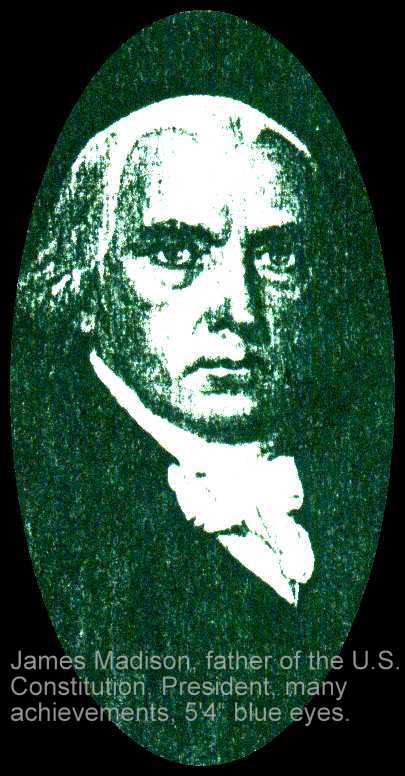
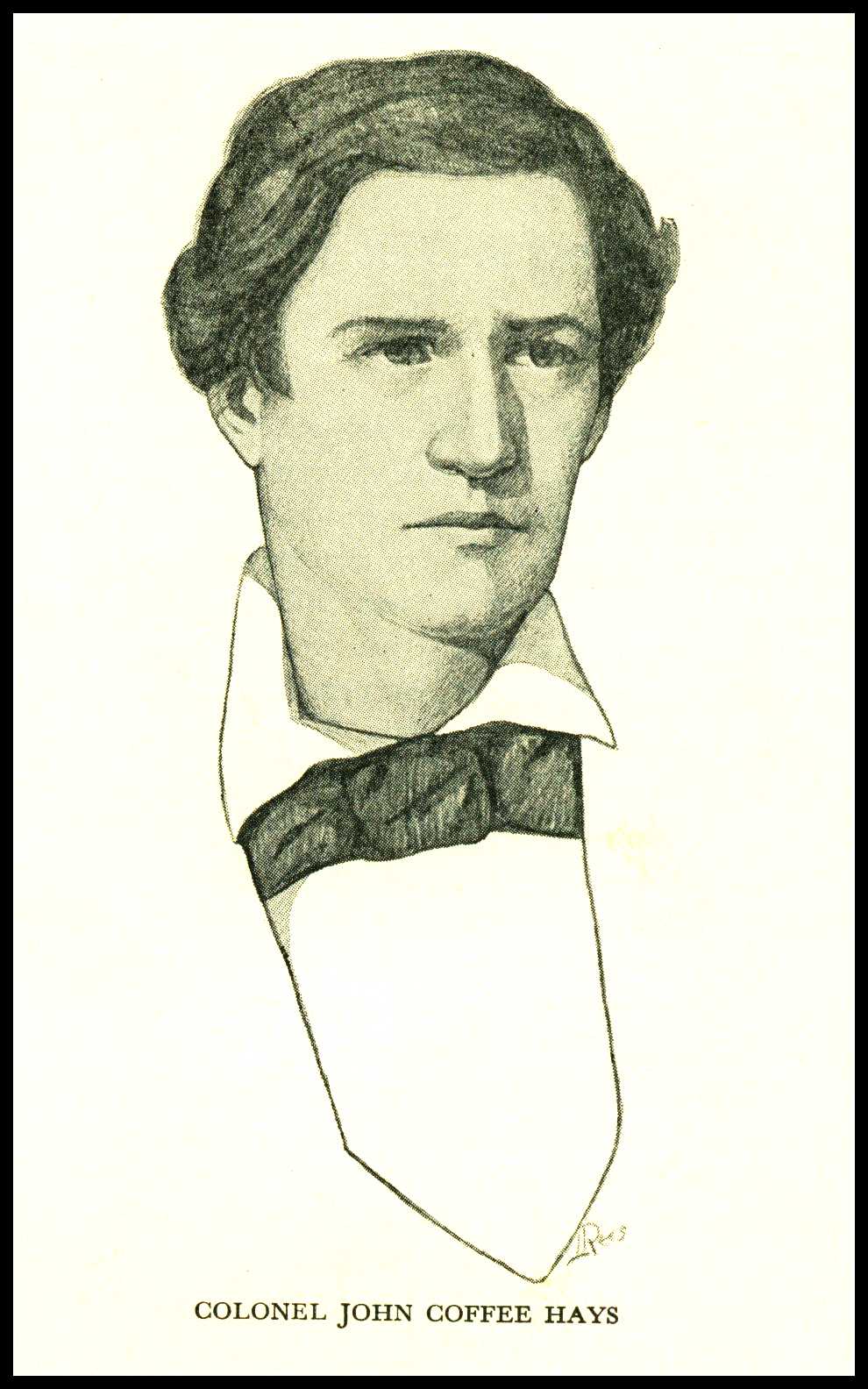
Colonel Jack Hays - As the people of Israel awaited a warrior to lead them into Canaan to "utterly destroy" their enemies, so it was with the early Texans. "Capt." John C. (Jack) Hays was their Joshua of the early Texas frontier. Captain Hays, a quiet and gentlemanly man, led the early Texas Rangers in decisive defeat of the mexicans and Comanche indians. And without his excellent leadership of the Rangers in the Mexican/American War, the United States Army would have been defeated and driven out of Mexico. Thereafter, the mexicans would not have been willing to sell to the United States all of the southwestern states formally owned by Mexico. A contemporary indian chief comments: "Me and Red Wing not afraid to go to hell together, Captain Jack heap brave, not afraid to go to hell by himself." The book "Lone Star" summarizes Hays' 13 year stay in Texas. Jack Hays was 5'8", 150 pounds and had hazel eyes.

Boy David, warrior supreme. Audie Murphy, age 19, shown here with his sister Nadine in 1945, was the most decorated man in WWII, (of the 8.1 million enlistments). Audie had a fifth grade education and his family was at the bottom of American society, often categorized as "poor white trash". Audie entered the Army only after being rejected by the Marines and the Paratroopers. He had blue eyes and when he entered the Army he was 5'6", 112 pounds. As a foot soldier, he received 37 medals, 11 for valor. He alone killed 240 men. (From No Name on the Bullet, by Graham).


Great cities are built, linked together by extensive and elaborate highway, railway, air and communication systems. There is no place where they do not reach, it's coast to coast.
Waterways are made navigable by tremendous feats of engineering. Dams are built coast to coast, to tame the flood waters, to provide drinking suppplies and to establish a new source of energy, electricity.
With thousands of inventors like Thomas
Edison, great factories are built. The
burdens of mankind are greatly lifted.
Through the seed of Abraham, will all
the nations of the world be blessed.
Genesis 26:4
Adamic man continues to find ways to irrigate the land in dry climates. Irrigation was started on the South Plains of Texas by 1911 (above) and a modern irrigation (self-propelled) system that minimizes evaporation, is demonstrated below. But Adamic man still does not understand his responsibility to the Creator and the Creation. For a profit, he uses until there is no more, then moves on.
CHAPTER 13
AMERICA THE CONQUERED
*********** To His special people, Israel, the Lord speaks these words... "And the Lord thy God will circumcise thine heart, and the heart of thy seed, to love the Lord thy God with all thine heart, and with all thy soul, that thou mayest live." (Deut 30:6).
And what is love? "If you love me, keep my commandments." (John 14:15).
See also Hebrews 8:8-10.
************
Most Americans now realize that they no longer have control of their destiny. They do not control any political candidate beyond the local level and they realize that the media distorts and lies. They (the media) often support causes contrary to the welfare of the nation. Most people understand that big money pays the piper, and they in turn make the rules by which we live. Yet most Americans still do not understand the reason why. Those that do understand feel helpless. They ask, what can I do, I'm just one person? What problems must we begin to solve first? Are there different levels of complicity we must consider? The list of questions seems endless.
Because the deception and corruption are so widespread, it is very difficult to summarize the findings to those answers in a form that appears rational. But we do have a responsibility to our children, our ancestors and our nation to search out the answers.
Is it possible that the people who control the current world order from behind the scenes have read the history of civilizations? Is it possible that in reading these histories, these extremely wealthy men would be able to figure ways to gain even more power and control for themselves? Does it make sense that they would eliminate that which is in competition with their personal goals and plans? Are there such wealthy men who seek and enjoy world control? Could their wealth and power eventually let them become as gods on earth? Would they not have to find ways to negate the effects of Deuteronomy 30:6, Hebrews 8:10 and John 14:15?
When a craftsman takes on a job, he utilizes tools to accomplish different tasks within that job. He may use a sledgehammer for the rough work and finer tools for the more detailed. When he finishes the sledge job, he lays it aside and picks up another tool and begins to work with it. Managing a world society is no different. Different tools are used for different jobs.
The Toolbox
To sum up, Lenin said it best; "It is necessary to use any ruse, cunning, unlawful method, evasion, concealment of truth to gain their ends."
Tool Number 1, The SledgeHammer
Communism has been proven a failure (but 30-40 million Adamic Christians were murdered under Stalin) in Soviet Russia yet the former communists there are still in control. Why? Is communism dead? There is no doubt that not all communists are dead, just look to modern America. We know that communism (or whatever name is currently fashionable), does not work; it is a failure. Why continue on its destructive path?
Tool Number 2, the Cankerworm and the Termite (Joel 1:4&6)
Communist Manifesto (10 planks, written by Marx & Engles in 1848)
1. Abolish all private ownership of farmland; state controls (What
finally worked in the Ukraine was a contrived starving to death of
about 10 million urban people - a financial crisis could cause the
same result. Farmers who own their land are too independent. To find
out who really owns the farm land in America, refuse to pay the
property taxes for a couple of years).
2. Progressive/graduated income tax (enacted in USA in 1913).
3. Abolition of right of inheritance (currently in America, estates over
$600,000 are taxed at rates of about 40-55%).
4. Confiscate the property of rebels (those who disagree with the State).
5. Centralize bank, an exclusive monopoly (Federal Reserve Bank - enacted
in USA in 1917. The Rothchild family, richest family in the world,
stated in the 1800's that one who controls the nation's money supply,
the centralized bank, controls the nation. The Federal Reserve banks
are not "federal" but privately owned - see Appendix B).
6. Control of media and transportation system (Of all the thousands of
news stories each day, the TV news and different newspapers all carry
basically the same stories. How can this be?).
7. State control of production (From a control perspective, what works
best is mega-business management, with government controls. Through
"free" trade and "capitalism", the small independent business owner is
gradually being phased out).
8. Equal obligation of all to work (begins when the tearing down of the
"old" phase begins to end - they know that welfare destroys).
9. Merger of agriculture with factory.
10. State control of education.
From their writings - other one world/communist goals: no guns (for citizens), abolish religion (or distort it until it becomes passive); destruction of the family - the State becomes the family head; total equality for women (remove women from function as mother of her children and place her in the workforce - the State becomes teacher/mama); phase out countries, nationalities & races (remove borders & promote inter-racial marriage), promote homosexuality, promote abortion (40 million white children since 1973), establish "democracy" (make everyone the same).
Tool Number 3, the Locust (Joel 1:4&6)
Why is America (and Europe) being flooded with people from Latin America, Asia, and Africa, with no action from Washington DC? Mao Tse-Tung (note 1), the great communist patriot (1950's), who murdered more people than any man in history (about 100 million), said it well... "The oppressed nations and peoples in Africa, Asia, and Latin America against imperialism and its lackeys will surround and strangle urbanized North America and Western Europe, the last stronghold of the moneygrubbing capitalist and bourgeoisie, corrupt labor unions and decadent Communist revisionists. In the final analysis, the whole course of world revolution hinges on the revolutionary struggles of the majority of the world's population."
Stoddard (note 2) said it better than Mao; "Communism is, in fact, as anti-racial as it is anti-social. To the communist mind, with its furious hatred of constructive ability and its fanatical determination to enforce leveling, proletarian equality, the very existence of superior biological values is a crime. Communism has vowed the proletarianization of the world, beginning with the white peoples. To this end it not only foments social revolution within the white world itself, but it also seeks to enlist the colored races in its grand assault on civilization. Communist agitators whisper in the ears of discontented colored men their gospel of hatred and revenge. Every nationalist aspiration, every political grievance, every social discrimination, is fuel for Bolshevism's hellish incitement to racial as well as to class war. Bolshevism thus reveals itself as the archenemy of civilization and the race. Communism is the renegade, the traitor within the gates, who would betray the citadel, degrade the very fiber of our being, and ultimately hurl a rebarbarized, racially impoverished world into the most debased and hopeless of mongrelizations."
The majority of the world's population is non-Adamic man. In 1900 white women of baby producing age were 20% of the world population, today 2% of the babies born worldwide are White. Inter-racial marriage and abortion further decrease the Adamic population.
Tool Number 4, The Wolf in Sheep's Clothing (Matthew 7:15-20)
What are GATT, WTO & NAFTA? It does not take a very intelligent person to figure the outcome of these "agreements." If American workers average $10 an hour and Asia's average wage is $.50 per hour, where will a manufacturer locate, given no trade tariffs? These instruments will eventually "equalize" all the economies of the world. They cannot bring the Asians, Latinos, Africans, etc., up to the American/European level of living, so we must "equalize" down to theirs. In addition, huge blocks of geographic territories are much easier to manage than small independent minded nations.
The Craftsmen
A few New York banks (see Appendix A) financed all the communist takeovers from Russia in 1917 through South Africa in the 1960-90's. Why? Through elimination of free enterprise (the small independent businessman), power is concentrated into the hands of the few. "Capitalism" (big banking, big business, chain stores, Wall Street, big money, "free" trade, multi-nationals, etc.) is the tool that is utilized to further those goals. To survive, to work, the proletarian (employee) must conform to "higher power" dictates, in speech and action (or not work). Oddly enough, capitalism and communism are both sides of the same phony coin. American (and worldwide) communism-capitalism, in practice today, is simply the transfer of wealth from the many (labor - the proletarian) to the few (the super-rich & the poor). As time progresses, the "many" will become much more inclusive (almost everyone lives like the peasants in Mexico) - with all the world's wealth and power held by the few (the super-rich). Today, most of the world's wealth already rests in the hands of the few. Armies march to protect this concentration of power. Please re-read Ben Franklin's prophesy in Chapter 12.
Interestingly, the perpetrators of this master world scheme are themselves, mostly Adamic man. Yet they are not the Sons of God, but fruits indicate they are of the sons of the devil. They seek, like Caesar of old, to make themselves god on earth. They manipulate, foment, and create the problems. Why? Because in disunity and turbulence, they are able to solidify their chokehold. Also remember that "divide and conquer" works today just as it did 2000 years ago.
It does seem impossible to wrestle any control back from these evil & ruthless men. They are intelligent and very versatile. They have learned to take one step back then take two steps forward many times along their long path. We cannot out-wealth or out-smart them.
What do they fear? How can we form into a coordinated unit, all marching to the same drummer, the same rules; versus our current state, i.e., division, a rudderless-oarless boat, doing only what feels good? The enemies of mankind know how they can be defeated. There is a way.
*******
Footnotes, Chapter 13
1. Quotations from Mao. Check any college library.
2. The Rising Tide of Color, by Stoddard.
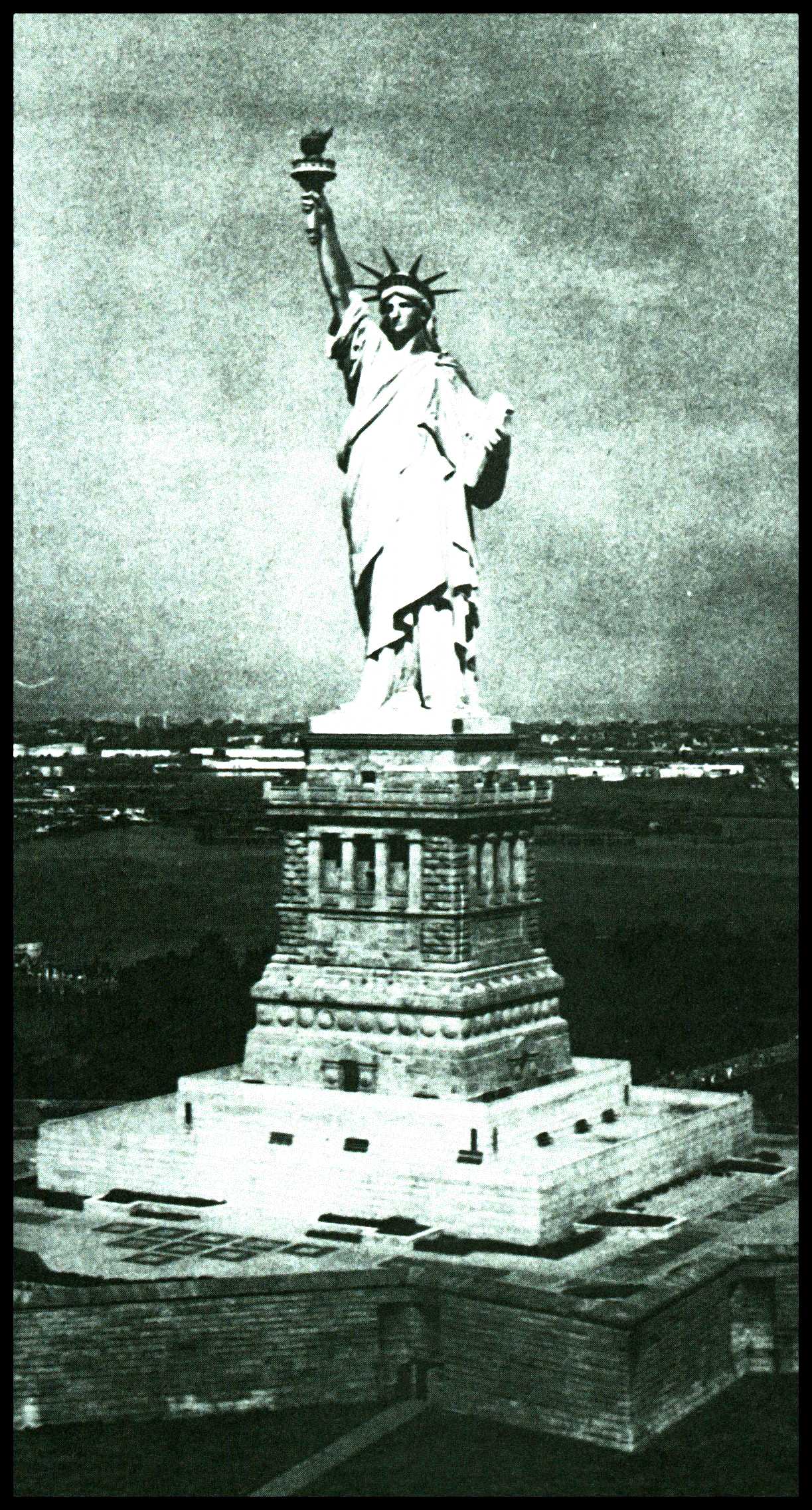
Statue of Liberty. In the beginning it was a symbol, a light for the world. After it arrived in New York, a sign was later added to its base by American "leaders". It was written by Emma Lazarus, a socialist, a Jew, and reads, "Give me your tired, your poor, your huddled masses". The anti-Christ forces could not negate such a huge symbol for liberty, so they perverted it, by making it a symbol for unbridled immigration (non-Adamic man).
Art
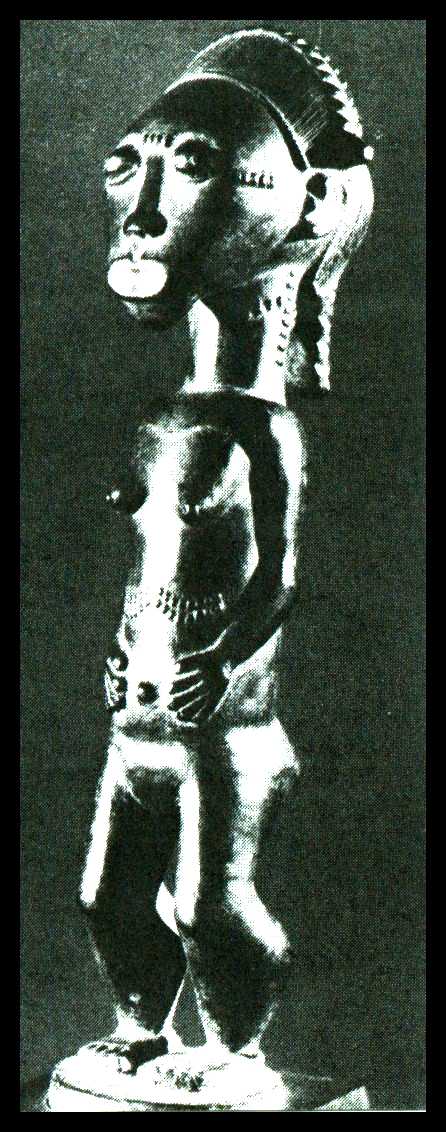

The growing hordes of the homeless.
CHAPTER 14
CONCLUSIONS
It is apparent, Adamic man has indeed been blessed with special gifts from God. From a worldly perspective, the most outstanding of these is his ability, his internal need, to build and to create. Because of this need to create, evolves the architect, the engineer, and the artist.
Our first pursuits were to feed ourselves beyond day-to-day existence. As we learned the art and science of irrigation, we began to settle and establish communities, then cities. We made the roads, bridges, buildings, and finally monumental works of art, both large and small. Adamic man indeed became a blessing to all of mankind (Genesis 12:3) with these special gifts of intellect, determination and creation. But spiritually, Adamic man's greatest gift is his special love for God. This has been demonstrated by spreading the Word of Christ to all the nations of the earth. Tirelessly, millions have been His servants in this pursuit.
But Adamic man continually failed to understand his purpose on earth. His purpose was to "till the earth" (Genesis 2:5), to take care of the Creator's invention. But in this function, he became lost unto himself. Upon many occasions he, himself, became the god. In his mind, other men became his cannon fodder to enhance his selfish worldly interest. As a result, man enslaved man. They became man-gods, then gods themselves.
We are now at a crossroads in time. The end of our Age is near. The lies and propaganda of the old Age are reaching fanatical proportions. They will stop at nothing to protect their old rule. They know their time is short and only a Police State will save their existing Empire. Promotion of crime, drugs, racial strife, division, and terrorism are the tools that will bring on such a State. The Caesars want this strife because those who control the Police State control it all. They will stop at nothing to bring in the new Caesar, a world wide Police State, where they can finally rest protected and secure, a State where dissenters, enemies of the State, will be executed.
But time marches onward. Labor pains of the newborn have begun. Soon world liberty and freedom will have its back against the wall. Will we fight solely for self-preservation? Will it be race against race? Will the new age be a repeat of the old? History indicates that God has given us a free will to choose; the decision is in our hands. History also indicates God is patient.
What is it that the modern day Caesars fear? The answer lies in II Chronicles 7:14... "If my people, which are called by my name, shall humble themselves, and pray, and seek my face, and turn from their wicked ways; then will I hear from heaven, and will forgive their sin, and will heal their land."
Does this mean that we need to start saying "praise Jesus," "Jesus is Lord," or other such comments in our daily lives? No. It just means that we must be willing to set aside the worldly things we know are wrong. We must start the process of rebirth in our own homes, our own families. It means that we, as individuals, accept the fact that God knows more than we do, His laws are more powerful than our personal opinions toward right and wrong. Say, "God, we need help, our nation's problems are beyond our ability to make right." This is the first step. Without it, we will continue to stumble and fall.
The next step is to obtain more knowledge. Turn to Appendix C and see the required reading and listening list. After listening and reading a little, self-initiative is the next step. Resistance is a good word that describes what you must do. Do not be a destroyer of everything, a nihilist. That is what they are. Simply resist the portion of man's law that conflicts with God's law. Our society is such that you will not currently be successful. Yet we must resist. We must get it in our mind that we will never quit, never, until the struggle is won.
If we will do these things, humble ourselves and seek His face, in time our land will be healed, a new Age will come to us.
In this new Age let us, Adamic man, recognize our duties and obligations to the world. First let us recognize that as groups, the colored and Adamic world are not enemies. However, never let us again forget that we have been commanded, kind after kind. Without the constant propaganda and manipulation to the contrary, all races will seek separation, just by their very nature. In their heart, all races know that the differences are too great to live side by side in harmony. Let us recognize that the artificial State, the multi-cultural, multi-racial, pluralistic society is dead. It has never worked and it never will. Today, as in the past, its purpose has been to destroy. Its purpose has been to bring power to a few evil men. Yet, let us also recognize that we can live in peace, given strong and secure fences... on all sides.
Adamic man must have a pure territory(s) of his own, just like all the other nations of the world. This is an absolute. Also, let Adamic man never again subjugate the other people of the world. Let us strive to live our lives by the Laws as described in the Word. Because when we do, those who see themselves as the man-gods on earth will become impotent. These Caesars will die on the vine that they, themselves, have created.
Either we will live by God's law or we will live by man's. And as the Word directs, man's law is a yoke of iron, God's law is light (Matt 11:29-30). Let the new Age progress forward.
APPENDIX A
WHY?
If you have not yet figured out the why, or it just will not sink in, I will try to summarize the answer to that question. Part of the answer lies in the genetic programming of Adamic people. Unless we have negative experiences to the contrary, we, by nature, trust and care for other people. It is within us to care for the creation.
From which people has the Gospel been carried to all points of the earth? Which people have sent tens of thousands of missionaries to help the colored people of the world? When a natural disaster strikes, which group of people rush to the site to give relief to those suffering and needy people? Which group of people work tirelessly to help Mexican and black inner city youth escape the inescapable? For the honest at heart, the answer is obvious to all these questions. The problem is that we wear blinders, we think all people think and believe the way we do. To the honest observer, that is obviously not true. In all the history of non-white nations, there has never been any type of civilized order without a ruthless, brutal dictatorship. God's law has not been circumcised into their hearts. As groups, the non-white people are not like us. They neither think nor behave like Adamic people.
We also tend to have a live and let live attitude. We can't help being like that. God made us that way. It makes for a good, kind, and happy society. But as you see, it also makes for a society easily manipulated. Our enemies think we are stupid, not because they are smarter than we are, it is just that they do not understand honesty and kindness. They understand dishonesty and manipulation. Like the wolves that eat sheep, that is what they do, it is their function in the scheme of things. When we deviate from God's law, the function of the wolf and locust comes into action. We need to realize that our first responsibility is to care for ourselves and NOT to be eaten, either by the wolf or by the locust. The only way to accomplish this is to return to God's law.
Our function is to control the wolf and locust population, build, create, organize and make order... for all the creation. Remember, the wolves do not want to be controlled. They like eating sheep at their leisure. It is their function in the scheme of things.
It has been said that God's laws are written for the unrighteous, not the righteous. The righteous have His basic laws written in their hearts. The unrighteous do not. They like the worldly pleasures, regardless of how many people must suffer.
The unrighteous (wolves) must have a device by which to control the masses (the sheep). They must eliminate all aspects of control from man's life, all but theirs. Religion, if not eliminated, must be controlled, redirected. Thus is born Judeo-Christianity, the perversion of God's Word. The worldly man wants the State to be god, because he can control the State. As in modern America, we look to the government god for all our needs. He controls the governmental political process (with money and the media) and our minds through the media (with money) and government education (with money, the media and the political process). We look to what he controls for guidance, thus he becomes god. The circle completes.
Ponder these quotations:
Alexis de Tocqueville (note 1)
"When the religion of a people is destroyed, doubt gets hold of the higher powers of the intellect and half paralyzes all the others. Thereafter, his opinions are ill-defended and easily abandoned; and, in despair of ever solving by himself the hard problems respecting the destiny of man, he ignobly submits to think no more about them. Such a condition cannot but enervate the soul, relax the springs of the will, and prepare a people for servitude. Not only does it happen in such a case that they allow their freedom to be taken from them; they frequently surrender it themselves."
"It seems evident that the more the barriers are removed which separate one nation from another and one citizen from another, the stronger is the bent of the human mind, as if by its own impulse, towards the idea of a single and all-powerful Being, dispensing equal laws in the same manner to every man. In democratic ages, then, it is particularly important not to allow the homage paid to secondary agents to be confused with the worship due to the Creator alone."
"As public opinion grows to be more and more the first and most irresistible of existing powers, the religious principle has no support strong enough to enable it long to resist its attacks."
Richard Swartzbaugh (note 2)
"If one looks only at current religious ideologies, it is overwhelmingly obvious that their theme is not only one of accord but of universal brotherhood."
"Primarily religion helps to stabilize relationships between factions, classes, regions, and races which would otherwise have divided allegiances. In orienting themselves toward a single superhuman and supernatural authority, diverse groups are often more susceptible to a centralized human political power."
"Usually, however, religion is invoked to save a collapsing system. H.G. Wells (Outline of History) says that for the empire of Constantine, Christianity '...was a unifying and organized force...It provided the only hope of moral solidarity he could discern in the great welter of narrow views and self-seeking over which he had to rule. It, and it alone, had the facilities for organizing will, for the need of which the empire was falling to pieces like a piece of rotten cloth.'"
"Without tribal bonds (racial groups) men cannot have access to one another except through symbolic interstices (for example, Judeo-Christianity, etal)." "The mediator (Caesar) fears the establishment of instinctual bonds (racial groups) which render symbolic ones (Judeo-Christianity) unnecessary. In short he fears tribalism (racial groups) and regionalism, the exclusion of the outsiders (other races and religions), he decries as 'racism'."
"The remaining question is whether the priest (Caesar's) can sustain this highly abstract climate until the instinctual group (racial group) dissolves forever. Usually what happens, if the outsider (other races and other religions) is not assimilated into the organic texture of the group (Judeo-Christianity), is that the congregation re-tribalizes and re-segregates itself in subtle ways and informal ways. The ritual group (Judeo-Christianity) and the tribal group (racial group) finally polarize, leading usually to the dissolution of the former."
The symbols (religious), while they may temporarily take an independent direction, must finally return to the elemental fact of biology and race. Tribal groups (racial group) involve the whole emotional and instinctual man, while symbolic groups (Judeo-Christianity) pertain simply to his abstract intellect. If religion does not ultimately affirm the tribe (racial group), then religion and with it the priest (Caesar's) are irrelevant to and even at odds with the spontaneous flow of life."
"A crucial stage in the formation of a religious community is reached when the symbolic tie begins to channel organic energies. The group that has artificially set itself apart from others begins to feel within itself like an organic group. If ritual groups (Judeo-Christianity) do not begin to develop into breeding groups, the ritual group will fall."
"Just as the 19th century saw the total victory of the idea of humanity, so the last of the 20th century will experience a new and real atheism as the final development of the same idea. With the breakdown of the world society and the reassertion of regionalism, men at the passing of this century will be the most cynical atheists regarding 'mankind'."
Wilmot Robertson (note 3)
"Today, Christianity in the United States has come full circle. Once again, it has turned its attention from God to man and become the champion of minorities. Many Protestant ministers take the money from their collection plates and spend it on projects, in particular projects that have nothing to do with religion of their Majority congregations. All in vain, as Neitzsche predicted a century ago: 'There is nothing more terrible than a barbaric slave class, who have learned to regard their existence as an injustice, and now prepare to avenge, not only themselves, but all future generations.' In the face of such threatening storms, who dares to appeal with confidence to our pale and exhausted religions."
"A decline in formal religion does not necessarily result in a nation of atheists. The religious instinct does not mortify. It flows into different channels in the search for different divinities. In the school system, as in so many other American institutions, Christianity is simply being phased out by the modern religious syncretism of democracy, equality, and minority racism. Certainly anyone familiar with contemporary school and college curricula can hardly fail to detect a theological tone in much of the subject matter. Whatever else they may be, political science lectures are becoming increasingly difficult to distinguish from sermons."
"Remove the spiritual props, the cultural reinforcements, the time-tested morale builders, the four-dimensional insurance of family, race, nation, and church, and the delicate balance of the human mentality can easily crack."
**************
Footnotes to Appendix A
1. Tocqueville was a French diplomat in the 1830's who toured America. His "Democracy in America" is a classic.
2. The Mediators, by Swartzbaugh, 1973.
3. The Dispossessed Majority, by Robertson, 1972.
APPENDIX B
THE FEDERAL RESERVE BANKING SYSTEM
How the Federal Reserve Banking System Works.
Most Americans believe that the Federal Reserve Banking System, which controls and manages the nation's money supply, is part of the Federal government. Not so. The twelve regional Federal Reserve Banks are all privately owned. Officially, no one but the insiders know who the owners are, not even the United States Congress. Currently, their kinsman, Alan Greenspan, is their chief talking head.
If you own a Federal Reserve Bank corporate charter, within the "Federal" Reserve Banking System, this is how it works....
1. The United States needs a billion dollars to pay its bills.
2. It notifies the U.S. Bureau of engraving to print one billion dollars in U.S. bonds, notes, and bills. The primary cost to do this is paper and government employee labor.
3. The U.S. Government delivers the bonds, notes, and bills to the New York Federal Reserve Bank. The Federal Reserve System sells the bonds, notes and bills in the open market, for which it receives a commission. Most of the proceeds are given back to the U.S. Government to pay its bills. However, a significant portion of the cash proceeds are given to the twelve Federal Reserve Banks, free of charge.
4. The Federal Reserve Banks deposit the cash in their banks, for which they pay nothing, and lend it out to all the local banks in America.
5. The public is told (and it is also put in college textbooks) that the "Fed" (Federal Reserve Bank) is the lender of last resort, but in actuality, they are (indirectly) a prime lender to local banks. This is because the "Federal" funds interest rate is below current competitive rates, an attractive feature to member banks.
6. The Federal Reserve Bank retains ownership of the cash (and interest received), which it received free of charge. They tell "the people" and the United States Congress this is their fee for "managing the nation's money supply".
7. Also note that under present banking laws, member banks can loan out over twenty five times the amount they have on deposit. A Federal Reserve Bank is a total and absolute monopoly.... no competitors. Their decision meetings are closed to the media, public, and the U.S. Congress. They also get to determine how much free cash they need to "manage the money supply"!
Without the absolute control over the money supply, the vampire will eventually die. This is the anti-Christ's primary source of power. It feeds all the other tentacles.
APPENDIX C FURTHER READING AND EDUCATION
REQUIRED:
1. The Law (tapes), by Peters, 1980's, (note A).
2. The Missing Links Discovered in Assyrian Tablets, by Capt, 1985,
(note E).
3. Inter-racial marriage cassette tapes (4), by Peters, 1980's, (note A).
4. The Bible.
5. Buy a copy of Strong's Concordance of the Holy Bible, 1898, (note C).
6. Greatest Discovery (tape), by Peters, 1980's, (note A).
RECOMMENDED:
01. God's Covenant People, by Weiland, 1994, (note A).
02. The Passing of the Great Race, by Grant, 1916, (note C).
03. The Dispossessed Majority, by Robertson, 1972, (note B & D).
04. Protocols of the Learned Elders of Zion, (In all time sales volume, this book is second only to the Holy Bible.), 1897, (note A).
05. Your Inheritance, by Sacred Truth Ministries, Robert Alan Balaicius, 1994, (note C).
06. Why Civilizations Self Destruct, 1977, by Pendell, (note B).
07. The Mediator, by Swartzbuagh, 1973, (note B).
08. Race, by Baker, 1970's, (note B).
09. Imperium, by Yockey, 1948, (note B).
10. The Light and the Glory, by Marshall, 1977, (note A & D).
11. The Origin of Race and Civilization, by Weisman, 1990, (note A).
12. Jacob's Pillar, by Capt, 1977, (note E).
13. Saga America, 1980, America BC, 1976, and Bronze Age America, 1982, by Fell, (note D).
14. In Quest of the White God, 1961, by Honore', (note D).
15. Calalus, by Covey, 1975 (note D).
16. Race, Reds, Riots and Crime, by Teddy Roosevelt, 1910, (note C).
17. The Rising Tide of Color, by Stoddard, 1920, (note C & D).
18. Scriptures for America tapes: Baal Worship, The Most Confusing Word - Jew, Who is Esau/Edom, God, Guns, and Guts (Is
Christianity a religion for pacifists), White Boy, (note A).
19. The Makers of Civilization in Race and History, by Waddell, 1930's, (note D).
20. The Jewish Religion; It's Influence Today, by Dilling, 1983, (note A).
WHERE TO FIND ABOVE MATERIAL:
A. Scriptures for America
PO Box 766
LaPorte, CO 80535
B. Howard Allen Enterprises
Box 76
Cape Canaveral, FL 32920
C. Sacred Truth Ministries
PO Box 18
Mountain City, TN 37683
D. Local library or inter-library loan.
E. Artisan Sales
P.O. Box 1529
Muskogee, OK 74402